
/images/ppid_59c68470-image-178900503017471967.webp)

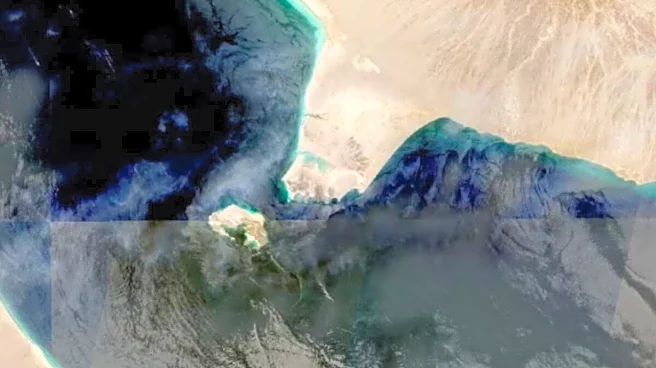
Iran-backed Houthi fighters have rapidly expanded their control along Yemen’s Red Sea coast, capturing the strategic port city of Mocha and Perim Island within about 36 hours, according to CNN.
The sudden advance has raised concerns that Yemen and the Red Sea could become a new front in the ongoing conflict between the United States and Iran. The capture of the two locations could also give the Houthis greater leverage over shipping through the Bab al-Mandeb Strait.
The fight for Mocha intensified on Thursday as Houthi forces launched a major assault on the port city. A senior Yemeni military source told CNN that the Houthis deployed large numbers of fighters, along with ballistic missiles and other weapons.
The source said he contacted the US
Central Command (CENTCOM) as the situation worsened and was told that the US was “watching the situation closely” and that Saudi air support was coming.
“But the air support never came,” the source said. “And Mocha has now fallen.”
The Houthis captured Perim Island soon afterwards. The island lies in the Bab al-Mandeb Strait, a key shipping route connecting the Red Sea with the Gulf of Aden.
Amr Al-Bidh, a senior official with Yemen’s Southern Transitional Council, said the Houthis did not need sophisticated weapons to threaten the waterway.
“(The Houthis) don’t need to use advanced weapons to close Bab al-Mandeb. They can just use a cannon on a car,” he told CNN.
“It’s a leverage that they have without using advanced weapons,” Al-Bidh added. “And they will keep it.”
The importance of the route has increased during the Iran war as the Strait of Hormuz faces disruption. Saudi Arabia has also redirected some oil exports towards the Red Sea to avoid Hormuz.
‘A Saudi-American F**k Up Of Epic Proportions’
The rapid fall of Mocha has triggered a blame game among forces opposed to the Houthis.
A regional source told CNN that the failure was the result of political disagreements and delayed decisions in Riyadh.
“There was not one air strike throughout the day yesterday (by Saudi support forces), although there were minute-by-minute updates,” the source said.
The source described the situation as “a Saudi-American f**k up of epic proportions.”
Another Western source familiar with the fighting said Saudi Arabia had failed to provide the support needed on the ground.
“The Saudis threw the Yemenis under the bus,” the source said.
The criticism has also focused on the Yemeni forces themselves. A Western source told CNN that some battalions were severely depleted and that their military rosters contained “ghost names” — people listed as soldiers who were not actually serving.
The source estimated that the actual strength of the forces was only around 20% of what was shown on paper.
Mohammed al-Basha, a Washington-based adviser on risks in the Arabian Peninsula, said the problems went beyond the lack of Saudi air support.
“This goes back to a deeper problem in the anti-Houthi coalition,” he told CNN. “There is no political cohesion.”
“I think everybody was aware of the Houthis’ push towards the west coast. The writings on the wall was very clear,” he added. “There’s no united command and control in Yemen.”
Trump Declines Call To Strike Houthis
According to a source familiar with the matter, Saudi Crown Prince Mohammed bin Salman spoke twice with US President Donald Trump on Thursday and urged him to strike the Houthis. Trump declined to intervene, the source said.
The White House said the US was focused on “protecting our core national security interests—such as ensuring freedom of navigation in the Red Sea” while supporting regional partners in dealing with security challenges.
The developments have come despite a recent increase in US military support for Saudi Arabia.
CNN reported that more than 100 US military advisers had been sent to Saudi Arabia to provide intelligence and targeting support. One US official estimated that around 200 US personnel were in the country as part of a newly established joint forces command.
CENTCOM chief Admiral Brad Cooper was also in Saudi Arabia on Thursday for coordination meetings, according to sources cited by CNN. CENTCOM declined to comment, citing operational security.
The Saudi military had reportedly been placed on high alert three weeks earlier. However, the Western source said key personnel needed to direct combat aircraft had not been moved into position.
With Mocha and Perim now under Houthi control, the group could have greater freedom to operate along the Red Sea coast.
Al-Basha said he expected the Houthis to move east, citing satellite and open-source imagery showing that the group was mobilising.
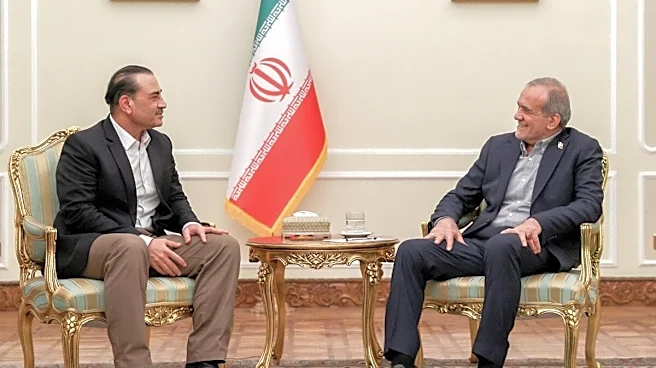
An adviser to Iran’s Supreme Leader described the Houthi advance as a “clear victory”, saying the US and its allies were paying the price for the economic crisis and the policies of the Trump administration.

/images/ppid_59c68470-image-178911252781887008.webp)



/images/ppid_59c68470-image-17890975215156195.webp)

/images/ppid_59c68470-image-17891275881737722.webp)

