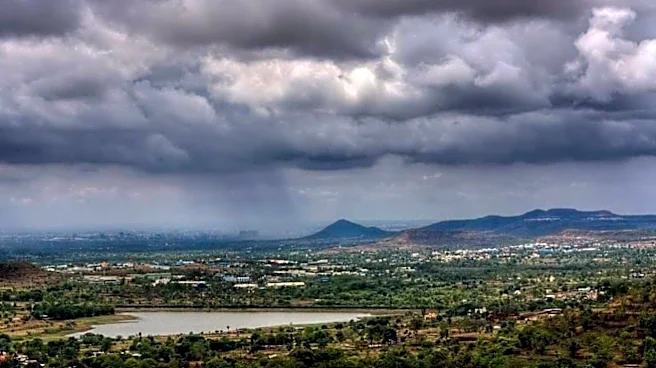



After over three months of intermittent rainfall, the weather conditions are now becoming favorable for the southwest monsoon to retreat from India this week, according to the India Meteorological Department (IMD).
It is likely to withdraw from some parts of West Rajasthan by 19th September. Normally, the withdrawal process starts from Bikaner and Jaisalmer districts by 17th September, and ends with parts of north-east and southern states by 15th October, marking the end of the four-month monsoon season. It withdraws from Delhi by 25th September.
However, the monsoon still has some momentum left. The weather department has forecast widespread rainfall across several parts of North India in the days ahead. There is a heavy rainfall alert for West
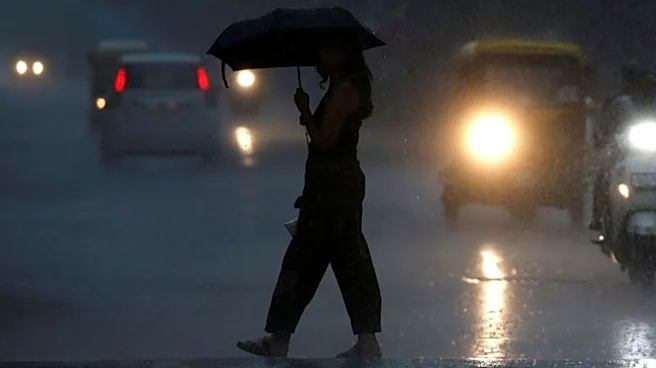
Rajasthan and West Uttar Pradesh till 18th September, while the eastern parts of the two states are likely to see showers through 20th September. The rain spell is also expected to extend to Himachal Pradesh, and Uttarakhand till 20th September, with parts of Delhi, Chandigarh and Haryana also likely to receive scattered rain between 18th and 20th September. The low pressure area over Gujarat has also caused heavy rainfall over the state on Monday.
India’s Deficit Over -15%
With the rainy season drawing to a close, India is still staring at a shortfall of over 15% as of 14th September. Regionally, it is highest for southern India at –28%, followed by East and Northeast India at -25%, Northwest India at -10% and Central India at -5%. According to IMD, the season is most likely to end with a country-wide deficit.
As many as 18 out of the total 36 meteorological sub-divisions are reeling under deficient rains including parts of Punjab, Haryana, Bihar, Saurashtra and Kutch, Marathwada, Rayalseema, Karnataka, Tamil Nadu, Andhra Pradesh, as well as eastern states including Arunachal Pradesh. Rayalseema (-50%) and Punjab (-40%) face the highest deficit this season.
The weather department has warned of below-normal rains in September as well due to the influence of El Niño in the equatorial Pacific Ocean which is becoming stronger. According to the latest update by the US-based National Oceanic and Atmospheric Administration (NOAA), there is a 75% chance of a historic event that would exceed the strength of previous El Niño events dating back to 1950. El Niño adversely impacts of the southwest monsoon.
Meanwhile, the temperatures remain higher than normal. After experiencing the warmest-ever August since 1901, the forecast suggests India is likely to experience above-normal day and night temperatures in September as well. Barmer in Rajasthan sizzled at 40.8 ℃ – country’s highest on Monday. The mean monthly temperature in August for India was recorded at 28.01℃ – highest-ever, with night time temperatures also setting a new record.

/images/ppid_59c68470-image-178936502762277079.webp)