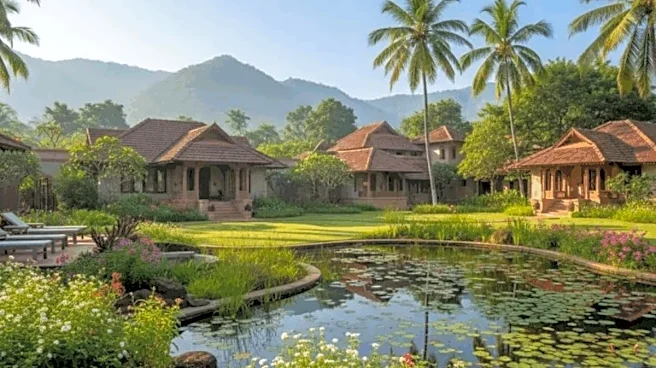






For decades, luxury hospitality followed a familiar formula: grand lobbies, impeccable service, plush suites, and a predictable level of comfort that felt reassuringly similar across destinations. Today, however, the definition of luxury is undergoing a profound transformation.
Modern travellers are increasingly seeking experiences that go beyond thread counts and curated amenities. They want to understand where they are, not just stay there. Whether it’s through local cuisine, regional architecture, indigenous wellness practices, or immersive cultural experiences, hospitality is becoming less about standardisation and more about creating a meaningful sense of place.
Across India, hotels are moving away from generic luxury models and embracing
the distinct character of their surroundings. The result is a new generation of destination-led stays that allow guests to engage more deeply with local culture, history, traditions, and landscapes.
When Heritage Becomes the Experience
“For today’s travellers, authentic experiences and a genuine connection with the destination are becoming more valuable than standardised luxury,” says Lalit Mundkur, General Manager, Fort Jadhavgadh.
Set within a beautifully restored Maratha fort near Pune, Fort Jadhavgadh exemplifies this shift. Rather than offering a luxury experience that could exist anywhere in the world, the property immerses guests in Maharashtra’s rich cultural legacy. Traditional architecture, antique artefacts, folk performances, regional cuisine, and village-inspired activities work together to create an experience rooted firmly in place. Here, luxury is not simply about comfort, it is about context.
Wellness Rooted in Place
The same philosophy is reshaping the wellness hospitality sector, where travellers are increasingly seeking restoration that feels connected to the destination itself.
“Today’s traveller is no longer looking for luxury that feels the same everywhere. They want a genuine connection with the destination, its culture, landscape, and traditions,” says Sharad Bajpai, General Manager, Toyam by Orchid Hotels.
Nestled amidst tranquil lakes and rolling hills near Pune, Toyam draws deeply from its natural surroundings and India’s Ayurvedic heritage. Wellness experiences inspired by ancient healing traditions, coupled with the property’s serene setting, create an environment where guests can reconnect with themselves while engaging with the region’s unique character.
Letting Nature Lead the Narrative
Nature, too, is becoming an integral part of the luxury narrative. At Courtyard by Marriott Mahabaleshwar, the destination itself takes centre stage. Surrounded by the dramatic landscapes of the Sahyadri range, the property encourages guests to experience the region through its scenery, flavours, and seasonal rhythms.
According to Rahul Janve, General Manager, Courtyard by Marriott Mahabaleshwar, visitors are increasingly drawn to experiences that celebrate the destination’s natural identity, from panoramic valley views and locally sourced produce to seasonal culinary festivals showcasing Mahabaleshwar’s famed strawberries. Encounters with native wildlife further strengthen the feeling of immersion, allowing guests to engage with the landscape in a meaningful way.
The Power of Local Storytelling
Beyond architecture, wellness, and cuisine, storytelling is emerging as another powerful tool in creating distinctive hospitality experiences.
Anand Mishra, Director of Operations, Sayaji Hotel Vadodara, observes that travellers increasingly value experiences that feel authentic to the destination. At Sayaji, local narratives, regional culinary traditions, curated cultural interactions, and the warmth of Gujarati hospitality are woven into the guest journey, offering visitors a richer understanding of the city’s heritage and identity.
A New Definition of Luxury
As traveller expectations continue to evolve, luxury is becoming less about opulence and more about authenticity. The most memorable hotel experiences today are not necessarily the most extravagant, they are the ones that create a genuine connection with a place and its people.
In an era where travellers can stay almost anywhere, what increasingly sets a hotel apart is not how universally luxurious it feels, but how uniquely local it remains. By embracing culture, community, history, and landscape, hospitality brands are redefining luxury as something far more meaningful: a sense of belonging, however temporary, to the destination itself.





/images/ppid_59c68470-image-178160502573594320.webp)