
/images/ppid_a911dc6a-image-17811196324048574.webp)
/images/ppid_a911dc6a-image-178115872191559717.webp)


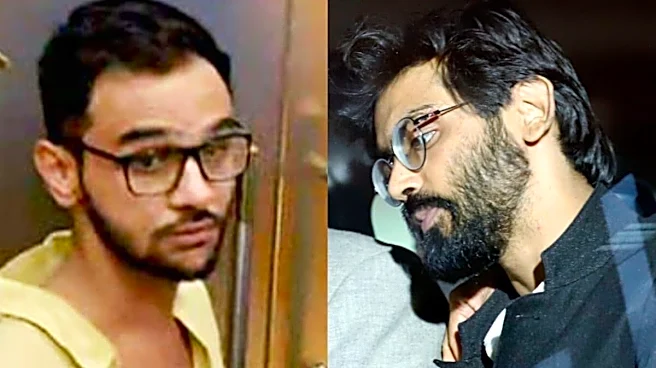
Umar Khalid and Sharjeel Imam have moved fresh regular bail applications before a Delhi court in connection with the 2020 northeast Delhi riots larger conspiracy case. Citing prolonged incarceration and a total lack of meaningful progress in the trial proceedings, the duo approached the Karkardooma Courts to challenge their continued detention. Vacation Judge Dr Sumedh Kumar Sethi issued a formal notice to the Delhi Police on the applications, seeking a comprehensive response and listing the matter for a detailed hearing on July 4.
The fresh petitions come approximately six months after the Supreme Court, on January 5, rejected earlier bail pleas submitted by Khalid and Imam. In their new filings, the activists contend that remaining behind bars
without the commencement of a trial or the finalisation of charges violates their fundamental right to personal liberty. They argue that despite the passage of significant time since the apex court’s ruling, the trial remains entirely stagnant at the preliminary stage of arguments on charges.
Citing Stagnant Trial and Change in Circumstances
In his application, Sharjeel Imam highlighted that he has remained in judicial custody for nearly six years. His legal counsel pointed out that there have been no substantial developments or structural progress in the case since the beginning of the year. The plea asserts that the persistent delay in proceedings results in an indefinite detention without a trial, which strengthens his legal entitlement to regular bail under prevailing constitutional protections.
Umar Khalid’s petition similarly challenges the stagnation but further introduces a “change in circumstances” based on recent judicial milestones. His plea draws attention to subsequent rulings and observations by coordinate benches of the Supreme Court, which reaffirmed that the legal principle of “bail is the rule” remains valid even under stringent anti-terror statutes like the Unlawful Activities (Prevention) Act (UAPA). The defence argues that prolonged pendency and extreme trial delays must feature prominently when balancing serious state allegations against an individual’s right to liberty.
Context of the Conspiracy Case
The ongoing legal battle originates from FIR 59/2020, registered by the Delhi Police Special Cell. The prosecution alleges that Khalid, Imam, and several others were the principal masterminds behind a premeditated, well-orchestrated conspiracy that triggered communal violence in northeast Delhi in February 2020. The clashes, which erupted during intense public demonstrations against the Citizenship (Amendment) Act (CAA) and the National Register of Citizens (NRC), resulted in 53 fatalities and left more than 700 people injured.
While the Supreme Court previously found a prima facie case against Khalid and Imam under the UAPA—noting they occupied a higher “hierarchy of participation” compared to others—it had simultaneously granted bail to five co-accused in January. As the Delhi Police prepare their formal reply for the upcoming July hearing, the trial court will face the critical task of evaluating whether the continuous delay in completing charge-framing arguments warrants a reassessment of the activists’ prolonged incarceration.
/images/ppid_a911dc6a-image-178128862852757770.webp)




/images/ppid_a911dc6a-image-17811638729228175.webp)