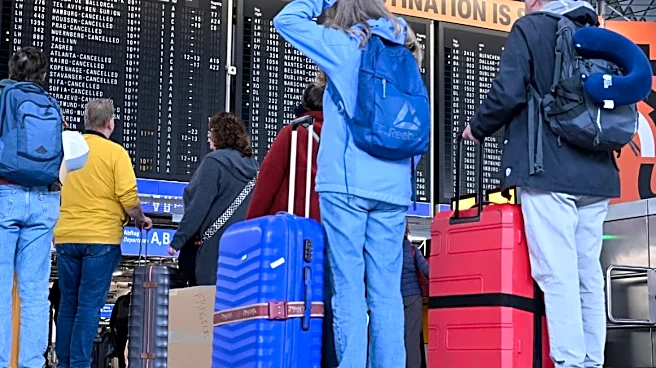




If you were hoping and wondering whether the newly announced ceasefire between the US and Iran will finally bring some relief to those painfully high airfares. After all, when tensions ease, prices should drop, right? Well, not so fast.
After weeks of escalating conflict, the announcement of a two-week ceasefire between the US and Iran has brought cautious relief to the Middle East. However, for the global aviation and travel industry, the truce may not translate into immediate good news for passengers hoping for lower airfares anytime soon.
IATA Director General Willie Walsh said it would take “months” for jet fuel supply to return to required levels, highlighting that the recovery process will be gradual rather than immediate.
He explained the
reality, “If it were to reopen and remain open, I think it will still take a period of months to get back to where supply needs to be given the disruption to the refining capacity in the Middle East.”
Major airlines like Delta have already warned of significantly higher fuel costs, projecting up to $2 billion in extra expenses and have started cutting capacity to protect their margins.
The reopening of the Strait of Hormuz has led to a sharp drop in oil prices, but experts caution that restoring crude flows alone will not resolve the issue. As per the Khaleej Times report, oil fell below $100 per barrel after Trump said he had agreed to a two-week ceasefire with Iran.
Walsh noted that even if crude supply resumes, disruptions in refining infrastructure will continue to constrain jet fuel availability for some time.
Despite ongoing uncertainties, airline and travel stocks saw a strong rally across global markets. In the Asia-Pacific region, Qantas Airways surged over 9%, while Air New Zealand gained more than 4%. Cathay Pacific rose 5%, and India’s IndiGo jumped 8%.
The upward momentum extended to Europe as well. Travel operator TUI climbed over 12%, while Wizz Air gained 10%. Air France-KLM rose around 14%, and Lufthansa was up 11% by late morning trading, outperforming broader European equity indices. Meanwhile, US airline stocks also showed gains in premarket trading.
Amid escalating tensions linked to the Iran conflict, Dubai authorities have officially restricted foreign airlines to just one daily rotation until at least May 31, 2026. This capacity cap, communicated via official notices to carriers, is a direct response to the operational strain caused by the regional war.
So in addition to dealing with cancelled plans, for the average traveller, the most immediate impact is the cost of a new ticket. According to a report in Gulf News, travel demand, high jet fuel costs and limited flight capacity are pushing airfares sharply higher.
Read More: Slot Squeeze, Price Hike: Dubai Restricts Foreign Flights To One A Day; Delhi, Mumbai Airfares Soar To ₹80,000
It also mentioned that prices may stay elevated for months. As per the report, a return ticket from Dubai to Mumbai for travel this week is priced at Dh4,230 (INR 1,06,507) compared to Dh730 (INR18,380) less than 60 days ago.
What This Means for Travellers?
- Airfares on Middle East, Europe, and Asia routes are likely to stay elevated for several months.
- Flight schedules may continue to see cancellations or changes.
- Longer routes and extra fuel stops could persist in the short term.
Although the reopening of the Strait of Hormuz is a positive development, restoring full refining capacity and stabilising jet fuel supply will take time. For airlines and travellers, this means higher fares, constrained capacity, and continued volatility are likely to persist well beyond the immediate easing of geopolitical tensions.
Most industry insiders believe any meaningful reduction in ticket prices is unlikely before late 2026.





/images/ppid_a911dc6a-image-177586152919559056.webp)





/images/ppid_a911dc6a-image-177585203280034000.webp)
/images/ppid_a911dc6a-image-177585207263091406.webp)