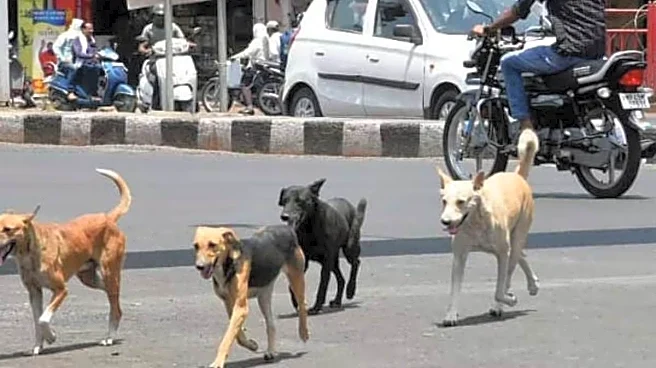

The Supreme Court of India on Thursday provided a significant clarification regarding the management of stray dogs, emphasising that it has never ordered a blanket removal of all canines from the streets.
A three-judge special bench, comprising Justices Vikram Nath, Sandeep Mehta, and NV Anjaria, stated that its primary objective is ensuring that stray animals are managed in strict accordance with the Animal Birth Control (ABC) Rules, 2023. This clarification comes amidst heightened public anxiety over a perceived judicial crackdown on street dogs following earlier orders focused on securing public institutions and highways.
During the proceedings, the bench reiterated that the legal framework mandates a scientific approach involving sterilisation, vaccination, and the eventual re-release of dogs into their original territories. The court noted that its intervention was prompted by the alarming rise in dog-bite incidents and the failure of municipal authorities to implement existing rules. While the bench has previously ordered the removal of dogs from sensitive areas—such as schools, hospitals, and railway stations—to ensure public safety, it clarified that this does not translate into a nationwide eviction of all street dogs. The judges expressed concern that administrative apathy has led to “systemic failures,” resulting in tragic fatalities, particularly among children and the elderly.
The hearing also delved into the nuances of canine behaviour and urban ecology. In an observation that drew considerable attention, the bench remarked that dogs possess an instinctive ability to “smell fear” or identify individuals who have previously suffered bites, which can trigger aggressive responses. When senior advocate CU Singh highlighted that an abrupt removal of dogs could lead to an ecological imbalance—specifically a surge in the rodent population—the court responded with a lighter remark, suggesting that if dogs and cats are natural enemies, perhaps the promotion of more cats could mitigate the rat menace.
However, the tone became markedly stern when the discussion shifted to the accountability of pet owners. Responding to a lawyer’s reference to a recent incident where a pet was unleashed on a neighbour, the bench delivered a clear warning: “Unintentionally also, if a pet goes and attacks a neighbour, that is an offence”. This statement underscores a strict liability approach, suggesting that pet owners cannot hide behind the plea of an accident if their animal causes harm. The court’s stance signals a tightening of legal responsibility for domestic animal owners, regardless of whether a specific intent to cause injury was present. As the hearing remains inconclusive, the apex court continues to seek a delicate balance between the fundamental right to life and the humane treatment of animals.





/images/ppid_59c68470-image-177040503772680285.webp)