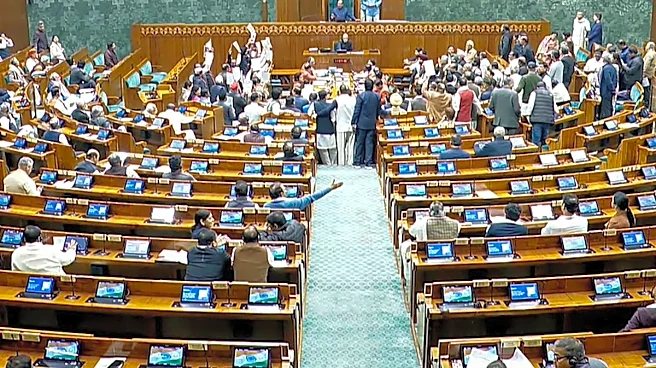






The Monsoon Session of Parliament will commence on July 20 and continue until August 13, Parliamentary Affairs Minister Kiren Rijiju announced on Saturday.
In a post on X, Rijiju said President Droupadi Murmu has approved the government’s recommendation to summon both Houses of Parliament for the Monsoon Session.
“The Session will commence on 20 July, 2026 and continue till 13 August, 2026, for meaningful debate, discussion and decisions on issues of national importance,” he said.
The session is expected to witness discussions on several key pieces of legislation. The Centre is likely to introduce the 130th Constitution Amendment Bill, the Women’s Reservation Implementation Bill, a delimitation bill, and a bill to amend the Foreign Contribution
(Regulation) Act (FCRA).
The government is also expected to table and seek passage of several pending bills, while the Opposition is likely to raise a host of political, economic and national security issues during the nearly four-week session.
Among the proposed legislations, the 130th Constitution Amendment Bill, the Women’s Reservation Implementation Bill and the delimitation bill would require a special majority, with constitutional amendments needing the support of at least two-thirds of members present and voting in both Houses of Parliament.
The Women’s Reservation and delimitation legislation failed to secure the required numbers during the previous Parliament session.
The proposed 130th Constitution Amendment Bill seeks to provide for the automatic removal of a Prime Minister or Chief Minister if they remain under arrest for 30 days or more in connection with specified serious offences, including corruption-related cases.
The Women’s Reservation Bill seeks to reserve 33 per cent of seats in the Lok Sabha and state legislative assemblies for women. While Opposition parties have broadly supported women’s reservation, they have strongly opposed linking its implementation to delimitation, arguing that the exercise could reduce the parliamentary representation of southern states.
Does Govt Have Numbers?
The NDA enjoys a comfortable majority to pass ordinary legislation requiring a simple majority in both Houses. However, constitutional amendments require a special majority, an area where the government fell short during the previous session.
The NDA’s strength has improved since then.
Following the West Bengal Assembly election, in which the BJP secured a landslide victory, 20 Trinamool Congress MLAs joined the Nationalist Citizens Party of India (NCPI), which subsequently extended support to the NDA.
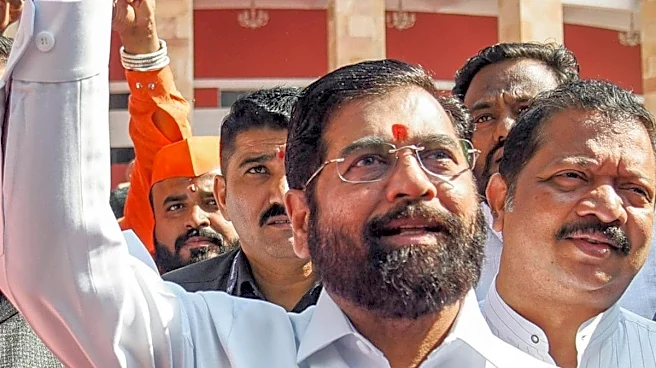
In the Lok Sabha, six MPs from Uddhav Thackeray’s Shiv Sena merged with Eknath Shinde’s Shiv Sena, taking the NDA’s effective strength to around 330 members. While this strengthens the alliance, it still falls short of the two-thirds majority required for constitutional amendments.
The NDA’s position has also improved in the Rajya Sabha. Seven Aam Aadmi Party MPs joined the BJP, taking the alliance’s strength to 141 members in the 242-member House. With the backing of 10 nominated and Independent members, the NDA’s assured tally rises to 151—comfortably above the simple majority mark but still 11 votes short of the two-thirds majority needed to amend the Constitution.
The government’s ability to secure support from regional parties could therefore prove decisive. Both the Biju Janata Dal (BJD) and the YSR Congress Party (YSRCP) have backed the Centre on key legislation in the past. Whether they extend similar support to the proposed 130th Constitution Amendment Bill, the Women’s Reservation Implementation Bill and the delimitation bill is likely to determine whether the government can secure the special majority needed to pass these bills.