
/images/ppid_a911dc6a-image-178215802882498279.webp)


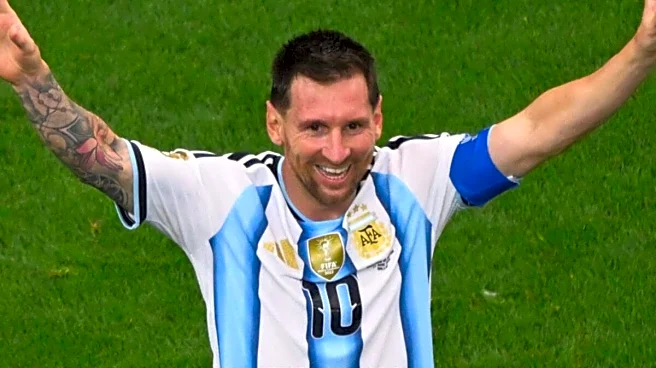
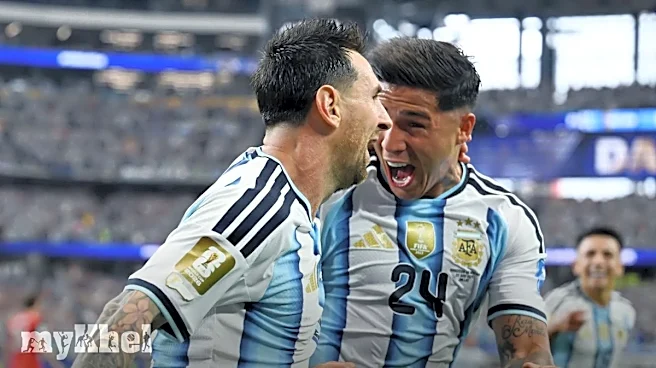
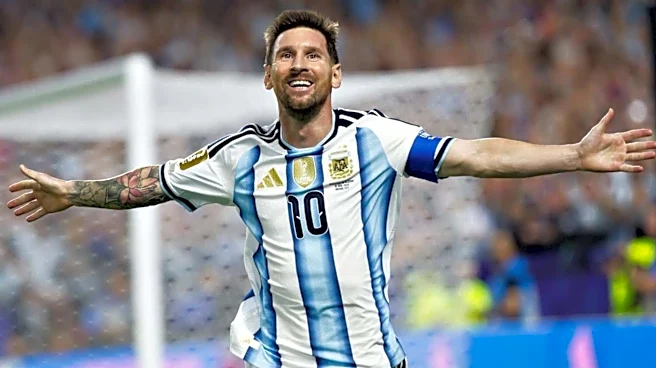
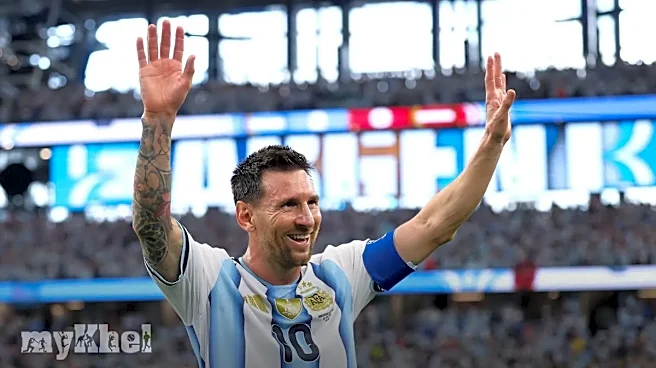
After scoring a hat-trick against Algeria in Argentina’s opening match of the FIFA World Cup 2026, Lionel Messi, arguably the greatest footballer of all time, scored twice in Argentina’s second Group J match against Austria on Monday (June 22).
In the fixture played at AT&T Stadium in Arlington, the 38-year-old opened the scoring in the 39th minute and added his second goal in the fifth minute of stoppage time after the end of regulation time.
Messi’s opening goal helped him surpass former Germany striker Miroslav Klose’s tally of 16 goals and become the highest goal-scorer in FIFA World Cup history. He then extended his record tally to 18 goals before the final whistle.
Most goals in FIFA World Cup
| POSITION | PLAYER | COUNTRY | MATCHES | GOALS | EDITIONS |
|---|---|---|---|---|---|
| 1. | Lionel Messi | Argentina | 28* | 18* | 2006, 2010, 2014, 2018, 2022, 2026 |
| 2. | Miroslav Klose | Germany | 24 | 16 | 2002, 2006, 2010, 2014 |
| 3. | Ronaldo | Brazil | 19 | 15 | 1994, 1998, 2002, 2006 |
| =4. | Gerd Müller | West Germany | 13 | 14 | 1970, 1974 |
| =4. | Kylian Mbappe | France | 15 | 14 | 2018, 2022, 2026 |
| 6. | Just Fontaine | France | 6 | 13 | 1958 |
| 7. | Pele | Brazil | 14 | 12 | 1958, 1962, 1966, 1970 |
| =8. | Sándor Kocsis | Hungary | 5 | 11 | 1954 |
| =8. | Jürgen Klinsmann | West Germany/Germany | 17 | 11 | 1990, 1994, 1998 |
The first goal against Austria also took Messi’s
tally to four goals in the 2026 FIFA World Cup, making him only the second footballer after Klose to score at least four goals in three different FIFA World Cup editions.
Lionel Messi has now scored 4+ goals in three different men’s World Cups (2014, 2022, 2026).
The only other player to do it? 🇩🇪 Miroslav Klose. pic.twitter.com/91lgTXvfqM
— Opta Analyst (@OptaAnalyst) June 22, 2026
Messi, who made his FIFA World Cup debut in 2006 and scored against Serbia and Montenegro on June 16, 2006, netted four goals in the 2014 edition and seven in 2022. He now has five goals to his name in the ongoing tournament.
Lionel Messi’s goals in FIFA World Cup
| EDITION | GOAL | AGAINST | VENUE | DATE |
| 2006 | 1 | Serbia and Montenegro | Arena AufSchalke, Gelsenkirchen | June 16, 2006 |
| 2014 | 1 | Bosnia and Herzegovina | Estádio do Maracanã, Rio de Janeiro | June 15, 2014 |
| 1 | Iran | Estádio Mineirão, Belo Horizonte | June 21, 2014 | |
| 2 | Nigeria | Estádio Beira-Rio, Porto Alegre | June 25, 2014 | |
| 2018 | 1 | Nigeria | Krestovsky Stadium, Saint Petersburg | June 26, 2018 |
| 2022 | 1 | Saudi Arabia | Lusail Stadium, Lusail | November 22, 2022 |
| 1 | Mexico | Lusail Stadium, Lusail | November 26, 2022 | |
| 1 | Australia | Ahmad bin Ali Stadium, Al Rayyan | December 3, 2022 | |
| 1 | Netherlands | Lusail Stadium, Lusail | December 9, 2022 | |
| 1 | Croatia | Lusail Stadium, Lusail | December 13, 2022 | |
| 2 | France | Lusail Stadium, Lusail | December 18, 2022 | |
| 2026 | 3 | Algeria | Arrowhead Stadium, Kansas City | June 16, 2026 |
| 2 | Austria | AT&T Stadium, Arlington | June 22, 2026 |
Klose, meanwhile, scored five goals each in the 2002 and 2006 FIFA World Cups, four in the 2010 edition and two in the 2014 tournament, which Germany won by defeating Argentina in the final at Rio de Janeiro’s iconic Maracanã Stadium.
Miroslav Klose’s goals in FIFA World Cup
| EDITION | GOAL | AGAINST | VENUE | DATE |
| 2002 | 3 | Saudi Arabia | Sapporo Dome, Sapporo | June 1, 2002 |
| 1 | Republic of Ireland | Kashima Soccer Stadium, Kashima | June 5, 2002 | |
| 1 | Cameroon | Ecopa Stadium, Shizuoka | June 11, 2002 | |
| 2006 | 2 | Costa Rica | Allianz Arena, Munich | June 9, 2006 |
| 2 | Ecuador | Olympiastadion, Berlin | June 20, 2006 | |
| 1 | Argentina | Olympiastadion, Berlin | June 30, 2006 | |
| 2010 | 1 | Australia | Moses Mabhida Stadium, Durban | June 13, 2010 |
| 1 | England | Free State Stadium, Bloemfontein | June 27, 2010 | |
| 2 | Argentina | Cape Town Stadium, Cape Town | July 3, 2010 | |
| 2014 | 1 | Ghana | Estádio Castelão, Fortaleza | June 21, 2014 |
| 1 | Brazil | Estádio Mineirão, Belo Horizonte | July 8, 2014 |
Messi’s opening goal against Austria also helped him become only the third footballer in FIFA World Cup history to score in six consecutive matches.
6 – Lionel Messi is the third player to score in six successive appearances at the FIFA World Cup after Just Fontaine in 1958 and Jairzinho in 1970.
Super. pic.twitter.com/DambEr9Lxi
— OptaJoe (@OptaJoe) June 22, 2026
He matched the feat first achieved by France’s Just Fontaine in 1958 and later equalled by Brazil’s Jairzinho.

/images/ppid_59c68470-image-178217256808717094.webp)

/images/ppid_a911dc6a-image-178216504930956433.webp)

/images/ppid_a911dc6a-image-17821615290499292.webp)