


/images/ppid_59c68470-image-177105003415990657.webp)
A special bench of the Supreme Court is set to hear a suo motu case on Monday regarding the controversial new definition of the Aravalli hills. The matter, titled “In Re: Definition of Aravalli Hills and Ranges and Ancillary Issues”, will be heard by a three-judge bench led by Chief Justice of India Surya Kant, alongside Justices JK Maheshwari and AG Masih.
The 100-Metre Controversy
The controversy stems from a November 20 judgment by a different bench of the apex court, which accepted a standardised definition proposed by the Ministry of Environment, Forest and Climate Change (MoEF&CC). Under this framework, a landform is classified as an “Aravalli Hill” only if it rises 100 metres or more above the local relief. Furthermore, a “range” is defined only when two such hills
are located within 500 metres of each other.
Environmentalists and former forest officials have raised an alarm, arguing that this height-based criterion is ecologically arbitrary. Data from the Forest Survey of India (FSI) suggests that out of over 12,000 hill formations in the region, only about 8.7% meet this 100-metre threshold. Critics contend that this definition effectively strips legal protection from more than 90% of the Aravalli landscape, particularly in Haryana and Delhi-NCR, where the hills are lower and more fragmented.
Ecological Stakes and Mining Concerns
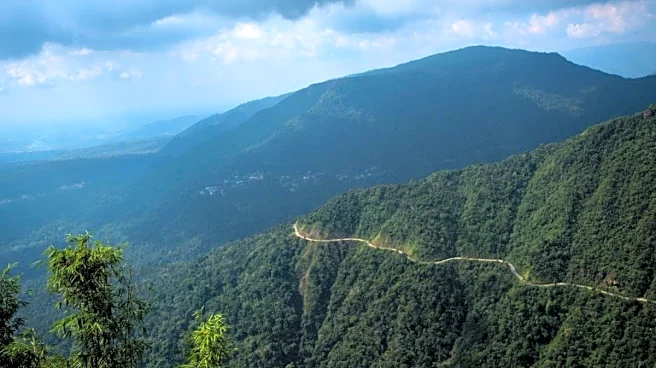
The Aravallis serve as a critical ecological corridor and a “green wall” that prevents the eastward expansion of the Thar Desert into the fertile plains of north India. They are also vital for groundwater recharge in parched states like Rajasthan and Haryana.
Activists fear that excluding low-lying ridges and scrub forests from the legal definition of “Aravalli” will legitimise unregulated mining, real estate development, and stone crushing in areas that were previously protected under the 1992 Aravalli Notification.
Court’s Re-evaluation
The Supreme Court’s decision to take up the matter on its own motion indicates a willingness to review whether the November ruling overlooked the “precautionary principle” of environmental law. While the previous judgment aimed to bring administrative uniformity across Rajasthan, Haryana, Delhi, and Gujarat, it has been criticised for prioritising “sustainable mining” over landscape-level conservation.
Monday’s hearing is expected to examine whether the height-based marker should be scrapped in favour of more scientific, slope-based, or geological criteria that recognise the Aravallis as a continuous ecological unit, regardless of elevation.



/images/ppid_a911dc6a-image-177105322971173172.webp)





/images/ppid_a911dc6a-image-177105253714182198.webp)
/images/ppid_a911dc6a-image-177105248655682778.webp)
/images/ppid_a911dc6a-image-177105245071149153.webp)

/images/ppid_a911dc6a-image-177105042575465447.webp)