
/images/ppid_59c68470-image-178902252237882195.webp)
/images/ppid_59c68470-image-178904752605986808.webp)
For nearly two decades, Dhirendra Mulkalwar worked behind the scenes, composing for independent projects, creating jingles and contributing as a music producer to films including Uri: The Surgical Strike, Toilet: Ek Prem Katha and Article 15. But his first opportunity to independently shoulder the music of an entire feature film arrived with a project that already had a deeply personal connection for him.
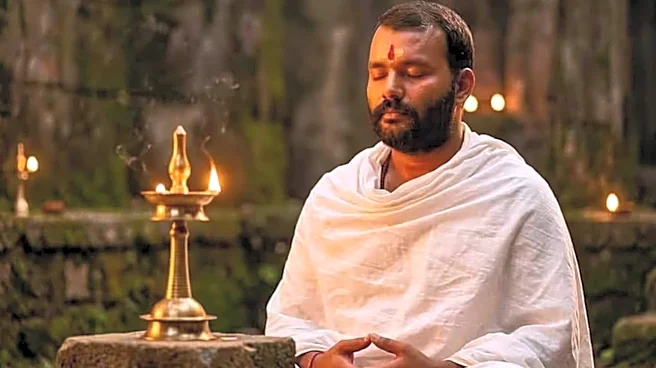
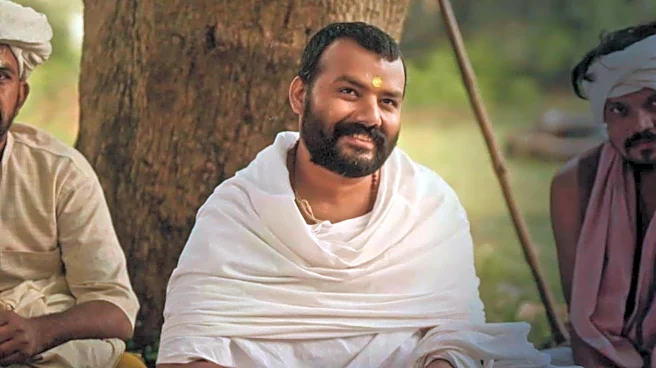
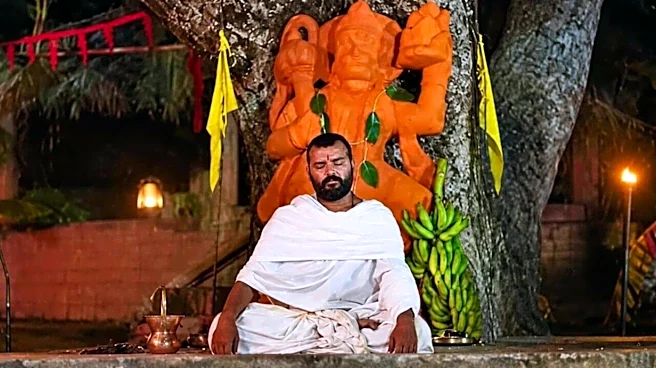
Hanuman Ansh, director Vishal Chaturvedi’s film based on the spiritual life of Neem Karoli Baba, gave Dhirendra his first solo credit as a Music Director. He created the film’s background score and also composed Siyavar Ramchandra Ki Jai, a track that was never originally conceived as a conventional song.
In an exclusive conversation with News18
Showsha, Dhirendra reveals that he had followed Neem Karoli Baba for years before Hanuman Ansh came his way. In fact, only months before Vishal approached him for the film, the composer had finally visited Kainchi Dham after trying to make the journey for six or seven years.
For Dhirendra, the timing was difficult to dismiss as coincidence.
Dhirendra Mulkalwar On How Hanuman Ansh Came To Him
Dhirendra traces his association with Hanuman Ansh to a visit he had wanted to make for years. Despite repeatedly planning to visit Kainchi Dham, something or the other would prevent the trip. That changed last April.
“I can only describe it as destiny. For the last six or seven years, I had been praying for an opportunity to visit Kainchi Dham and seek Babaji’s blessings, but for one reason or another, it simply never happened,” he recalls.
“Then, last year in April, I finally had the good fortune of visiting Kainchi Dham. And within just two or three months of that visit, Vishal ji called me.”
At the time, Vishal himself was observing a 43-day spiritual practice that involved reciting the Hanuman Chalisa for the film. Dhirendra says he accepted the offer almost immediately, without initially telling the director that he had recently visited Kainchi Dham.
“So, when he offered me the film, I agreed within a fraction of a second. I didn’t even have to think about it,” he says.
“Later, I told him, ‘You probably won’t believe this, but I was at Kainchi Dham just two or three months ago.’”
Neither knew about the other’s connection to Neem Karoli Baba. Vishal did not know Dhirendra had been following Babaji for years, while Dhirendra had no idea that Vishal was developing a film around his life.
“So, getting this film itself felt like a miracle. It genuinely felt as though it had already been written somewhere that this was supposed to happen,” he adds.
‘Perhaps Babaji Decided My Journey Should Begin With A Film About Him’
The significance of Hanuman Ansh also lies in what the project represented professionally for Dhirendra. Despite years of experience, moving from music production and shorter formats to independently scoring a feature film had proved difficult.
“When you have been working in shorter formats, such as advertisements, and then try to cross over into films, people often wonder whether you will be able to handle a project of that scale,” he explains.
His work on films such as Uri: The Surgical Strike, Toilet: Ek Prem Katha and Article 15 gave him experience on major productions, but working as a music producer did not necessarily place him directly in the decision-making relationship between a composer and filmmaker.
Dhirendra says he signed films over the years, only for some projects to never get made. On other occasions, he was replaced. Even when a director trusted him, producers could make another decision for commercial or other reasons.
That long wait finally ended with Hanuman Ansh.
“But eventually, as I said, perhaps Babaji himself decided that my journey as an independent film composer should begin with a film about him,” Dhirendra says.
The response to the film made that milestone more significant for him. “For my very first film as an independent composer to become such a major commercial success gives me immense happiness.”
The Hanuman Ansh Theme Came After Months Of Searching
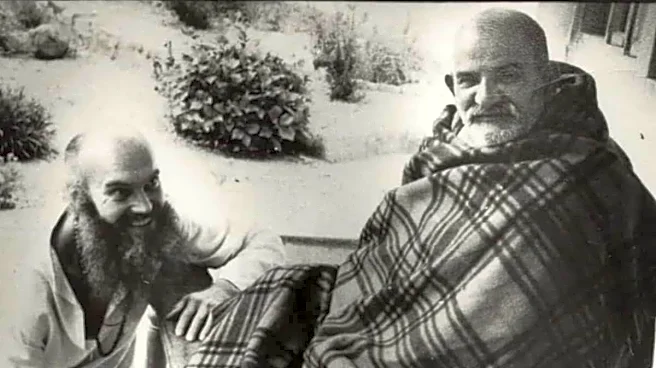
Dhirendra’s relationship with Neem Karoli Baba predates the film by well over a decade. He recalls first becoming curious about Babaji around 2010 after watching a video featuring Ram Dass.
A story narrated by Ram Dass prompted him to read further. He subsequently encountered accounts involving Steve Jobs, Julia Roberts and others, watched interviews and continued learning about Babaji and his teachings.
That connection deepened during the Covid pandemic, when Dhirendra saw friends and people around him going through difficult circumstances. His desire to visit Kainchi Dham grew stronger, although the journey continued to elude him.
“People often say that you cannot simply decide to go there. There has to be a ‘calling.’ Babaji has to call you,” he says.
“And perhaps Babaji finally called me last year. And when he did, it almost felt as though he was saying, ‘Come now, son. Your life is about to change.’”
That spiritual connection also entered his composing process. Dhirendra says he spent nearly two months trying to discover a particular theme for the film, but remained dissatisfied with everything he created.
Eventually, he stopped forcing the composition.
“I completely surrendered myself. I thought, ‘Now Babaji will have to show me the way.’”
According to him, a melody arrived that very day.
“And on that very day, at that very moment, a melody came to me. That melody eventually became the sound of Hanuman Ansh. In fact, the film itself opens with that theme.”
The experience altered how Dhirendra viewed composition. While craft and training remain integral to making music, he says Hanuman Ansh reinforced his belief that certain ideas seem to arrive without an obvious explanation.
How Dhirendra Built The Sonic World Of Hanuman Ansh
Scoring a film about Neem Karoli Baba also came with a responsibility that Dhirendra did not want to treat like an ordinary assignment. Given the devotion Babaji commands in India and abroad, he felt the research and musical choices had to be approached carefully.
“If I normally give a project 100 per cent of myself, I would have to give this one 150 or even 200 per cent,” he says.
The search extended to dialect, voices and instrumentation. Dhirendra wanted the score to remain connected to the region and its soil rather than creating a generic spiritual soundtrack.
He compares his method to a painter choosing colours before beginning a canvas. For music, he calls this his “sonic palette”, a defined group of sounds and instruments from which the larger score can grow.
Temple bells and singing bowls became important references because of their metallic resonance and association with spiritual spaces. That eventually led him to the pan drum, or hang drum.
“You can play Indian melodies on it, but at the same time, it isn’t technically an Indian instrument. So, for me, it became a kind of bridge instrument,” he explains.
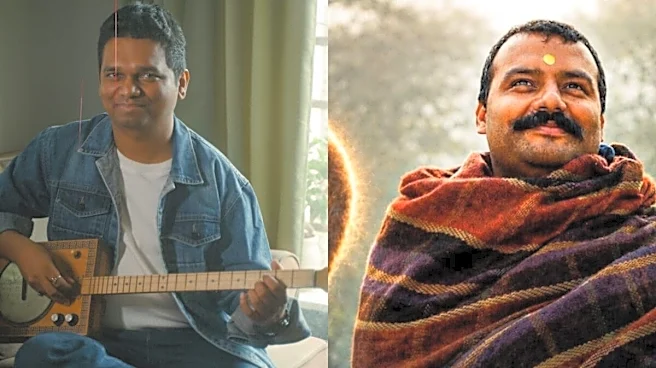
Another sound came from an instrument he created specifically for the project. Dhirendra designed a cigar-box guitar and had it constructed by his luthier. Instead of a conventional sound box, they experimented with the lid of a paint container to create an unusual metallic resonance.
The intention was to give Hanuman Ansh sounds that belonged specifically to its musical vocabulary rather than relying entirely on familiar instrumentation.
90 To 95 Per Cent Of Hanuman Ansh’s Music Was Recorded At His Home
That experimentation had to happen within the film’s financial limitations. Dhirendra says Hanuman Ansh did not have the luxury of unlimited studio hours, but he did not want musicians rushing through recordings simply because every additional hour was adding to the cost.
His solution was drastic but practical: he turned his home into a recording studio.
“Eventually, around 90 to 95 per cent of the recordings were done at my house itself,” he reveals.
“The main objective was very simple: irrespective of what the budget was, we would not compromise on the sound of the film.”
He also approached musician friends, asking them to contribute to the project despite the limitations. Many agreed.
“So, this film was really made through everyone’s collective effort. And whatever you are hearing when you watch the film in a theatre today is the result of all of that.”
Siyavar Ramchandra Ki Jai Was Never Supposed To Be A Song
One of Dhirendra’s most interesting musical discoveries on Hanuman Ansh happened almost accidentally.
Siyavar Ramchandra Ki Jai was not initially written as a song situation. It emerged while Dhirendra was scoring a scene involving Neem Karoli Baba and the revolutionary Dr Bhosale.
In the sequence, Babaji asks Dr Bhosale to continue his work for the country and gives him a blanket to help disguise himself from the British police. Dhirendra needed the music to carry patriotism without losing the spiritual character of the moment.
“It needed an uplifting, almost anthemic quality,” he says.
He initially created a piece that Vishal liked, but the director wanted to push it further. Dhirendra tried “10 or 12 approaches” without finding the precise emotion he wanted.
Then he stopped watching the scene.
Instead of composing according to the visuals, he concentrated solely on what the sequence was trying to communicate. He built a rhythm around dhol-tasha and other Indian percussion instruments.
“And once that rhythm came together, the words and melody almost started arriving automatically. ‘Sita Ram, Sita Ram…’ Then came the refrain around ‘Siyavar Ramchandra Ki Jai.’”
Once the music was placed against the sequence, Dhirendra felt it finally worked. He sent the piece to Vishal and waited. For almost two days, he heard nothing.
When he eventually visited Vishal’s office, the reaction became clear.
“I saw everyone in the office enjoying and grooving to the song,” he recalls.
The team had even experimented with placing the music over the trailer. What had begun as a short piece of background score was subsequently expanded into a complete song.
A Sattvic Environment Behind The Film’s Music
The spiritual atmosphere surrounding Hanuman Ansh was not restricted to what appeared on screen. Dhirendra says the film’s post-production operated in a noticeably sattvic environment.
Already a vegetarian, he did not need to dramatically change his diet, although he consciously avoided certain things from his regular routine. For around 15 days, he also followed a proper sattvic diet to experience the discipline associated with it.
His morning and evening prayers were already part of his everyday life, as was the temple in his home.
“Both Vishal sir and I were already spiritually connected to Babaji and to the emotion with which we were making this film. So, mentally, we didn’t really need to reset ourselves too much or suddenly enter a completely different headspace,” he says.
For Dhirendra, the larger challenge was translating that personal spiritual connection into music that could communicate with someone who knew little about Neem Karoli Baba.
“Vishal ji was trying to communicate those feelings through the film, and my responsibility was to take his vision forward through the music.”
“Even an ordinary viewer who may not necessarily know everything about Babaji should still be able to watch the film and feel those emotions.”
After years of waiting for his first independent feature-film score, Dhirendra ultimately found it in a film about the spiritual figure he had followed since around 2010. From finally reaching Kainchi Dham to finding Hanuman Ansh’s principal melody only after months of struggle, the composer views the project through a deeply personal prism.
“Whatever we were feeling,” he says, “we wanted those emotions to emerge naturally through our respective art forms.”