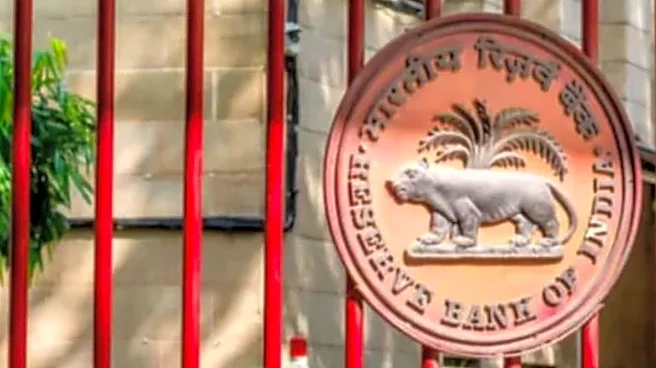




As the Reserve Bank of India’s Monetary Policy Committee (MPC) prepares for its first policy meeting of FY2026–27, home loan borrowers are closely tracking interest rate cues.
The six-member MPC will begin its review on Monday, April 6, with the policy decision scheduled for Wednesday, April 8.
Why home loan rates matter now
Repo rate decisions have a direct bearing on lending rates offered by banks. When the RBI cuts the repo rate, lenders typically lower interest rates on new and existing home loans, which can reduce EMIs for borrowers. Conversely, a pause or hike in rates can keep borrowing costs elevated.
How repo rate impacts home loan borrowers
The repo rate is the rate at which the RBI lends to commercial banks, making it a key benchmark for the cost of funds in the banking system. Most home loans today are linked
to external benchmarks such as the repo rate, ensuring faster transmission of policy changes. When the repo rate is reduced, banks can pass on the benefit by lowering lending rates, leading to either reduced EMIs or shorter loan tenures for borrowers. On the other hand, if rates rise or remain unchanged, EMIs may stay high, impacting household budgets and overall affordability.
What experts are saying
Experts expect the RBI to maintain status quo in April amid inflationary pressures and global uncertainty, according to Press Trust of India.
Aditi Nayar, Chief Economist, ICRA: “Given the uncertainty around crude oil prices and geopolitical developments, the RBI is likely to remain on pause in the April policy and closely monitor incoming inflation data before taking any further action.”
Soumya Kanti Ghosh, Chief Economist, SBI: “India is feeling the impact of the current crisis. The rupee is hovering above 93 per dollar, and crude oil remains above USD 100 per barrel, pushing imported inflation across states.”
Madan Sabnavis, Chief Economist, Bank of Baroda: “We do not expect any change in repo rate or stance this time. The tone will be cautious, with focus on RBI’s GDP and inflation forecasts.”
Since February 2025, the RBI has cut the repo rate by 1.25%, although it held rates steady in its August 2025, October 2025, and February 2026 reviews. With global volatility persisting, the MPC is expected to tread carefully in its April meeting.
Home loan borrowers should keep a close watch on the RBI’s announcements, as any change—or even a pause—in the repo rate will directly influence EMIs and borrowing costs in the months ahead.
The RBI conducts six bi-monthly policy meetings each financial year, where it assesses interest rates, liquidity conditions, inflation outlook, and broader macroeconomic trends.






/images/ppid_59c68470-image-177571255830784791.webp)

/images/ppid_59c68470-image-17757125297333920.webp)
/images/ppid_59c68470-image-177571259786934853.webp)
/images/ppid_59c68470-image-177571256458098388.webp)
/images/ppid_59c68470-image-177571258591165075.webp)