
/images/ppid_59c68470-image-177107752663443042.webp)


The Union Budget 2026-27 marks a decisive inflexion point in India’s human capital strategy, signalling a shift from expansion-led growth to capability-led development. Across education, healthcare, and skilling, the budget reflects a clear recognition that India’s next phase of economic competitiveness will be shaped not merely by infrastructure or consumption, but by how effectively it trains, deploys, and continuously upskills its people. Artificial intelligence sits at the centre of this recalibration, positioned not as a standalone sector but as an enabling layer across systems.
As articulated by Union Minister for Education Dharmendra Pradhan, the budget places education at the core of employment creation and long-term economic resilience.
The Ministry of Education’s allocation has risen to Rs 1,39,289.48 crore, an increase of 8.27 per cent over the previous year, at a time when many global economies are compressing public spending on education. This scale of commitment signals a strategic belief that human capital is India’s most durable national asset and a primary driver of sustained growth.
The education vision of Budget 2026-27 is anchored in the three Kartavyas outlined by the finance minister: accelerating growth, building capacities, and ensuring inclusive access. This is reflected most clearly in the Department of School Education and Literacy receiving its highest-ever allocation of Rs 83,562 crore. Flagship programmes such as Samagra Shiksha and PM POSHAN have been strengthened substantially, reinforcing foundational learning while modernising pedagogy and infrastructure. These investments indicate a shift from enrolment-driven metrics to learning outcomes and future readiness.
At the higher education level, allocations have risen to Rs 55,727.22 crore, marking an 11.28 per cent increase. Central universities, IITs, NITs, IIMs, and deemed universities have all seen sustained increases, accompanied by targeted schemes such as the Rs 2,200 crore PM One Nation One Subscription initiative, which democratises access to global research and academic resources. This is a critical intervention in a knowledge economy where access to high-quality research increasingly defines institutional relevance.
A defining feature of Budget 2026-27 is its explicit acknowledgement of artificial intelligence as a structural force reshaping education, employment, and productivity. The proposed Education to Employment and Enterprise Standing Committee has been tasked with examining how emerging technologies, including AI, are redefining skills and job roles. With over 65 per cent of India’s population below the age of 35 and the services sector contributing more than half of GDP, embedding AI literacy and computational thinking from early stages of education is no longer optional. It is foundational.
This intent is reinforced through tangible allocations. New and expanded Centres of Excellence in Artificial Intelligence for Education, with cumulative funding of Rs 350 crore, alongside the introduction of the PM Research Chair scheme, signal a push to align academic research, industry application, and public systems. Teacher capacity building, particularly through the upgrading of SCERT institutions, addresses a critical implementation gap. Without empowered educators, technology-led reforms risk remaining aspirational.
The school ecosystem is further strengthened through experiential learning initiatives such as Atal Tinkering Labs and AVGC Content Creator Labs, aimed at equipping nearly two million learners with problem-solving, creative, and applied technology skills by 2030. This reflects an understanding that future employability will be shaped by adaptability and interdisciplinary competence rather than narrow technical silos.
The implications of this education transformation extend directly into healthcare and medical sciences. The Union Budget 2026-27 accords paramount importance to the health sector, with the Ministry of Health and Family Welfare allocation rising to Rs 1,06,530.42 crore, nearly a ten per cent increase over the previous year. This includes expanded support for medical education, digital health systems, research, and workforce capacity building. Healthcare, much like education, is being repositioned as productivity infrastructure rather than social expenditure.
As artificial intelligence increasingly informs diagnostics, clinical decision support, and predictive care, healthcare training models must evolve accordingly. Traditional didactic approaches are insufficient to prepare professionals for high-risk, technology-enabled clinical environments. Immersive simulation and virtual reality-based training allow repeatable, standardised, and risk-free exposure to complex clinical scenarios. When integrated with AI-driven assessment and feedback systems, such platforms can significantly reduce variability in competence and improve patient safety outcomes at scale.
While the budget does not explicitly earmark funding for immersive simulation in healthcare education, its broader emphasis on AI, skilling, and institutional capacity creates a strong enabling environment. Early exposure to AI in schools, advanced research in higher education, and faculty upskilling together form the pipeline required to mainstream advanced training technologies across healthcare institutions.
MSMEs will play a decisive role in translating this policy vision into execution. India’s innovation ecosystem, particularly in healthcare technology and education platforms, is driven largely by MSMEs that combine domain expertise with agility. Budgetary support for MSME growth, coupled with clearer frameworks for public-private collaboration, can accelerate deployment while building indigenous capability and employment.
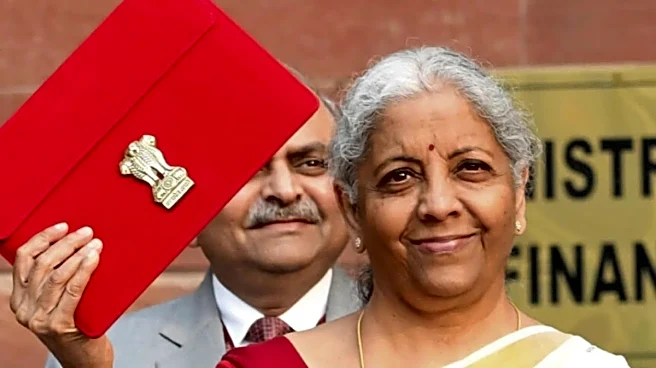
Budget 2026-27 should therefore be seen as more than a fiscal exercise. It represents a strategic rewiring of India’s education, skilling, and healthcare compact, aligning institutions, curricula, and technology with the demands of a rapidly evolving global economy. Under the leadership of Prime Minister Narendra Modi and Finance Minister Nirmala Sitharaman, the budget reflects confidence in India’s ability to compete not on cost alone, but on capability, quality, and scale.
As India advances towards the vision of Viksit Bharat 2047, the strength of its classrooms, laboratories, and training environments will determine its global standing. By backing intent with sustained investment and aligning policy with future skills, Budget 2026-27 sends a clear signal that India is preparing not just for the next growth cycle, but for long-term leadership in a knowledge-driven world.
Dr Anil Agrawal is former Member of Parliament, Rajya Sabha, and Chancellor, HRIT University. Sabarish Chandrasekaran is CEO and Co-founder, MediSim VR. Views expressed in the above piece are personal and solely those of the author. They do not necessarily reflect News18’s views.


/images/ppid_a911dc6a-image-177108123444667824.webp)

/images/ppid_a911dc6a-image-17710805760568758.webp)
/images/ppid_a911dc6a-image-177108053427333914.webp)
/images/ppid_a911dc6a-image-177108053803757699.webp)




/images/ppid_59c68470-image-177108005050622563.webp)

/images/ppid_59c68470-image-177108004800829223.webp)