

/images/ppid_a911dc6a-image-177004453711759994.webp)
/images/ppid_a911dc6a-image-17700130559368310.webp)
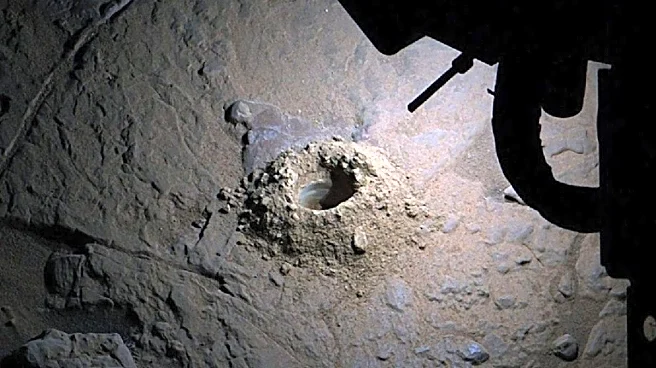
NASA’s Curiosity rover has captured a rare nighttime image of Mars, using small LED lights on its robotic arm to illuminate the dark surface of the Red Planet.
The unusual photograph was taken on December 6, 2025, during the 4,740th Martian day, or “sol,” of Curiosity’s mission and shared by NASA on its webpage and social media handles. Night images from Mars are extremely uncommon because rovers normally rely on sunlight to take pictures.
To create the image, Curiosity used lights attached to a camera called the Mars Hand Lens Imager, or MAHLI, located at the end of its robotic arm. These LEDs acted like tiny flashlights, brightening up a patch of ground so another camera, the Mastcam on the rover’s “head,” could photograph it.
Scientists usually
use MAHLI’s lights during the day to look into dark corners, such as the inside of drill holes or small openings on the rover. But using them at night is rare. Earlier in the mission, researchers tried nighttime imaging to study layers inside drilled rocks and better understand their composition.
The idea was revived after Curiosity drilled into a rock target nicknamed “Nevado Sajama” on November 13, 2025. Engineers noticed that the walls of the new drill hole were smoother than usual and might reveal hidden details if lit up in the darkness.
Mars at night 🔦
Our Curiosity rover shared a rare nighttime view of the Red Planet as scientists took a closer look at layers within a recently-drilled rock. Learn more about this photo: https://t.co/P6YhxoOXgt pic.twitter.com/OjO3saV86b
— NASA (@NASA) February 4, 2026
The hole was made in a region covered with unusual geological patterns known as “boxwork” formations. These crisscrossing ridges stretch for miles and look like giant spiderwebs when seen from orbit, making the area especially interesting to scientists.
Curiosity has been exploring Mars since 2012, slowly climbing Mount Sharp and studying the planet’s ancient environment. The rover was built by NASA’s Jet Propulsion Laboratory in California, which manages the mission for NASA. The two cameras used for the image — Mastcam and MAHLI — were developed and are operated by Malin Space Science Systems in San Diego.


/images/ppid_59c68470-image-177009757932145839.webp)


/images/ppid_59c68470-image-177013003704979125.webp)
/images/ppid_59c68470-image-177010003911157188.webp)
/images/ppid_59c68470-image-177009004042069954.webp)

/images/ppid_59c68470-image-177008507822819030.webp)