



Following allegations that the question paper for the NEET-UG 2026 entrance examination held on May 3 was leaked, the National Testing Agency (NTA), which conducted the test, has officially cancelled the examination.
Is this the first time? What are the issues? News18 explains
What happened this year?
Investigations by the Rajasthan Police Special Operations Group (SOG) revealed that a “guess paper” or practice bank containing roughly 410 questionswas circulated via WhatsApp and Telegram weeks before the exam. Out of the 410 questions in the circulated material, approximately 135 to 140 questions were found to be identical to those in the actual exam, mostly in the Biology and Chemistry sections. The matched questions accounted for nearly 600 out of 720 total marks.
The paper reportedly surfaced in Sikar, Rajasthan, nearly 42 hours before the exam. It was allegedly sold for prices ranging from ₹20,000 to ₹5 lakh per student. NTA had earlier referred the matter to central agencies on May 8 for independent verification and appropriate action. The Central Government has ordered a CBI probe into the matter to ensure a transparent investigation. At least 13 suspects have been detained so far, including individuals linked to coaching networks and career consultancies in Rajasthan and Uttarakhand.
In continuation of its press release dated 10 May 2026, the National Testing Agency wishes to inform candidates, parents, and members of the public of the following decisions taken in respect of NEET (UG) 2026. NTA had, on 8 May 2026, referred the matters then under consideration…
— National Testing Agency (@NTA_Exams) May 12, 2026
What does it mean for candidates?
A fresh date for the NEET UG 2026 re-exam will be announced by the Official NTA Website soon. Candidates do not need to register again or pay any additional fees; existing registration details will remain valid for the re-test.
The NTA has stated that the examination fees already paid will be refunded.
The history of errors
This marks a recurring crisis for India’s premier medical entrance test, following similar massive controversies in 2024 and 2017. Despite repeated promises of reform, the system has faced significant breaches:
2024: Mass Protests & Supreme Court Hearing
Allegations of an organised leak surfaced in Bihar, where the Economic Offences Unit (EOU) found evidence of question papers being sold for ₹30–50 lakh. The Supreme Court acknowledged a leak had occurred but ruled it was not “mass level” enough to warrant a total re-exam. However, it led to the withdrawal of grace marks for over 1,500 students.
2021: WhatsApp & Solver Gangs
In Jaipur, a candidate was caught receiving the paper via WhatsApp while sitting for the exam. The paper was allegedly photographed and sent to “solvers” in Sikar, who returned the answer key. Authorities arrested eight people, but the NTA denied it was a widespread leak, calling it an isolated cheating case.
2015: The AIPMT Cancellation
The Supreme Court ordered a complete re-examination of the AIPMT (the predecessor to NEET) after answer keys were leaked across 10 states. A gang in Haryana used micro-SIMs and Bluetooth devices stitched into students’ clothing to transmit answers during the test. This remains the most significant legal intervention, as the court ruled that even a few illegal entries “vitiate” the entire test’s sanctity.
2017: Allegations of different difficulty levels in vernacular papers led to claims of a compromised process in states like West Bengal and Tamil Nadu.
2014: The Combined Pre-Medical Test (CPMT) was cancelled after question paper boxes were found tampered with before the exam
NEET 2026 को लेकर सामने आ रही खबरें बेहद चिंताजनक हैं और लाखों छात्रों के साथ सीधा अन्याय है।
गरीब और मध्यमवर्गीय परिवार अपने बच्चों की पढ़ाई के लिए समय, पैसा और उम्मीद दांव पर लगा देते हैं — ऐसे में “पेपर लीक” ईमानदार छात्रों के भविष्य से खिलवाड़ करे तो यह सरकार की नाकामी और…— Sachin Pilot (@SachinPilot) May 11, 2026
The lessons that go unlearned
Critics and experts point to several systemic gaps that remain unaddressed year after year, according to reports.
Security Integrity and Paper Leaks: Recurring allegations of paper leaks — most recently involving the cancellation of NEET-UG 2026 following reports of a “guess paper” that allegedly matched 135–140 questions from the actual exam — highlight persistent vulnerabilities.
Inadequate Crisis Response: Critics point to a reflexive institutional response of first denying irregularities as “rumors” before escalating to central agencies like the CBI once public and judicial pressure becomes overwhelming.
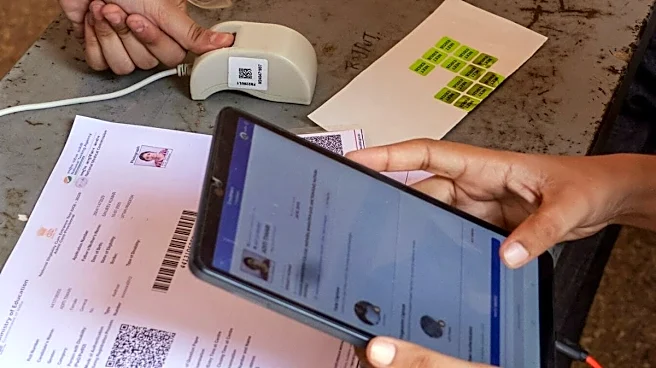
Technical and Administrative Glitches: Beyond leaks, the NTA has struggled with persistent biometric failures, power outages during exams, and incorrect paper distribution at centers.
Controversial Evaluation Practices: The 2024 controversy involved statistically improbable perfect scores and the disputed awarding of “grace marks” to 1,563 candidates, which the NTA was eventually forced to withdraw.
What are the consequences?
High-ranking judicial officials, including Supreme Court justices, have noted that even “0.001%” negligence in such high-stakes exams compromises the entire medical profession.
The current framework is often criticised for favoring wealthy students who can afford high-end coaching, while the recurring disruptions disproportionately harm vulnerable aspirants.
The ongoing pattern of disruptions has led the Union Education Minister to admit to an “institutional failure” of the NTA, resulting in the removal of its Director General and the formation of expert committees for reform.
Investigative agencies like the Rajasthan Special Operations Group (SOG) have highlighted the persistence of sophisticated, multi-state networks that profit from selling question papers. Even with measures like GPS-tracked vehicles, AI-assisted CCTV, and 5G jammers, leaks continue to occur via non-encrypted messaging apps like Telegram. While the Public Examinations (Prevention of Unfair Means) Act, 2024 was introduced to curb cheating, its effectiveness is already being questioned following the 2026 cancellation.
What is the impact on candidates?
The recurring cancellations have severe consequences for over 25 lakh medical aspirants.
Candidates face immense stress and “limbo” as they wait for re-examination dates. Widespread malpractice erodes trust in the meritocracy of India’s medical profession. Families invest significant resources in coaching, only to see the efforts jeopardized by administrative failures.
The government and National Testing Agency (NTA) are expected to notify new dates for the 2026 re-exam shortly.






/images/ppid_a911dc6a-image-177857163527949889.webp)