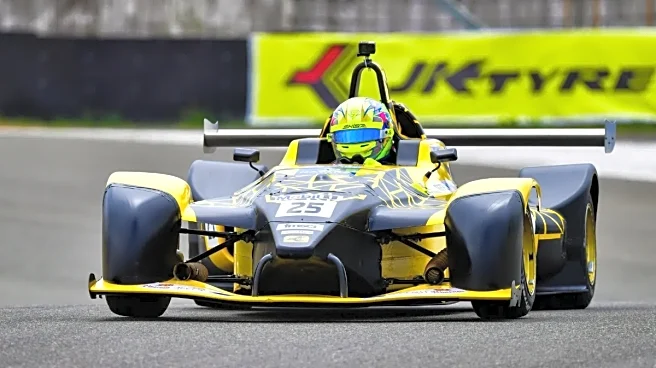



Anthony Hamilton, father of seven-time Formula 1 champion Lewis Hamilton, has revealed ambitious plans for a new global motorsport project designed to widen access and opportunity at the sport’s highest level.
The proposed HybridV10 series would feature two divisions — a flagship HybridV10 championship and a supporting HybridV8 category — with up to 24 teams and as many as 48 race seats. The target launch window is 2028 or 2029.
Central to the concept is cost control and competitive balance. All teams would start with the same technical foundation, hinting at a standardised chassis, while still allowing room for innovation without triggering an arms race. Manufacturers would also be invited to participate.
View this post on Instagram
Hamilton’s vision extends far beyond racing.
Plans include a central “HybridV10 Campus” housing a Centre of Excellence, shared engineering facilities, simulators, driver training tools, and education and apprenticeship pathways aimed at building careers in motorsport.
The series would introduce a draft system for drivers and team staff, overseen by its own Hybrid Super Licence framework. While entry standards remain high, drivers could earn eligibility not only through race results but also via simulator performance, technical knowledge, fitness and professionalism — opening doors for sim racers and non-traditional pathways.
Fan involvement, another cornerstone
A “This Isn’t Right” mechanism would allow supporters to raise concerns over fairness, safety or procedures during race festivals, which are planned as three-day events combining innovation showcases, HybridV8 racing and HybridV10 headline action.
A 12-round global calendar is proposed, spanning all major continents and targeting emerging motorsport markets.
“This is an early-stage build, being developed deliberately and properly,” Hamilton said. “I can build this alone, but I’d rather build it together with the fans and those who want to shape the future of a new motorsport platform.”
Development will continue through 2026, with testing pencilled in for 2027 as the project moves toward reality.


/images/ppid_a911dc6a-image-177101752951095973.webp)