




If 2025 was the year of blockbuster exhibitions, 2026 is shaping up to be the year of destination-defining museums and cultural landmarks. Across the globe, cities are investing in ambitious spaces that go beyond displaying art, they’re creating immersive experiences where architecture, performance, storytelling and heritage converge.
From a museum exploring the cultural impact of oil in Saudi Arabia to a Frank Gehry-designed performing arts institution in Abu Dhabi and George Lucas’ long-awaited museum in Los Angeles, these new openings reflect how culture is becoming central to tourism, urban development and creative economies.
Here are five of the most exciting museums and cultural institutions making headlines in 2026.
1. The Black Gold Museum, Riyadh, Saudi Arabia
One of the year’s most
thought-provoking openings, The Black Gold Museum in Riyadh explores the story of oil through the lens of art rather than industry.
Located within the King Abdullah Petroleum Studies and Research Centre (KAPSARC), the museum brings together more than 350 artworks by over 170 artists from 30 countries, inviting visitors to reflect on oil’s influence on civilisation, politics, economies and the environment.
Instead of presenting oil as merely an energy resource, the museum examines its cultural and social legacy through four immersive sections, Encounter, Dreams, Doubts and Visions. Combining contemporary installations with historical narratives, it encourages visitors to consider how one natural resource has shaped the modern world.
2. Dar al Funoon Abu Dhabi, United Arab Emirates
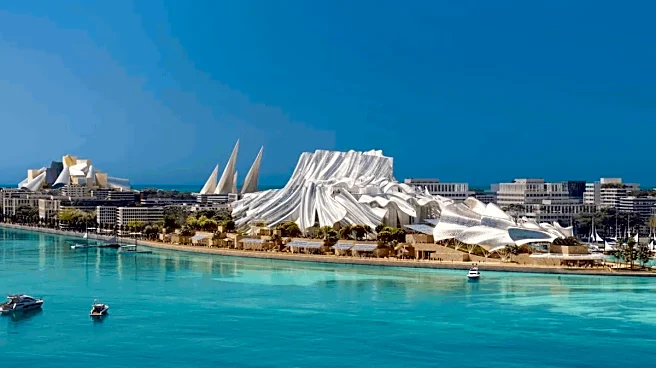
Abu Dhabi continues to cement its reputation as one of the world’s fastest-growing cultural capitals with the announcement of Dar al Funoon Abu Dhabi (House of the Arts).
Commissioned by the Department of Culture and Tourism, Abu Dhabi and designed by legendary architect Frank Gehry, the landmark institution is currently under construction on Saadiyat Island and is scheduled to open in 2030.
While technically a performing arts institution rather than a traditional museum, Dar al Funoon represents one of the region’s most ambitious cultural investments.
The venue will feature a 2,000-seat performance hall, a 3,500-seat open-air amphitheatre, a jazz venue and a studio theatre, hosting opera, ballet, theatre and live performances throughout the year.
Its flowing architectural design, inspired by billowing fabric, reflects movement and performance itself, while its transparent façade invites visitors into the creative process, reinforcing Abu Dhabi’s vision of making culture more accessible.
3. Lucas Museum of Narrative Art, Los Angeles, USA
After years of anticipation, the Lucas Museum of Narrative Art is finally set to welcome visitors in September 2026.
Founded by filmmaker George Lucas and philanthropist Mellody Hobson, the museum celebrates one of humanity’s oldest traditions, storytelling.
Unlike conventional art museums, its collection spans fine art, illustration, comic books, photography, cinema and digital media, showcasing how stories have been told across generations and cultures.
Visitors can expect works by legendary artists such as Frida Kahlo and Norman Rockwell, alongside film memorabilia, original comic illustrations and cinematic artefacts, all housed within a futuristic building designed by MAD Architects.
4. Centre Pompidou Hanwha, Seoul, South Korea
Paris’ iconic Centre Pompidou has officially expanded into Asia with the opening of Centre Pompidou Hanwha in Seoul.
The museum introduces one of Europe’s most influential modern art collections to Korean audiences while creating opportunities for cross-cultural artistic collaborations.
Its inaugural exhibition, The Cubists: Inventing Modern Vision, explores the revolutionary movement that transformed twentieth-century art, featuring celebrated works from the Centre Pompidou’s renowned collection.
Beyond exhibitions, the museum aims to become a vibrant hub for education, research and contemporary artistic dialogue in East Asia.
5. V&A East Museum, London, United Kingdom
London’s newest cultural destination, V&A East, offers a fresh interpretation of what a museum can be.
Situated in Stratford’s Queen Elizabeth Olympic Park, the museum focuses on the stories behind everyday creativity, from fashion and music to design, photography and youth culture.
Its opening exhibitions celebrate Black British music, while future programming promises to explore identity, migration, technology and contemporary design through an inclusive and community-driven lens.
Unlike traditional museums centred on historical collections, V&A East embraces living culture, making it especially relevant for younger audiences.
The Future of Museums Is About Experience
The newest generation of museums isn’t simply adding more galleries, it is redefining what cultural institutions can be.
Today’s museums combine architecture, technology, storytelling, performance and community engagement to create spaces that inspire conversation rather than passive observation. They’re places where visitors can experience culture rather than simply view it.
Whether it’s Riyadh exploring the legacy of oil through contemporary art, Abu Dhabi investing in world-class performing arts, Los Angeles celebrating visual storytelling, Seoul bringing French modernism to Asia or London reimagining cultural identity, one thing is clear: 2026 is proving that the future of museums is more immersive, inclusive and globally connected than ever before.



/images/ppid_59c68470-image-178300505011353518.webp)