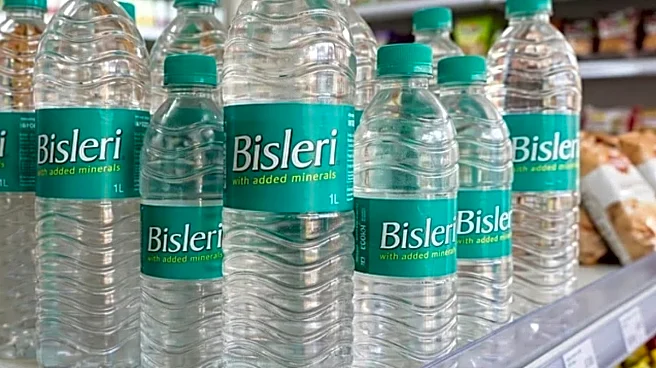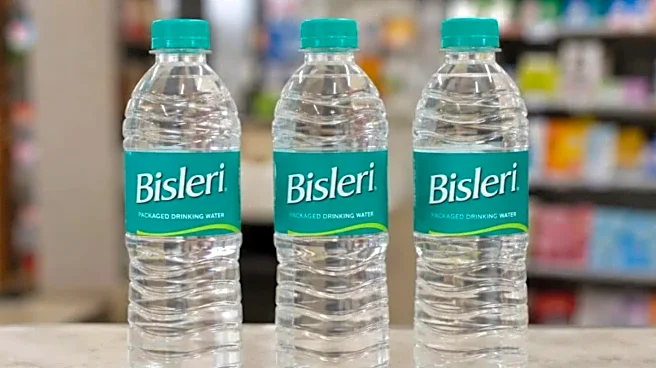



After India’s food safety regulator found a sample of Bisleri International’s packaged drinking water unsafe, Food Safety and Standards Authority of India (FSSAI) plans to test products of all packaged drinking water companies across the country, in a move that could bring the entire bottled water industry under closer scrutiny.
FSSAI said on Sunday that a sample collected from Bisleri’s premises failed to meet prescribed safety standards. The regulator initially flagged bromate, a chemical that can form as a by-product of certain water disinfection processes, before a referral laboratory also declared the sample unsafe after detecting polynuclear aromatic hydrocarbons (PAHs).
Reuters reported citing a government source that the FSSAI plans to
test more Bisleri samples from across the country, as well as products from other packaged drinking water companies. A second source told the outlet that the batches linked to the unsafe sample had been recalled and that subsequent testing of products had not found any issues with water quality.
What Did FSSAI Find In Bisleri Water Sample?
According to the regulator, the sample was initially found to be non-compliant with prescribed bromate limits. After Bisleri challenged the finding, the sample was sent to a referral food laboratory, which also declared it unsafe, this time after detecting PAHs.
PAHs are a group of chemical compounds that can be produced during the incomplete burning of organic material. Some are associated with serious health risks because of their toxic, mutagenic and carcinogenic properties, according to research published in the National Library of Medicine.
Bromate can form during water treatment, particularly when ozone is used for disinfection in the presence of bromide. Exposure to elevated levels over time has been associated with health concerns, including potential kidney damage and cancer risks.
What Bisleri Said?
Bisleri said the sample was collected from its Goa facility last year and that it had arranged independent testing after the initial findings. The company said the sample recorded bromate levels of 12 micrograms per litre, against the prescribed limit of 10 micrograms per litre. It maintained that further independent testing arranged by the company found the chemical within prescribed limits.
“Drinking water safety is a priority for Bisleri. We maintain stringent quality controls,” the company said, adding that it would cooperate with regulators.
Bisleri, introduced in India in 1965, is among the country’s most recognisable packaged drinking water brands. It competes with PepsiCo’s Aquafina and Coca-Cola’s Kinley in a market valued at $3.6 billion in 2025, according to Persistence Market Research.