



Transport between India and Bhutan has evolved from mountain trails to modern connectivity. Before roads began to develop around 1961, travellers and traders relied mainly on walking, horses and mules. Road transport subsequently became the principal link, carrying passengers and goods by buses, cars and trucks. Established in 1961, India’s Project DANTAK continues to build and improve roads and bridges in Bhutan, while border checkpoints facilitate cross-border movement.
Air connectivity began with Drukair’s Paro–Kolkata service in 1983 and now links Paro with several Indian cities. Railway connections between Kokrajhar and Gelephu, and Banarhat and Samtse, agreed upon in September 2025, remain under implementation. Bhutan also accesses overseas
markets through Indian transit routes, supported by agreements dating back to 1972. Developing inland waterways offers another opportunity to reduce bulk transport costs and strengthen cooperation between the two neighbours. Inland waterways have the potential to transform Northeast India into a major centre of regional connectivity.
Transforming Geographical Challenges into Economic Opportunities
Bhutan’s landlocked geography has historically shaped its trade and transportation options. The country depends heavily on road connectivity through India to access international markets. Although existing routes support bilateral commerce, reliance on road transport can increase logistics costs and create vulnerabilities during disruptions caused by difficult terrain, adverse weather and infrastructure limitations.
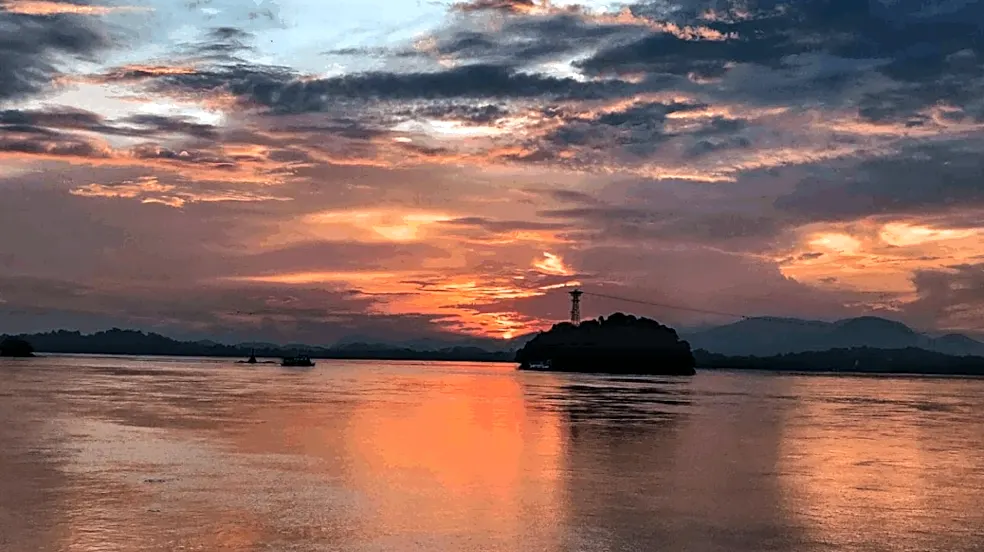
The proposed use of India’s National Waterway-2 along the Brahmaputra offers an opportunity to diversify these transportation options. By connecting Bhutanese cargo with inland waterway infrastructure in Assam, both countries could develop a more flexible logistics network that combines road, river and potentially rail transport. Such integration would not eliminate Bhutan’s dependence on overland connections, but it could reduce pressure on existing road corridors and improve the efficiency of selected cargo movements.
For Bhutan, this development could support the export of agricultural products, manufactured goods and other commodities. For India, it could generate additional commercial activity in Assam while strengthening economic cooperation with an important Himalayan neighbour.
Jogighopa: An Emerging Gateway for Bhutanese Trade
The Jogighopa inland waterway terminal in Assam has emerged as a central element of the proposed connectivity framework. Its location along the Brahmaputra offers an opportunity to link regional transportation networks with India’s wider inland waterway system.
During the bilateral discussions, Sonowal highlighted the strategic importance of National Waterway-2 and Jogighopa as potential gateways connecting Bhutanese trade with international markets. The development of multimodal logistics infrastructure around Jogighopa could allow goods transported from Bhutan by road to be transferred to river vessels for onward movement.
This would give exporters and importers additional transportation options while encouraging investment in warehousing, cargo handling and logistics services. The economic benefits could extend beyond transportation. Improved connectivity may stimulate local businesses, generate employment and attract private investment in Assam’s logistics and industrial sectors.
However, the success of this initiative will depend on reliable cargo volumes, efficient terminal operations, competitive transportation costs and coordination between the two governments.
Manas and Sankosh Rivers: Expanding Cross-Border Connectivity
Another important aspect of the discussions was the potential role of the Manas and Sankosh rivers in strengthening connectivity between Bhutan and India’s national waterways. These river systems are geographically significant because they connect the Himalayan foothills with the broader Brahmaputra basin.
Exploring their integration into inland transportation networks could open up additional possibilities for cross-border cargo movement. Nevertheless, their commercial potential requires careful technical assessment. Seasonal variations in water levels, river depth and sedimentation, as well as environmental sensitivities, could influence whether regular navigation is practical.
Any future development must therefore balance economic objectives with ecological protection and the interests of communities dependent on these rivers. A sustainable approach would ensure that transportation infrastructure supports economic development without undermining the environmental stability of Himalayan river systems.
Strengthening Regional Trade and Strategic Cooperation
The proposed waterway partnership also carries wider regional significance. Stronger connectivity between Bhutan and Assam could encourage trade diversification and improve access to markets through India’s established transportation infrastructure. The Brahmaputra corridor could become an important component of a more integrated regional logistics system, connecting production centres, border trade points and inland transportation facilities.
For Bhutan, access to additional transportation routes could strengthen economic resilience by reducing reliance on a limited number of freight corridors. For Assam, increased cross-border cargo movement could reinforce its role as a commercial hub and support the growth of logistics-related industries.
The initiative also demonstrates how infrastructure cooperation can deepen bilateral relations through practical economic benefits, rather than remaining limited to diplomatic commitments.
Building Skills for Long-Term Cooperation
Beyond physical infrastructure, the ministers discussed opportunities for Bhutanese youth to receive maritime and inland waterway training at the developing Centre of Excellence in Dibrugarh. This is particularly important because modern transportation networks require trained personnel capable of managing vessels, cargo operations, navigation systems and logistics infrastructure.
Skill development could help Bhutan build technical expertise while creating professional opportunities for young people in emerging transportation sectors. By combining infrastructure investment with human resource development, both countries can establish a stronger foundation for long-term cooperation.
Turning Connectivity Ambitions into Reality
The India-Bhutan discussions on Brahmaputra waterways represent a promising step towards a more connected and economically integrated Himalayan region. The proposed use of National Waterway-2, the Jogighopa terminal and potential connections involving the Manas and Sankosh rivers could expand trade opportunities while strengthening Assam’s role in regional commerce.
However, the initiative remains at an exploratory stage. Its success will depend on feasibility studies, infrastructure readiness, environmental safeguards and sustained bilateral coordination.
The real significance of this partnership lies in its potential to turn geographical constraints into shared economic opportunities. With careful planning and effective implementation, the Brahmaputra could evolve into an important commercial corridor, improving Bhutan’s access to wider markets, promoting Assam’s economic development and strengthening the long-standing partnership between the two countries.
The writer is an author and columnist. He is a writing fellow with the Middle East Forum, Washington. His X handle is @ArunAnandLive. The views expressed are personal and solely those of the author and do not necessarily reflect News18’s views.