


For some designers, couture week is a language of maximalism that they’ve honed over editions. For Arpita Mehta, however, her debut marks a decade of building that vocabulary one occasion-wear collection at a time. The vibrant colour, intricate craft, modern femininity she champions finally found a place at Hyundai India Couture Week 2026, in association with Nexxus New York, where the whole story was held with precision. The collection is called CEREMONIAL, and it marks her couture debut. She spoke to us about the collection and what it took for her to get it perfect on a rainy evening in the Capital.
Why Now
Why now, after years of running a successful business without a couture debut? “India Couture Week felt like the natural next chapter for us,”
Mehta told News18. “With CEREMONIAL, I felt we had a story that deserved to be experienced in its entirety rather than through individual pieces.” A runway, she explains, does something a standalone collection can’t: “It allows you to create an immersive world where every look builds the next, and the collection unfolds as one complete narrative.”
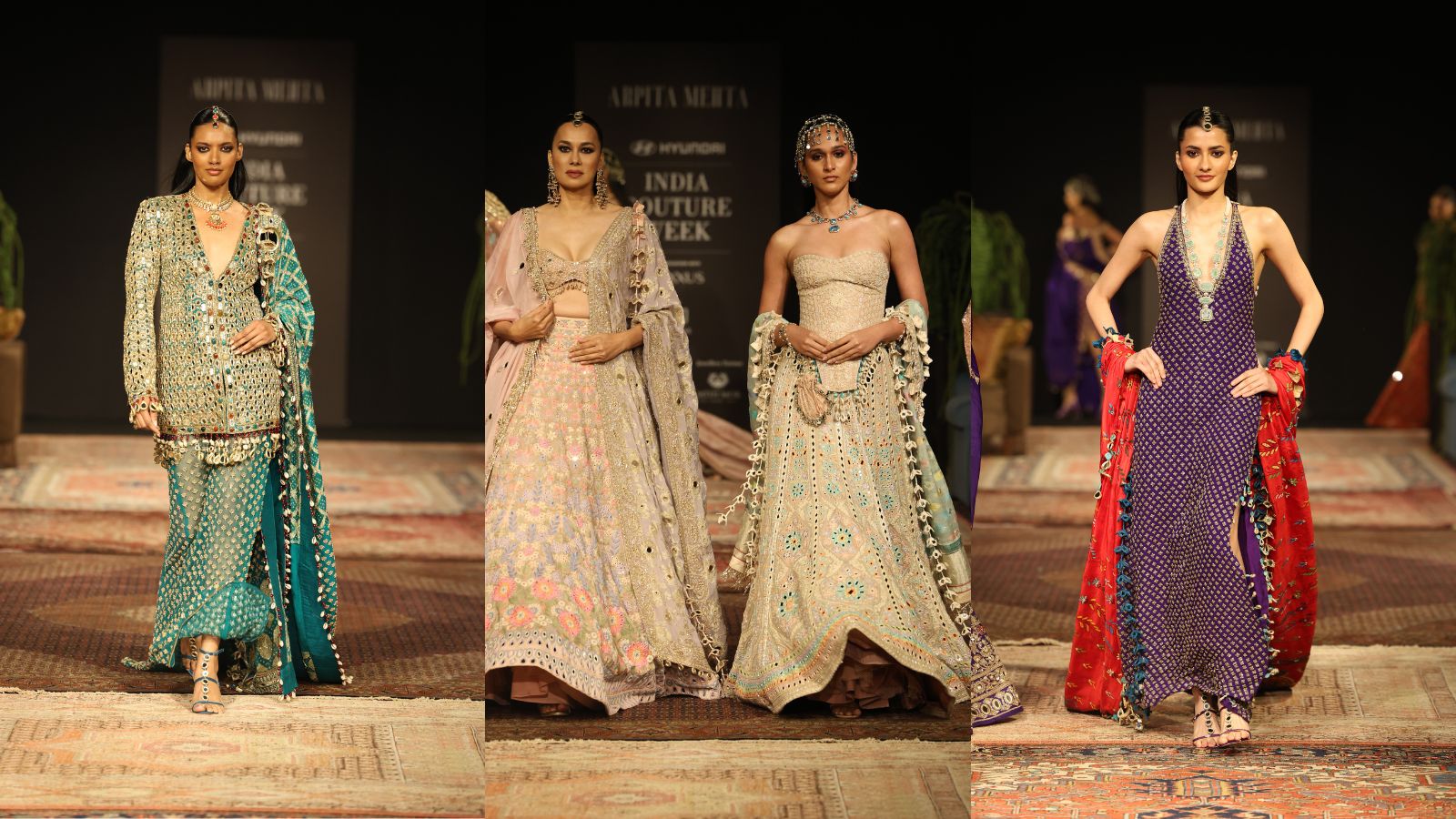
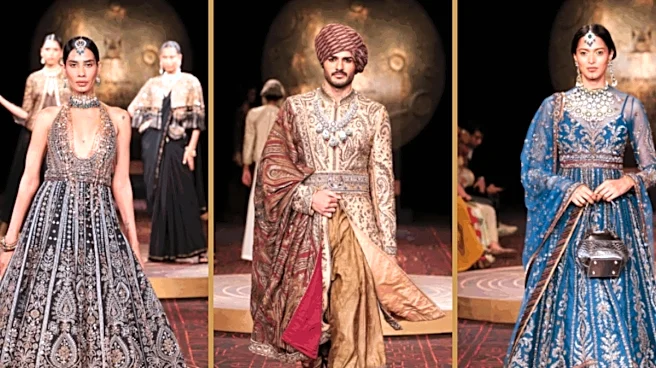
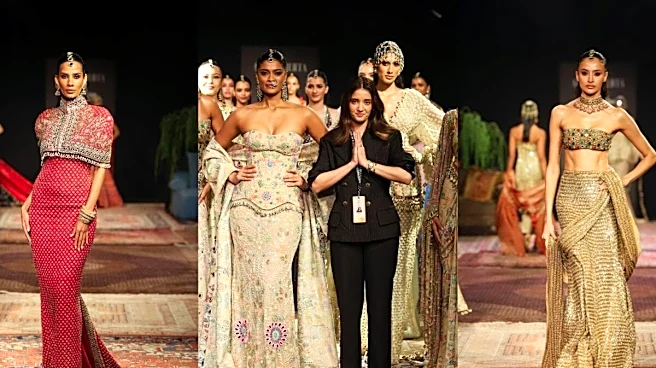
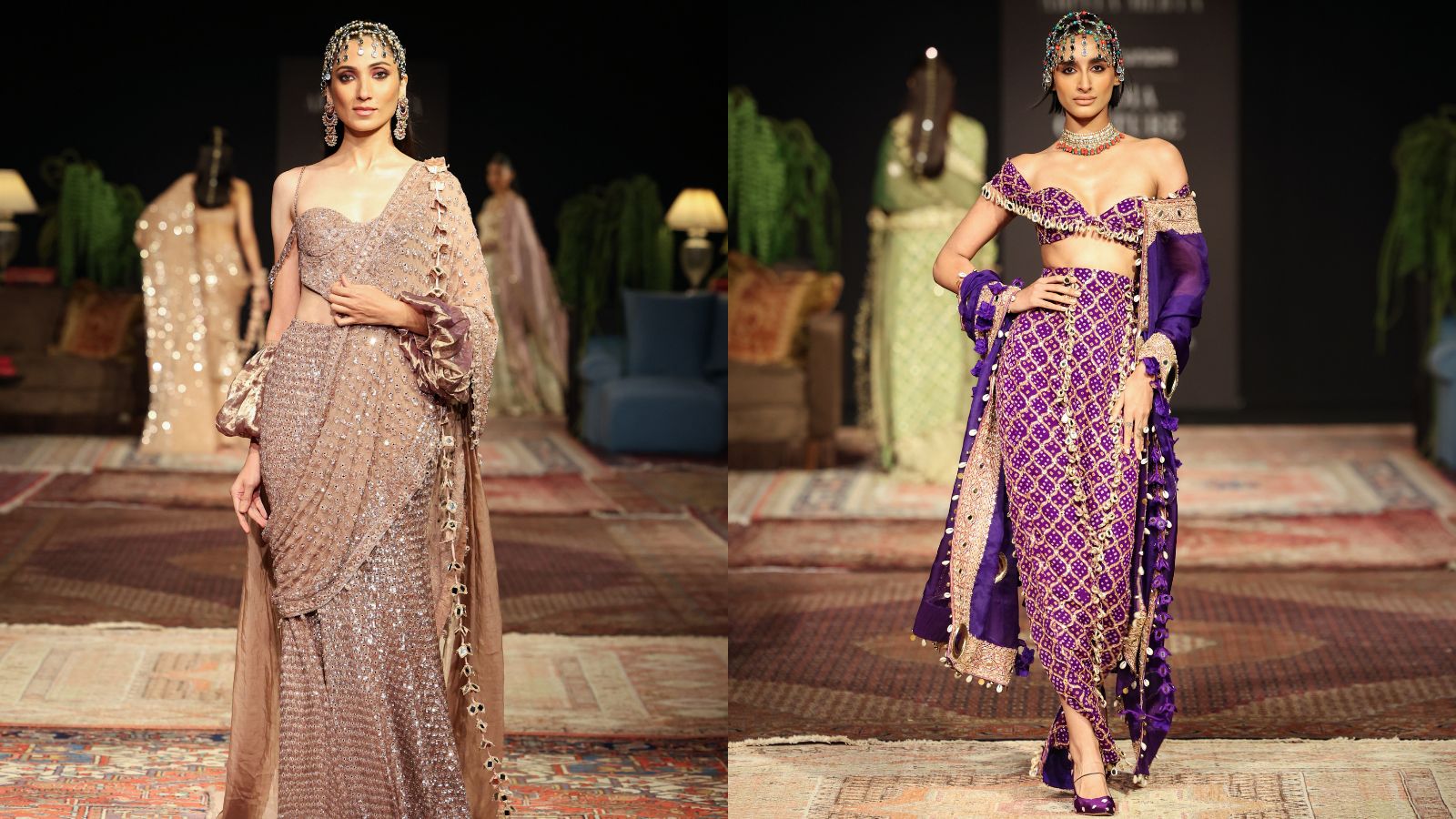
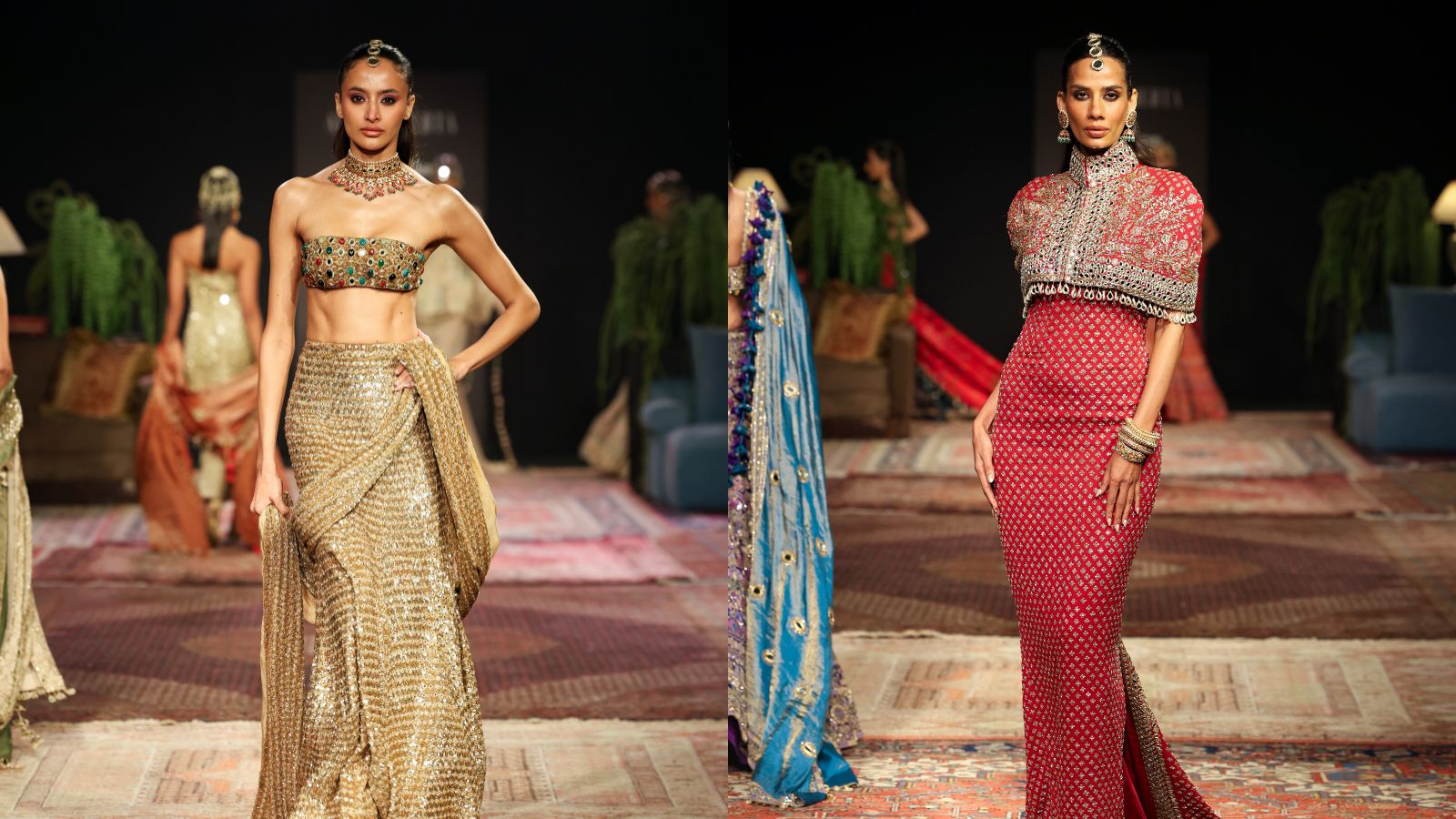
That narrative pulled from some of India’s most recognisable textile traditions, Bandhani, Banarasi and tissue, alongside Kantha, appearing in Mehta’s couture vocabulary for the first time. On the runway, this translated into sculpted lehengas, fluid saris and corseted blouses (which is certainly the flavour of the season). A deep purple bandhani lehenga with a mirrored, shell-fringed dupatta and an off-shoulder bustier, worn under a jewelled maang tikka. A few looks later, a fully sequinned gold sari-gown, bandeau blouse and all. There was also a red mirror-worked gown, styled with a matching cape-like jacket.
Getting the crafts right meant resisting the urge to modernise them for its own sake. “The goal is never to make a craft look contemporary for the sake of it, but to first understand what makes it so special and then allow it to evolve in a way that feels relevant today,” Mehta said. Kantha, in particular, got a gentle hand. “Kantha is a craft that feels incredibly human because every stitch carries time, care, and the hand of the artisan behind it. There’s a quietness to it that I found really beautiful,” she added, noting that instead of reinventing it, “we approached it with sensitivity, allowing its inherent character to sit naturally alongside our own design language instead of trying to transform it into something it isn’t.”
Where The Line Sits
Ask her where reinterpretation tips into appropriation, and Mehta has a clear answer: “Reinterpretation only becomes problematic when a craft is disconnected from its origins or reduced to a purely decorative element. As long as we continue to honour its history, its technique and, most importantly, the artisans behind it, evolution doesn’t diminish cultural memory, it allows it to be carried forward in a meaningful way.”
The collection’s silhouettes reflect a shift Mehta has watched happen in real time. “Today’s bride isn’t looking for one version of herself on her wedding day, she’s celebrating across multiple occasions, each with its own mood and expression,” she told us. “She wants pieces that feel timeless yet personal, and she values comfort just as much as craftsmanship.” That’s pushed her toward lighter constructions and more fluid silhouettes, without giving up the richness couture is meant to carry. “It’s less about choosing between maximalism and restraint, and more about finding the right balance between the two.”
Inside The Show
That balance played out beautifully off the runway too. The set, conceived by creative show director Pranav Goswamy, reimagined the space as a members-only lounge from the 1970s and ’80s, all Indo-European furniture, brass accents, suede and velvet, with rugs from Jaipur Rugs anchoring the room in earthy sage, rust and ochre. Actor and entrepreneur Anshula Kapoor was among the guests seated on those very rugs, there with her husband to watch the collection unfold in what could be described as someone’s living room.
Maximalism vs. Restraint
On whether Indian couture is quietly leaving maximalism behind, Mehta isn’t convinced it’s an either-or. “Indian celebrations have always embraced grandeur, and I don’t see that changing,” she said. “There will always be a place for rich embellishment and maximalism, but there’s also a growing appreciation for refined craftsmanship, beautiful textiles and thoughtful construction.” For her, that’s the real shift, not one aesthetic replacing another, but choice becoming the point. “The modern woman wants the freedom to express herself in a way that feels authentic to her, and I think that’s what defines the new era of Indian couture.”
That same instinct shaped which crafts made it into CEREMONIAL at all. “It has to feel authentic to the story we’re trying to tell,” Mehta told us. “I don’t think a craft should be included because it’s having a moment, it should have a genuine connection to the collection and to the brand’s design language.” With Bandhani, Banarasi and Kantha each earning their place on that logic, CEREMONIAL was the perfect debut Mehta, and her loyal fans, could hope for.