
/images/ppid_a911dc6a-image-177103508492594205.webp)

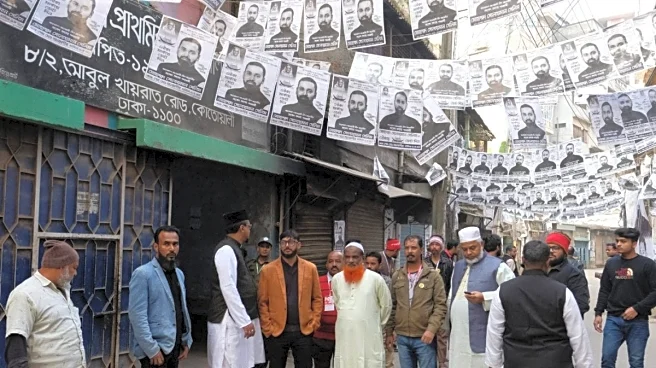
Ahead of the Bangladesh elections, Jamaat-e-Islami has made a reference to India in its election manifesto, outlining its foreign policy approach towards neighbouring countries. The party said it is committed to maintaining “constructive and cooperative relations” with India, stressing that such ties would be rooted in mutual respect and fairness.
Jamaat-e-Islami also pledged peaceful relations with other neighbours, including Bhutan, Nepal, Myanmar, Sri Lanka, the Maldives and Thailand.
Bangladesh is heading into its first national election since the ouster of former prime minister Sheikh Hasina, with polls scheduled for February 12. The election follows months of political upheaval after Hasina was removed from office in August 2024, following
a violent crackdown on protesters, and later fled to India.
Her former party, the Awami League, once the country’s dominant political force, has since been banned, leaving a significant section of the electorate without its traditional political platform.
The absence of the Awami League has created uncertainty in several regions, including Gopalganj, a longtime stronghold of Hasina and her family. Hasina had secured repeated landslide victories from the constituency since 1991, and her father, Bangladesh’s founding president Sheikh Mujibur Rahman, hailed from the district. With the party outlawed and its election symbol removed from the ballot, voters are now facing an unfamiliar political landscape.
This will be the first election in decades in which Awami League candidates are not contesting. Hasina was sentenced to death in absentia by a Dhaka court in November for crimes against humanity, and authorities have since filed thousands of cases against her supporters following clashes during earlier phases of campaigning. Human rights groups have criticised the ban on the Awami League, while analysts warn of possible low voter turnout in former party bastions.
With the Awami League sidelined, the main contenders in the election are candidates from the Bangladesh Nationalist Party (BNP) and Jamaat-e-Islami, both longtime rivals of Hasina. The shifting political equations have reshaped the contest, as voters navigate an election without the party that dominated Bangladesh’s politics for over three decades.
/images/ppid_59c68470-image-177104254494215325.webp)

/images/ppid_a911dc6a-image-177104210287325129.webp)

/images/ppid_a911dc6a-image-177104202793221357.webp)
/images/ppid_a911dc6a-image-177104206710214315.webp)
/images/ppid_a911dc6a-image-177104202907093694.webp)
/images/ppid_59c68470-image-177104014803952296.webp)
/images/ppid_59c68470-image-177104006389961167.webp)
/images/ppid_a911dc6a-image-177103853218557950.webp)