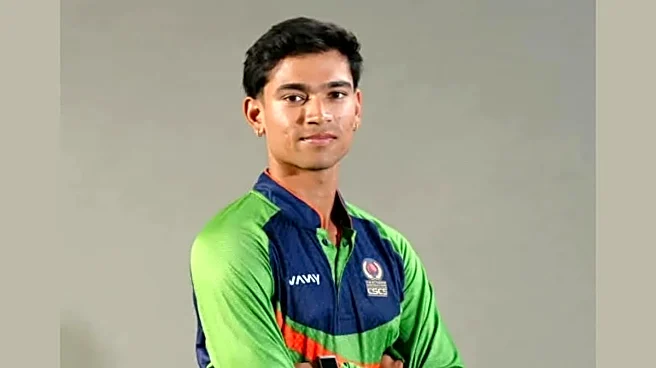


Vikalp Tiwari and his father, Manoj, were returning to their home in Rajnandgaon, Chhattisgarh, from a nearby village when the 17-year-old cricketer got a call from a friend.
“Bhai, congratulations. Mera bhi dekhlena
,” the friend joked, requesting Vikalp to look after him during the Syed Mushtaq Ali Trophy. Vikalp didn’t know what he meant, and why he, a teenager who hadn’t yet made his T20 debut, was being asked such a thing.“Arre bhai, you have been made the team captain,” the friend announced. Vikalp, still in disbelief, turned to Manoj, who had a similar reaction to the news.
“We both started laughing,” Manoj tells News18. “I thought they would make him captain after three-four years, when he does well. I didn’t expect it at this time, not
at all.”
“Mujhe toh pehle laga printing mistake ho gayi hogi (I thought it was a printing mistake),” Vikalp adds. “I was shocked! Papa said, ‘Don’t tell anyone; maybe it’s just a mistake’. Then one or two more calls came, and I understood: yes, I am actually the captain.”
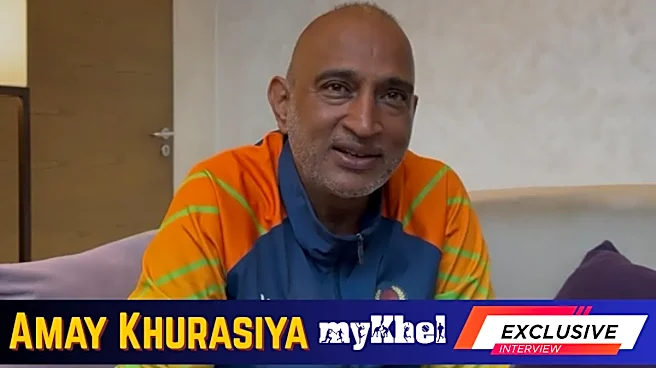
The Chhattisgarh State Cricket Sangh (CSCS) team management, alongside coach Amay Khurasiya, had made the unprecedented call.
When he took the field against Uttarakhand on November 14, Vikalp became the youngest to captain a team on his debut, at 17 years and 51 days old. If it were not for Vaibhav Sooryavanshi being chosen as Bihar’s captain for the same tournament, Vikalp would also have been the youngest-ever captain in senior T20 cricket.
‘He’ll run in rain’
The maturity CSCS has seen in Vikalp was quite evident even when he took to a cricket field for the first time.
Manoj, a club cricketer in Rajnandgaon, opened his academy in 2010, a year after his son was born, partly out of passion and partly to help the children of the city. He wanted his son to play cricket like him, too, and was glad to see him take interest as a toddler.
From four years of age, Vikalp would follow Manoj to the academy whenever possible.
“I made him play with the tennis ball against kids in the Under-14 nets,” Manoj says. “He played quite well against older boys. And catching—there’s a sense a kid should have—that also started showing at a small age. So, I felt he could play the sport.”
Vikalp remembers his father as an excellent cricketer of his time, who couldn’t continue because of a lack of support from the family. The youngster believes it to be the reason why he never had to fight for the freedom to play the sport.
“Sometimes, I would even leave school early by saying I was unwell, then go to cricket practice,” Vikalp recalls with a laugh. “He gave me complete freedom. Papa also said studies must go side by side, though it was never forced.”
Vikalp has developed into an elegant left-handed batter — sharp reader of the length, excellent on the off-side against pace, plus equally adept at sweeping and stepping out against spin — and a tidy left-arm spinner. But neither skill drew him into the sport initially.
“Both batting and bowling were fun, but if I may say so, I enjoyed fielding even more than batting and bowling,” he says. “… Even at home I used to throw the ball on the wall and dive around trying to catch it.”
Growing up, he remembers watching matches on TV with Manoj and listening to his insights. He fell in love with Suresh Raina’s fielding and Yuvraj Singh’s finishing skills, and now admires England’s talented southpaw Jacob Bethell.
When playing the sport became a bit more serious business, and as tennis ball practice transitioned to seasoned leather, Vikalp started practicing three times a day. He would wake up at 4 a.m., go to the ground for fitness training at 4:30, return home for breakfast, and then go to first cricket practice at 9, followed by a second practice at 3 pm.
The mantra for both father and son was for him to play as many balls as possible, so cricket would become muscle memory. Manoj regularly pushed him out of his comfort zone, making him travel to Pune, Visakhapatnam, Nagpur and Jabalpur, among others, to play for various academies.
“He believed that if you stay only in Chhattisgarh and play only Chhattisgarh bowlers, you won’t understand how other states’ bowlers are at the senior level,” Vikalp says.
Most of the opposing cricketers continued to be older than him. Vikalp never let it show to his father, but now admits it took him some time to adjust to it.
“I used to get scared of the ball,” he says. “Everyone used to ask me to keep going out there and continue batting so I could learn, but I didn’t understand then—I used to get angry, ‘I don’t want to do this. I am scared’. But now, slowly I have understood that it was the right decision to start against older boys.”
As envisioned for him, when he started to find success against senior cricketers, Vikalp fell even more deeply in love with the sport.
“He wakes up in a single alarm,” Manoj says. “I might forget sometimes, but when I wake up, he’s already ready to go at 4:30 am. Whether it rains or a storm comes, he has to go to the ground at all costs. He’ll run in the rain too! Sometimes he asks me to drop him off on the ground in the car and then come to pick him up later.”
At 11, Vikalp played under-14 cricket for Chhattisgarh and scored centuries for fun. At 16, he made his List A debut for the state in the 2025-26 Vijay Hazare Trophy.
Batting at number five, Vikalp managed only single-digit scores in his first two matches and was dropped for the third against Mumbai.
The fourth match, against Sikkim, was in Jaipur and, coincidentally, Vikalp’s family — Manoj, mother Sangeeta, who’s a beautician, and elder sister — were all in Rajasthan on a pilgrimage at the Khatu Shyam Ji Temple. On the eve of the match, when he spoke to Manoj, Vikalp didn’t seem confident about his chances of being in the playing 11.
But when the family returned to Jaipur, they saw that he was included and, more invitingly, the team was batting first. Manoj made everyone rush to the ground and saw Chhattisgarh pile up 170/2 in 33 overs, with Vikalp still waiting.
“16 overs were left when his batting came,” Manoj says. “I thought if he scores 30-40, it will be good; maybe he’ll get a chance in the next match too. Vo hundred maardiya (He hit a century!). He hit one six into our gallery where we were sitting as well.”
It was one of the six maximums that came off Vikalp’s bat as he remained not out at 112 off 57, becoming the second-youngest Indian, after Sooryavanshi, to score a List-A century.
“Pata hi nahi chala kab 100 ho gaya (I didn’t even realise when I reached my 100),” Vikalp says. “It was a great feeling, more so because it was the first time Mummy and Papa had come to watch a match.”
Vikalp made his First-Class debut in the Ranji Trophy earlier this year, scoring a 94 against Hyderabad, and captained an India Under-19 ‘D’ team to five wins in five matches in a BCCI camp at Bengaluru’s Centre of Excellence — his only leadership experience before SMAT.
Then, in this year’s Chhattisgarh Cricket Premier League in the summer, he topped the charts with 351 runs in seven innings at a strike rate of 153.
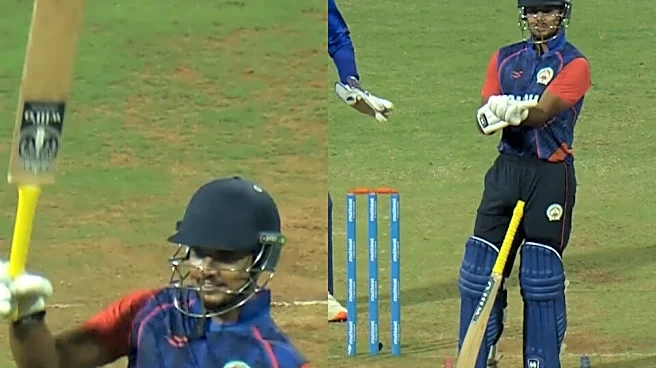
Doing all of this at the age of 16 set him up well for the maiden SMAT. Chasing 198 against Uttarkahand, Vikalp hit a 17-ball 50 with eight fours and two sixes, striking at nearly 300.
After a blip against Hyderabad, the youngster went a step further with a remarkable 56-ball 119 against Odisha, hitting three sixes and 18 fours. Coming to bat at 4/1, Vikalp says he only focussed on reading the wicket and playing his shots. When the boundaries started flowing, he, just like his century against Sikkim, forgot about the score.
“Ekdum se sab taali bajane lage, maine bola kya ho gaya? Vo bole 50! Toh hi maine bat dikhaya. (Suddenly everyone started clapping, I asked what happened, and they said it was for my 50. Only then did I raise my bat.)” Vikalp chuckles. “All the seniors asked me to keep playing. When I reached 98, I realised I was close to my century, so I played a bit carefully—otherwise I was just going to hit. Then I took the two runs calmly, and it gave me so much relief that, ‘Yes, I have done something.’”
Star boy
The thing about prodigies is that the best of them are like sponges, always absorbing whatever they are told, with an open mind. For instance, after the Odisha hundred, Vikalp says, uninitiated, that he realised how scoring only 50s was never enough.
Coach Khurasiya is impressed by the youngster’s humility, his team-first attitude, and ability to listen. He points out how Vikalp is fine with not bowling a lot, realising that he has two senior left-arm spinners in Ajay Mandal and Dharmendrasinh Jadeja to utilise.
His transition has also been helped immensely by the Chhattisgarh seniors — some are veterans of the domestic circuit — who have not let him feel awkward by being as forthcoming with their inputs as Vikalp has been with his outreach to them.
Vikalp has shown off some of his electric fielding and batting already in SMAT and speaks about captaincy with green-flag phrases like ‘adaptability’ and ‘not thinking too far ahead’.
Khurasiya is confident that the world has yet to see Vikalp’s best.
“He’s definitely a three-format player,” Khurasiya says. “People will see it in two years. You see, he is very young. And he has got weak legs right now because he is young—his arms and legs are of a 17-year-old. So whatever he is doing, he is doing it with a lot of timing. And with time, he will get power also.”
Vikalp has already given trials at Mumbai Indians, Rajasthan Royals, Kolkata Knight Riders and Lucknow Super Giants ahead of the IPL 2027 auction on December 16. The last few years have shown IPL franchises the huge upside of investing in the right prodigy early, but with that attention comes more interviews, expectations, and distractions.
However, Manoj describes a kid whose love and discipline for cricket is greater than anything else: a mother’s boy — ‘Mummy-ich waala hai vo’ are the words used — who is so introverted that he wouldn’t have stepped into the neighbor’s house in 17 years.
“He does every task himself—wears shoes himself, washes his own clothes, mandatorily does his puja-path,” Manoj says. “That’s how he has been from the start. I don’t remember if I ever tied his laces or held his kitbag or bat for him. No matter how heavy it is, he doesn’t let anyone carry his things. I’ve genuinely gone and checked it — in big hotels you get asked to let an employee carry your luggage, but he doesn’t give it to them either.”
After his century against Odisha, the keywords of his chat with Manoj were ‘stay normal’. Manoj says Vikalp knows how to keep his body language as if he has gotten out for a duck every day, and in front of everyone, irrespective of how many runs he scored, and not take anything said by a player, umpire, or official on his ‘ego’.
It’s no surprise, then, that in all the congratulatory Instagram stories put in his name by his friends and teammates, the word ‘innocent’ keeps propping up.
And yet, there’s a quiet-but-steely confidence about Vikalp. It comes out in flashes, but feels like waves — in how he calls himself a ‘subtle starboy’ on his social media bio, and how he says that apart from winning the next match for Chhattisgarh every time, his only long-term goal is to ‘become the world’s number one all-rounder in all three formats’.
“The word ‘subtle’ is there because I call myself a starboy, but it hasn’t been widely considered yet,” he says.
If he stays on this course — and all signs point that he will — it won’t be long that ‘subtle’ would be cropped out of the picture. Starboy Vikalp has a nice ring to it.