

/images/ppid_59c68470-image-178254252904021647.webp)
/images/ppid_a911dc6a-image-178248003743375420.webp)


The Indian stock market traded lower in the afternoon session on Monday, with benchmark indices extending losses amid broad-based selling across auto, IT, banking and oil & gas stocks. At around 1:29 pm IST, the BSE Sensex was down 347.79 points, or 0.45%, at 76,752.68. Meanwhile, the Nifty 50 slipped 93.20 points, or 0.39%, to 23,962.80, moving between 24,120.00 and 23,925.40 during the session.
Among Sensex constituents, Mahindra & Mahindra, InterGlobe Aviation (IndiGo), Maruti Suzuki, Reliance Industries, UltraTech Cement, State Bank of India, Infosys, and Bharti Airtel were among the top laggards. On the other hand, Trent, Eternal, Power Grid Corporation, NTPC, Sun Pharma, Tech Mahindra, and Tata Steel traded in the green, helping limit the overall
decline.
Sectorally, Nifty Auto emerged as the worst performer, falling over 2%, followed by Nifty MidSmall IT & Telecom, Nifty PSU Bank, and Nifty IT.
Broader markets also remained under pressure, as the Nifty Midcap 100 and Nifty Smallcap 100 declined around 0.5% each, while India VIX jumped over 6%, indicating increased market volatility.
Why Is Market Falling?
1 Rising Tensions In Iran and US
The fresh tensions between the US and Iran arose following a truce, shattering hopes of a peace deal ending the war soon.
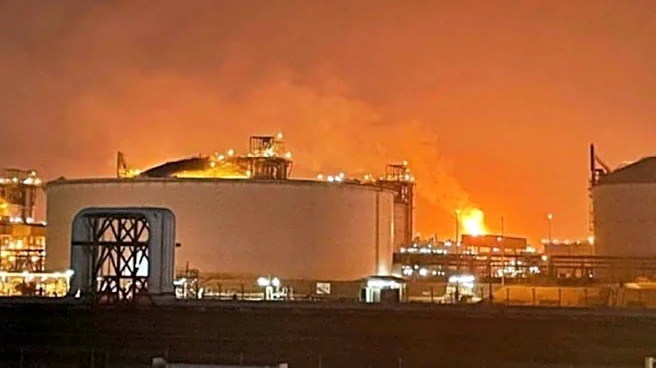
Iran launched missiles and drones targeting US military sites in Kuwait and Bahrain early Sunday, shortly after US President Donald Trump warned that the Islamic Republic would “cease to exist” if it failed to honour the agreement to end the conflict.
The US military had also carried out fresh strikes on Iran hours after a tanker was hit in the Strait of Hormuz, a key global energy shipping route that Tehran has largely closed during the conflict.
Both countries have agreed to stop attacking each other and will meet in Qatar on Tuesday in an effort to resolve their dispute over the Strait of Hormuz.
2. Asian Market Remains Choppy
Asian markets traded in a choppy range on Monday as investors balanced optimism over AI-driven growth with concerns about rising costs, while also monitoring the fragile ceasefire between the US and Iran that kept oil prices elevated and the dollar hovering near a one-year high.
South Korea’s KOSPI fell as much as 3.4% on Monday after losing 7% last week, before trimming some losses to trade around 2% lower. Meanwhile, Taiwan’s benchmark index climbed as much as 2.1%, extending its gains to 56% so far this year, making it the second-best-performing market in Asia, behind the KOSPI’s 97% rally
3. Rise In Crude Oil Prices
Crude oil prices have jumped once again as the tensions arose in the Middle East. WTI and Brent crude oil climbed to $69 and 72 per barrel, respectively.
Rising crude oil prices are a bad signal for India as it imports 90 per cent of its requirements.
4. Dollar Index Above 100
The dollar index, suggesting the strengthening of the dollar against foreign currencies, stays above a one-year high, as investors await the latest US monthly jobs report for fresh clues on the labour market and the outlook for Federal Reserve policy.
/images/ppid_59c68470-image-178269759199166869.webp)

/images/ppid_59c68470-image-178271510835679822.webp)

/images/ppid_59c68470-image-178272506764459983.webp)
/images/ppid_59c68470-image-178263252491161077.webp)
/images/ppid_59c68470-image-178263255586469343.webp)



/images/ppid_59c68470-image-178270755418196252.webp)