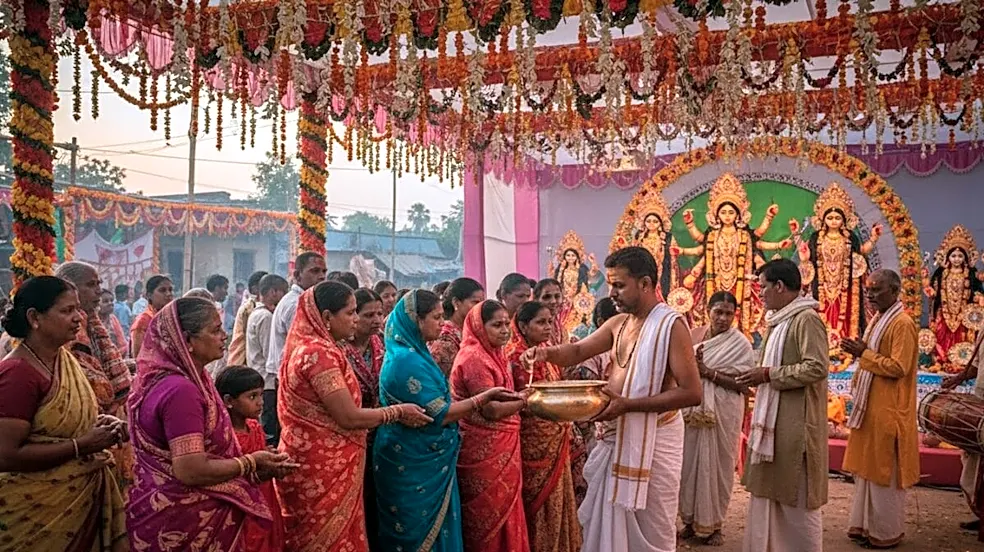



Durga Puja ended on a bitter note for some people in Uttar Pradesh’s Gorakhpur district as they had a rabies scare. People from two villages had to receive anti-rabies vaccinations as a precaution after consuming charanamrit made from the milk of a cow suspected of having rabies. The milk was used to prepare the religious offering distributed during Durga Puja celebrations.
The scare began as the cow that produced the milk had fallen ill and died, which raised concerns among villagers who had consumed the prasad.
The incident was reported in Dadi Khas village in Gorakhpur district, with residents of neighbouring Govindpur also among those who sought vaccination. According to an Economic Times report, the health department organised a vaccination camp
after the animal’s death prompted fears of possible exposure to rabies.
The cow’s suspected rabies infection has not been officially confirmed. The vaccinations were administered as a precaution, and the incident does not mean that the villagers who consumed the prasad have contracted rabies.
According to reports, the cow had appeared unwell for one or two days before its condition deteriorated on Tuesday, October 20. Its owner, Navami Yadav, reportedly consulted private veterinarians and a doctor at the local veterinary hospital after noticing that the animal was ill.
The veterinarians suspected that the cow might have been bitten by a dog. The animal subsequently began displaying unusual behaviour, including barking, before dying on Tuesday evening, stated an India Today report.
The news of the cow’s illness and death alarmed residents who had consumed charanamrit prepared from its milk during Durga Puja. The concern also extended to people who may have come into contact with the milk through local shops and households, as the cow’s owner reportedly supplied milk to two shops and several homes.
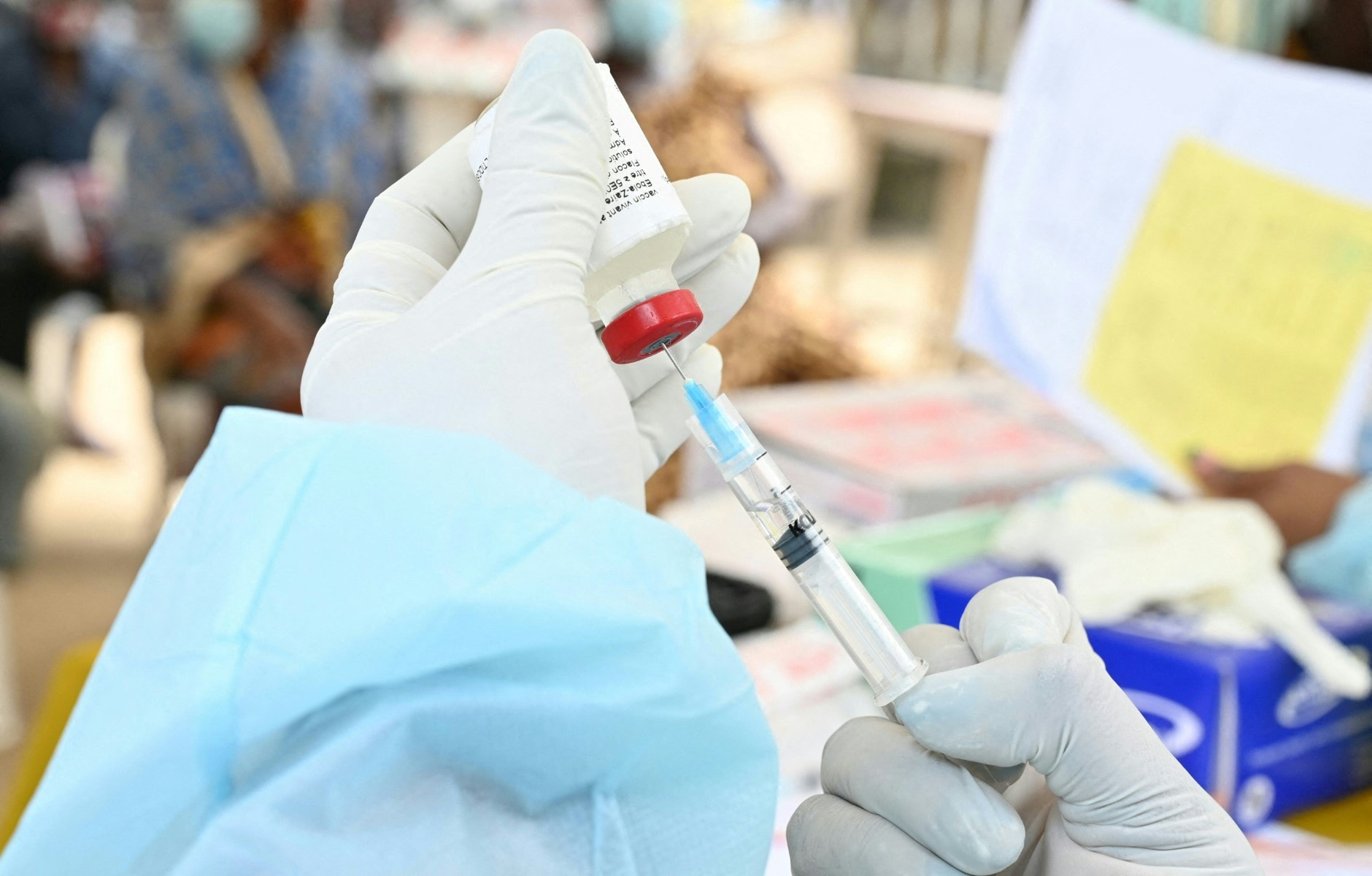
The possibility of rabies led residents to seek medical advice and anti-rabies vaccinations. Following these concerns, the health department also arranged a vaccination camp in Dadi Khas village on Wednesday, October 21.
According to officials, around 50 people had received anti-rabies vaccinations at a community health centre on Tuesday. A further 400 people were vaccinated during the camp on Wednesday, bringing the reported total to approximately 450.
The vaccination drive was conducted by a health department team led by pharmacist Siddharth Singh. Community health centre officials also said arrangements would be made to ensure that vaccines remained available for people who needed them.
In a report by The Indian Express, Amarendra Thakur, the community health centre’s in-charge, advised people concerned about possible exposure to consult medical professionals and follow the prescribed vaccination schedule.
Can Rabies Spread Through Milk Or Prasad?
Rabies is a viral disease that usually spreads when the saliva of an infected animal enters the body, most commonly through a bite. Exposure can also occur if infected saliva comes into contact with broken skin or the eyes, nose or mouth.
However, consuming milk alone is not an established route of rabies transmission, and there is no confirmed evidence that the villagers contracted rabies by eating the prasad. The vaccination drive was a precautionary response to the suspected infection in the cow.
Health experts advise against consuming milk or other products from an animal suspected of having rabies. Anyone concerned about a possible exposure should seek medical advice promptly rather than relying on symptoms or attempting to assess the risk independently.
The cow’s symptoms raised suspicion of rabies, but symptoms alone cannot establish a diagnosis. Veterinary assessment and appropriate testing are needed to confirm the disease. Reports on the incident have not established that the cow had laboratory-confirmed rabies.