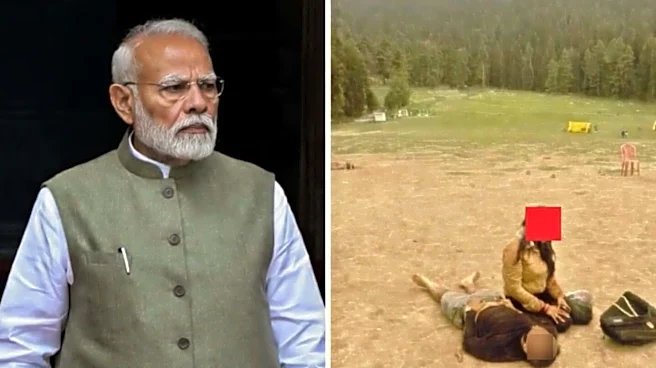



A year after the morning of April 22, 2025, when the calm and serene Pahalgam turned into a site of horror, the air feels heavy for those who remember. Families still light a candle in quiet corners of their homes. Survivors flinch at the sound of sudden noise. The memory of 26 innocent lives lost in a single, brutal sweep of terror has not faded.
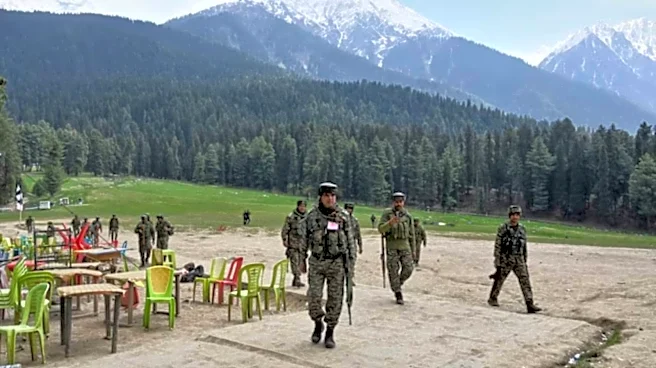
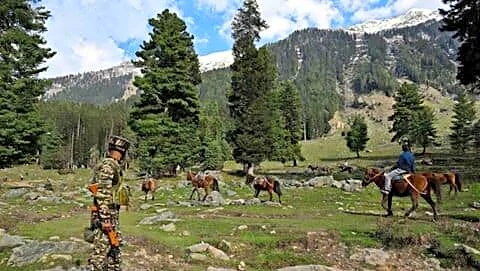
On April 22, 2025, the peaceful Baisaran Valley near Pahalgam in Jammu and Kashmir was shattered when at least three heavily armed terrorists walked out of the surrounding forests and opened fire on a group of unsuspecting tourists. In a matter of minutes, 26 civilians, mostly Hindu tourists, along with a Christian tourist and a local Muslim pony ride operator, were killed and more than 20 others were injured,
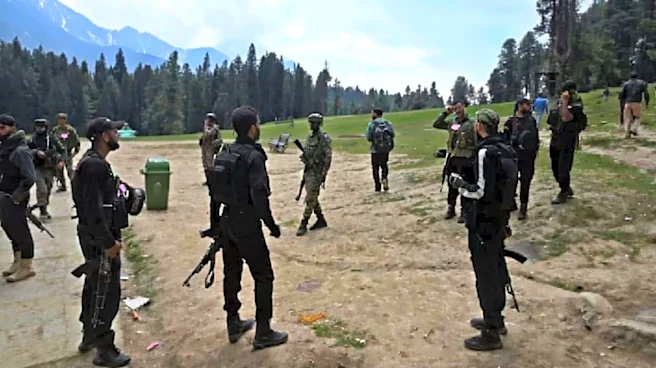
making it one of the deadliest attacks on civilians in India in recent decades. Survivors described a scene of panic as gunshots rang through the meadow, bodies lay scattered on the ground, and people screamed for help before security forces rushed in to evacuate the injured and launch a massive manhunt for the attackers.
That attack was responded to by India with Operation Sindoor, a focused response to a calculated act of cruelty.
What Was Operation Sindoor?
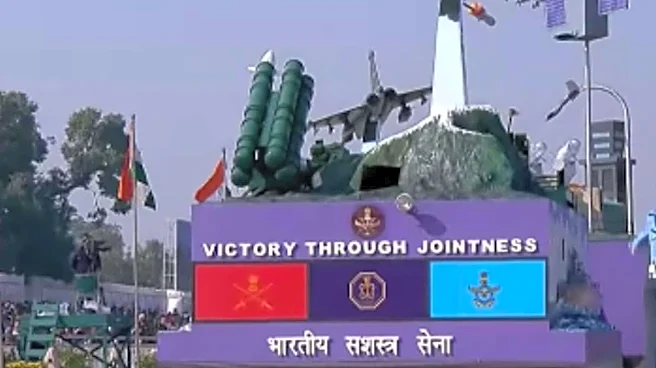
Operation Sindoor was the living answer of a nation that had watched its people being picked out by name, by religion, and then murdered. It was born on the night of May 7–8, 2025, when India’s forces moved with precision across the Line of Control, striking back at the architects of that terror attack.
Using credible intelligence gathered since 22 April, India’s military identified nine terrorist camps and training hubs linked to groups like Lashkar‑e‑Taiba, Jaish‑e‑Mohammed, and Hizbul Mujahideen spread across Pakistan‑occupied Jammu and Kashmir and parts of Pakistan’s Punjab province. The strikes were executed in a tightly compressed window of about 25 minutes, with missile and aircraft‑based munitions hitting each site almost simultaneously to overwhelm the enemy’s response and minimise collateral damage.
The operation relied on a mix of cruise missiles, precision‑guided bombs, and loitering munitions, fired from stand‑off ranges so that Indian forces did not have to enter Pakistani airspace deeply. Target selection was deliberately calibrated to avoid Pakistani military bases or civilian settlements, focusing instead on known terror infrastructure, command nodes, and logistics hubs. After the initial strikes, Pakistan responded with drones and missile attacks on Indian military installations, but India’s layered air‑defence and counter‑drone grid intercepted most of them, turning the first few days into a brief but intense cross‑border conflict that ended with a mutually agreed ceasefire by May 10.
Unlike a full‑scale war, this was a calibrated, deliberate push, meant to send a message. A senior Air Force officer, speaking off the record, put it simply: “We didn’t want to punish an entire people; we wanted to remove the machinery that thought they could kill our tourists and laugh.”
Prime Minister Narendra Modi, addressing the country in the days that followed, put the feeling into words: “Those who thought they could strike us from across the border and vanish behind denials have finally seen the cost of their arrogance.”
Which Terror Sites Were Hit During Operation Sindoor?
In the shadow of Pahalgam, India chose to target not just the men who had pulled the trigger, but the very eco-system that had nurtured them. Under Operation Sindoor, the focus fell on training camps, supply routes, and command centres of Pakistan‑based terror groups like Lashkar‑e‑Taiba, Jaish‑e‑Mohammed and Hizbul Mujahideen, organisations long accused of operating under the shadow of state tolerance.
Nine sites across Pakistan-occupied Kashmir and inside Pakistan bore the sharp edge of India’s response. These were not abstract locations; they carried names that had long been whispered in India’s security files.
In Pakistan‑occupied Kashmir (PoK), India hit:
- Gurubazar (a JeM–linked camp close to the Line of Control)
- Astore (HM–linked training and logistics hub)
- Kamalpur (JeM and LeT transit node)
- Baramulla‑Poonch corridor hideouts (used for infiltration and communication)
- An additional HM/LeT camp in the Sialkot‑Poonch axis
Inside Pakistan, the strikes went deeper, hitting some of the most notorious sanctuaries:
- Muridke, the main headquarters of Lashkar‑e‑Taiba, known as Markaz‑e‑Taiba or Markaz Subhan Allah, a sprawling compound in Punjab that functioned as its nerve centre.
- Bahawalpur, the central command base of Jaish‑e‑Mohammed, where decades of operations planning and recruitment had been orchestrated.
- Sialkot, a cluster of JeM and LeT facilities used for training and storage.
- Another LeT‑linked camp in southern Punjab, near the desert belt, which had been used to stage infiltrators heading into Jammu and Kashmir.
For the families of Pahalgam, the names of these camps were the echo of the planning that had led to the attack. One survivor from Pahalgam, speaking to a journalist, said, “When I heard ‘Muridke’ and ‘Bahawalpur’ on the news, I felt like a part of the evil that smiled at our faces had finally been burned.”
Who Were The Key Terror Commanders Eliminated?
Based on media reports and security‑linked disclosures, key terror figures are said to have been eliminated or seriously hit in the operation. Mudassar Khadian Khas, reportedly a senior LeT commander and described as the head of the LeT headquarters complex in Pakistan, overseeing overall planning and coordination of attacks into India, was reportedly hit. Hafiz Muhammad Jameel, a close relative of LeT founder Hafiz Saeed and a key operational link in the LeT network, often cited as running training and logistics, was also hit in the operation, as per reports.
Mohammad Yusuf Azhar, the cousin of JeM chief Masood Azhar, portrayed in Indian and media accounts as a mastermind of multiple attacks on Indian soil, including in Jammu and Kashmir, was reportedly eliminated in Operation Sindoor, along with Mohd Hassan Khan, a top JeM commander identified as running JeM cells in Jammu and Kashmir and coordinating infiltration and attacks. Khalid (alias Khalid alias Dudu), a veteran JeM operative allegedly involved in multiple terror strikes in Jammu and Kashmir, was also reported among the senior figures killed in Sindoor‑linked strikes.
Is Operation Sindoor Over?
A year after the Pahalgam attack, Operation Sindoor remains not just a memory of one decisive night, but an ongoing statement of intent. Prime Minister Narendra Modi has made it clear that Operation Sindoor was not over with those strikes. “The operation does not end when the missiles land; it continues as long as we remain alert, ready and willing to protect every Indian life,” he said in an address.

/images/ppid_a911dc6a-image-177678806349899745.webp)


/images/ppid_a911dc6a-image-177682962981615184.webp)
/images/ppid_a911dc6a-image-177682966615195071.webp)
/images/ppid_a911dc6a-image-177685214513234355.webp)
/images/ppid_a911dc6a-image-177686602453368624.webp)
/images/ppid_a911dc6a-image-177679586654745091.webp)