
/images/ppid_a911dc6a-image-177563888491032835.webp)
A joke is a joke. It should be taken with a pinch of salt. But a joke can never become history, and a comedian trying to reduce a historical tragedy into a joke should never be taken as humour.
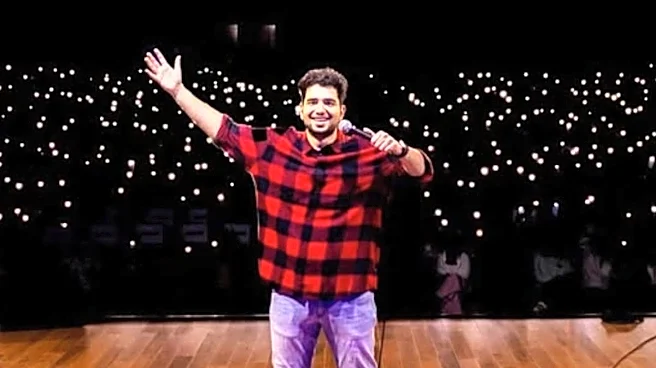
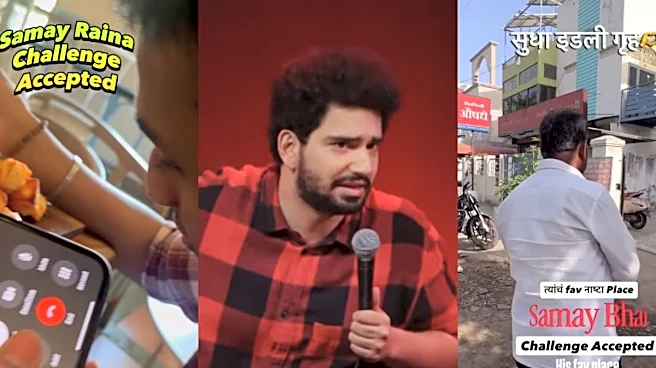
That is exactly what has happened with the recent remarks of Samay Raina.
At a time when he himself has been moving from one controversy to another, apologising to authorities for his own content, he chose to trivialise the exodus of Kashmiri Pandits—mockingly equating it to his own situation and calling it “Kashmiri Pandit wisdom.”
This is not comedy. This is a complete collapse of understanding.
Because what happened to Kashmiri Pandits is not a metaphor. It is not a casual reference. It is one of the deepest scars in independent India’s history. And scars are
not punchlines.
Five Lakh People Did Not “React.” They Were Forced Out
Over 3.5 to 5 lakh Kashmiri Pandits are estimated to have fled the Valley between 1989 and the early 1990s, according to multiple government and independent assessments.
They did not leave in phases of comfort. They left in fear.
Families walked out in the dead of night. Homes were abandoned. Temples left behind. Generations uprooted. Survival—not choice—dictated their movement.
To compare this to a comedian apologising for an obscene act is not just insensitive—it is an insult to every individual who lost everything in those nights.
And the tragedy does not end there. Nearly four decades later, they are still not home.
Even today, available data and official records suggest that only a small fraction of displaced families have been able to return in any meaningful or permanent way, despite multiple rehabilitation efforts.
This is perhaps the biggest irony of our times—that people displaced within their own country continue to live like outsiders, waiting for a return that never fully comes.
This Was Not a Story. This Was Life
There are people who speak of Kashmir as if it were a narrative. For some of us, it was life.
Growing up in Kashmir in those years was not easy. One day we were planning cricket matches. The next day, a friend’s house would be locked—the family gone overnight.
No one knew where they went. A Kashmiri Pandit neighbour would disappear, and before you could even process it, another would be gone. Entire communities vanished silently.
Some families still preserve their bus tickets from those nights—a stark reminder of the moment they left their homes, not knowing if they would ever return. Renowned Kashmiri Pandit scholar Utpal Kaul once posted a ticket on his Facebook page, which brought tears to thousands of followers, as it was a grim reminder of the pain the community went through.
This is not a story that can be brushed aside with clever wordplay.
The irony is stark: nearly four decades later, many Kashmiri Pandits are still unable to return to the land that rightfully belongs to them. While some have rebuilt their lives through sheer resilience and hard work, thousands continue to live in cramped government accommodation in Jammu and elsewhere. A generation has grown up disconnected from its roots—its language fading, its cultural practices diluted, and its collective memory scarred.
To reduce this lived reality to a joke is not just offensive; it is unjust.
There is also a troubling tendency among sections of society to either mock the community for leaving or debate whether they should have stayed and “fought back.” Such arguments ignore the ground reality of the time. The early 1990s in Kashmir were marked by extreme volatility, targeted violence, and a breakdown of law and order. Survival, not ideology, dictated decisions.
Ask those who chose to stay back. This is not something you joke about. This is something you carry for life.
The Streets Told a Different Story
Every day, there were protests.
Slogans filled the air—“Hum kya chahte? Azadi”—followed by chants that made it clear that this was no longer just political. It had taken a religious turn.
Fear was everywhere. We slept with swords or axes near our pillows—not because we thought we could fight back, but because doing nothing felt worse.
That was the reality. Not the version reduced to a joke for views.
Why Some Stayed: The Spirit That Cannot Be Understood from a Distance
When people today casually debate why some left and why some stayed, they completely ignore the ground reality.
Circumstances decide survival. But what must be remembered—and respected—is the spirit of those who stayed.
I still remember asking elders why we should not leave Kashmir. My grandfather would say, “We will fight here and die here if needed.” He would remind us—what if Guru Tegh Bahadur Sahib or the sons of Guru Gobind Singh had thought only about survival? What if sacrifice was replaced by fear?
That spirit kept many rooted. And it is that spirit that defined the Sikh presence in Kashmir.
“We Feel We Are in India When We See a Turban”
I remember meeting an Army officer in the early 1990s.
He said something that has stayed with me ever since. “We feel we are in India only when we see a turban in Kashmir.”
Think about that for a moment. This was a time when Pakistan flags were openly hoisted on rooftops, when slogans in favour of Pakistan were written across walls.
And yet, in that atmosphere, the presence of Sikhs—standing firm, visible, unafraid—became a symbol of India itself.
Not in speeches. Not in policy. But in presence.
That is not something you can understand from a stage or a screen.
The Price of Staying
The Sikh community paid heavily for that resolve.
The Chittisinghpora massacre of March 2000, where 35 Sikhs were killed, remains one of the darkest reminders of the cost paid by those who chose to stay.
And yet, they did not abandon their land. Even today, Sikhs continue to live in those very areas. That is not just resilience. That is defiance. But this is not about comparing pain. It is about understanding that every community suffered in its own way—and all of that suffering deserves dignity, not mockery.
Jammu: The Land That Absorbed Pain Without Noise
While Kashmir burned, Jammu absorbed.
At the peak of the migration, lakhs of displaced persons moved towards Jammu, transforming the region into an immediate humanitarian response zone—where local communities stepped in long before systems could fully respond.
The Dogra community opened its homes to migrants from across the region. They provided food, shelter, and dignity—without asking who came from where or what religion they belonged to.
Jammu became a melting pot of suffering—and of compassion—and it continues to do so today.
Regions like Doda, Kishtwar and Udhampur witnessed repeated terror attacks in the 1990s, yet the local population continued to live, rebuild, and support others displaced by the same violence.
A warrior community—not just in uniform, but in spirit.
Would You Joke About The Holocaust?
To truly understand how misplaced such humour is, one must ask a simple question: Would anyone dare to reduce the Holocaust to a joke? Would it be acceptable if Jews themselves were shown making light of one of the darkest tragedies in human history?
The answer is obvious.
Because some tragedies demand silence before they demand commentary.
The exodus of Kashmiri Pandits deserves that same seriousness. Pain does not become lighter just because it is less talked about.
Samay Raina’s Problem Is Not Comedy. It Is Ignorance
This is not about restricting comedy. This is about recognising ignorance. When someone who has neither lived through Kashmir nor truly understood it speaks lightly about it, the problem is not humour—it is the absence of awareness. Views may come. Clips may go viral. But trivialising the suffering of a community does not make content stronger. It only makes the creator smaller.
The Last Word
The mockery of a community’s pain is never a joke. It is a reflection of how disconnected we have become from our own history. Some stories are not meant to be told with laughter. They are meant to be told with respect.
Because for some, it may be content. But for others, it is still life.
/images/ppid_59c68470-image-177573504430264260.webp)

/images/ppid_a911dc6a-image-177583122575276108.webp)


/images/ppid_a911dc6a-image-177581562558185784.webp)
/images/ppid_59c68470-image-177582503196737387.webp)