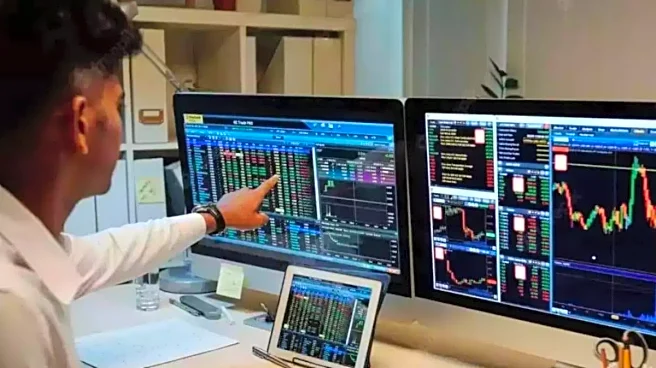




After three straight months of aggressive selling, foreign portfolio investors (FPIs) turned net buyers in Indian equities during the first week of February, pumping in over Rs 8,100 crore, supported by improving risk sentiment and progress on a trade deal with the US.
This reversal comes after sustained outflows in recent months. FPIs had withdrawn Rs 35,962 crore in January, Rs 22,611 crore in December and Rs 3,765 crore in November, according to data from the depositories.
Cumulatively, foreign investors pulled out a net Rs 1.66 lakh crore ($18.9 billion) from Indian equities in 2025 so far, making it one of the weakest phases for overseas flows. The selling pressure was driven by currency volatility, global trade tensions, concerns over possible
US tariffs and stretched market valuations.
Data showed that FPIs invested Rs 8,129 crore in Indian equities in February till the 6th.
Himanshu Srivastava, principal manager–research at Morningstar Investment Research India, said the renewed buying reflects an improvement in risk appetite and confidence in India’s growth prospects. “The sentiment was supported by easing global uncertainties, stability in domestic interest rate expectations, and optimism around India-US trade and policy developments,” he said.
The shift in sentiment stands in sharp contrast to January, when FPIs exited Indian markets amid a global risk-off environment and elevated US bond yields.
Vaqarjaved Khan, senior fundamental analyst at Angel One, echoed similar views, noting that progress in India-US trade talks helped ease geopolitical concerns and spur a market rally. This was aided by stabilising US yields and supportive measures announced in the Union Budget for FY26, including fiscal stimulus and sector-specific incentives.
V K Vijayakumar, chief investment strategist at Geojit Investments, said the appreciation in the rupee also played a crucial role in improving investor sentiment. The currency strengthened from a record low of 90.30 against the dollar, though it later slipped to around 90.70 by the close of February 6.
He added that the rupee is expected to stabilise and gradually appreciate to below 90 per dollar by the end of March 2026, a move that could attract further FPI inflows. However, outcomes will hinge on global trade dynamics and developments related to artificial intelligence.
Market participants remain cautiously optimistic. While sustained corporate earnings growth and stable global trade conditions could draw in more foreign money, lingering rupee weakness, high valuations and potential shifts in US policy may cap the upside, Khan said.




/images/ppid_59c68470-image-177107752663443042.webp)






/images/ppid_a911dc6a-image-177107705051568684.webp)