
/images/ppid_59c68470-image-177500753329418831.webp)
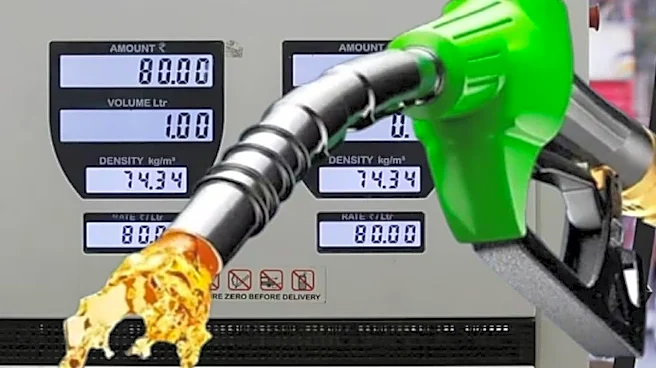
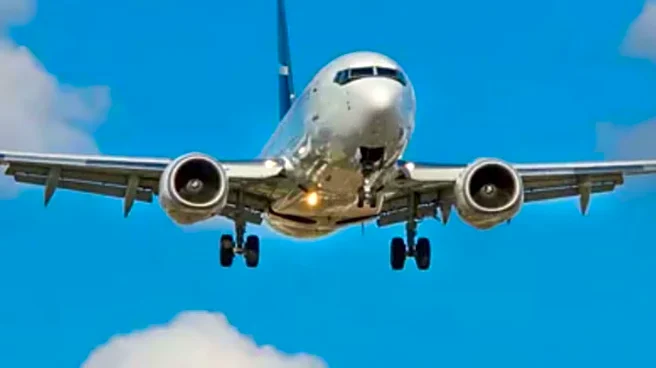
The government on Wednesday defended the 8.5 per cent rise in Aviation Turbine Fuel (ATF) prices, stating that the increase passed on to domestic airlines is only a “partial and staggered” adjustment, aimed at cushioning the impact of a global oil price surge triggered by the ongoing West Asia conflict.
In a clarification, the Ministry of Petroleum and Natural Gas in a post on X said ATF prices in India have been deregulated since 2001 and are revised monthly based on international benchmarks. Due to the closure of the Strait of Hormuz and the resulting disruption in global energy supply chains, ATF prices for domestic markets were expected to rise by more than 100 per cent from April 1.
However, to prevent a steep spike in airfares, state-run
oil marketing companies — in consultation with the Ministry of Civil Aviation — have limited the increase for domestic airlines to about 8.5 per cent, translating to roughly Rs 15 per litre.
“In order to insulate the domestic travel costs from the substantial increase in international prices, PSU Oil Marketing Companies… have passed only a partial and staggered increase,” the ministry said.
ATF prices in India were deregulated in 2001 and are revised on monthly basis based on a formula of international benchmarks. Due to the closure of Strait of Hormuz and extraordinary situation in global energy markets, price of ATF for domestic markets was expected to increase by…
— Ministry of Petroleum and Natural Gas #MoPNG (@PetroleumMin) April 1, 2026
In contrast, foreign airlines and non-scheduled operators such as charter services will bear the full impact of the global price surge. ATF rates for these carriers have more than doubled, rising by over Rs 1.1 lakh per kilolitre, or 114.5 per cent, to Rs 2.07 lakh per kl — the highest ever.
What Domestic Aviation Companies Say
Airline companies have welcomed the government’s move to moderate the increase in ATF prices, calling it a timely relief amid global volatility.
IndiGo in a post on X said, “We would like to thank the Hon’ble Prime Minster for such a significant step for all of us. We would also like to convey our heartfelt appreciation to the Ministry of Civil Aviation and the Ministry of Petroleum and Natural Gas as this marks a meaningful way forward, enabling greater stability for airlines and allowing us to pass on the benefits through more accessible and affordable travel for our customers.”
Ajay Singh, chairman and managing director of SpiceJet, in a statement said, “The government’s decision to allow only a partial increase in aviation turbine fuel prices comes as a significant relief for the Indian aviation industry at a time of unprecedented global uncertainty. We sincerely thank the Hon’ble Union Minister of Civil Aviation, Ram Mohan Naidu Kinjarapu, and the Hon’ble Secretary, Ministry of Civil Aviation, Samir Sinha, for their leadership and proactive intervention in securing a moderated adjustment to ATF prices.”
He added that their timely intervention will go a long way in helping airlines navigate one of the most challenging global crises in recent times, marked by severe external disruptions and volatility in fuel markets. “The government has, time and again, demonstrated strong and reassuring leadership, steering Indian aviation through global headwinds with clarity and resolve. This decision once again reinforces that commitment.”
On Commercial LPG Cylinder Price Hike
On the commercial LPG price hike, the ministry said April 1 price increase in Commercial cylinder price is due to a 44% surge in the Saudi Contract Price: from $542/MT in March to $780/MT for April, as 20-30% of global LPG supplies are stuck in Strait of Hormuz.
“Prices of Commercial LPG cylinders, used by industries and hotels, are deregulated, market determined and revised normally on a monthly basis. Their consumption is less than 10% of the total LPG consumed in the country. April 1 price increase in Commercial cylinder price is due to a 44% surge in the Saudi Contract Price: from $542/MT in March to $780/MT for April, as 20-30% of global LPG supplies are stuck in Strait of Hormuz,” the petroleum and natural gas ministry said in another post on X.
In line with the commitment of Prime Minister Narendra Modi, the domestic consumer continues to be comprehensively protected: 14.2 kg domestic cylinder: Rs 913 — price unchanged. PMUY beneficiary price: Rs 613 — price unchanged, according to the ministry.
At current prices, OMCs are incurring under recovery of Rs 380/cylinder. Cumulative losses by end-May will reach approximately Rs 40,484 crore. Last year also, out of total losses of Rs 60,000 crore, Rs 30,000 crore were absorbed by Oil PSUs and Rs 30,000 crore by Government of India, in order to insulate the Indian citizen from high international LPG prices, it added.
“India’s domestic LPG price remains one of the the lowest in the world as compared to Pakistan: Rs 1,046. Sri Lanka: Rs 1,242. Nepal: Rs 1,208,” the ministry said.
On Premium Petrol Price Hike
The ministry said the recent Rs 2/litre revision applies only to premium petrol variants — XP95, Power95, Speed — high-octane performance products, whose prices are revised on fortnightly basis and whose sales by volume are 2% and 5% of total volume.
“It is also clarified that regular petrol and diesel prices— the fuel that India runs on — are unchanged i.e. at Rs 94.77/litre and Rs 87.67/litre in Delhi. With global petroleum prices up by upto 100% in the last 1 month, PSU OMCs are incurring under-recoveries of Rs 24.40/litre on petrol and Rs 104.99/litre on diesel at RSP level as on 01.04.2026. These decisions are in line with Hon’ble PM @narendramodi Ji’s commitment to protect the Indian citizens from soaring international prices. The recent Rs 2/litre revision applies only to premium petrol variants — XP95, Power95, Speed — high-octane performance products, whose prices are revised on fortnightly basis and whose sales by volume are 2% and 5% of total volume. They are purchased by motorists, at a premium, by choice,” it said in another post on X.
Every pump in India continues to offer regular petrol and diesel at unchanged prices, even as prices in countries all over the world have risen by 30-50%, said the ministry.


/images/ppid_a911dc6a-image-177519424853845840.webp)


/images/ppid_59c68470-image-177501260625127408.webp)

/images/ppid_59c68470-image-177502016521047782.webp)
/images/ppid_a911dc6a-image-177500962567678490.webp)
/images/ppid_59c68470-image-177501769903911215.webp)
