
/images/ppid_a911dc6a-image-1776790629516616.webp)
/images/ppid_a911dc6a-image-177678802867735303.webp)
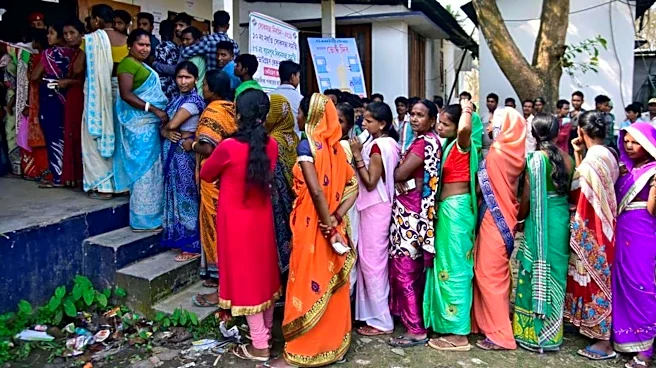
The larger irony frames itself neatly this National Panchayati Raj Day. At the national level, the promise of women’s political representation continues to move in fits and starts, the long, uneven journey of the Women’s Reservation Bill reflecting hesitation at the top. But at the very first rung of governance, the story is moving quietly, stubbornly, and in the opposite but positive direction.
India’s village republics, institutionalised through the 73rd Constitutional Amendment Act, had mandated space for women long before Parliament could settle the question for itself. Yet, that early head start came with a caveat. Representation was often real; authority was not. The ‘sarpanch pati’ became the system’s most visible contradiction, with men exercising
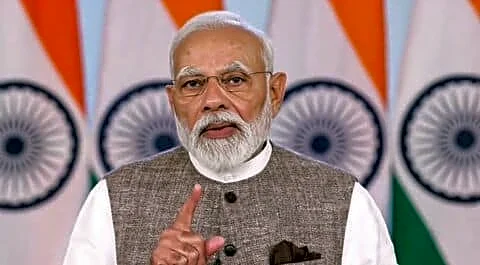
power through elected women, normalised to the point of invisibility. But decades later, the Modi government has succeeded in taking corrective measures.
What the Ministry of Panchayati Raj is attempting now is not a fresh reform, but a course correction. The focus has shifted decisively from filling seats to activating them. Women sarpanches are now being trained, networked, and positioned as administrators in their own right. Governance modules are no longer household-facing; they are leader-facing.
The grammar of empowerment has been changing, from symbolic inclusion to functional control. To commemorate National Panchayati Raj Day, the ministry has decided to highlight the contribution of women leading grassroots democracy in the country.
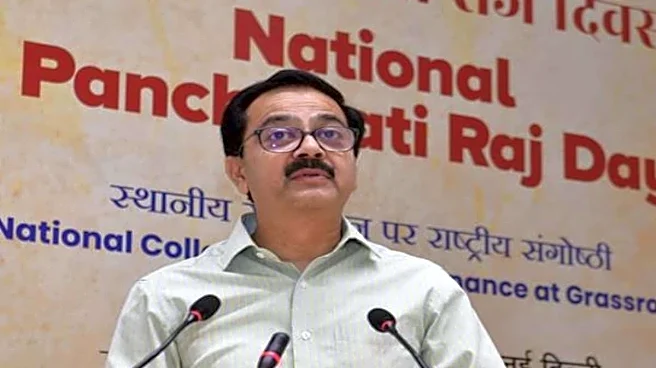
Talking to News18 exclusively, Vivek Bharadwaj, Secretary, Ministry of Panchayati Raj, said, “India has nearly 14 lakh elected women sarpanches today, but the real shift is not just in numbers. It is in building leadership as well. The effort now is to bring women leaders to the fore in governance, not as placeholders but as decision-makers. Our experience shows that when women lead, development outcomes tend to be sharper, better and more grounded. The same attentiveness they bring to managing families often reflects in their administrative priorities, which include health, education, and development indicators that consistently see stronger focus under women-led local bodies.”
“For the first time in decades, the ministry has initiated structured capacity-building workshops specifically for women panchayat pradhans. In the first phase alone, nearly one lakh women representatives have been trained, and now they are moving into the second phase of advanced training,” added Bharadwaj.
From Representation to Real Authority
The night before her first Gram Sabha, Sunita Devi could not sleep. She lay awake in Gadli village, Fatehabad, Haryana, listening to the silence. It was a silence that had swallowed the voices of women like her for generations. She had won the local panchayat election. Her name was on the door. The seat was hers. And yet, when she walked into that room, the men spoke first. The men spoke last. And somehow, the decisions were already made before she opened her mouth. She was the Sarpanch. But no one was acting like it.
This is not a story about a woman who was handed power. It is also a story about a woman who had to claim what was already hers, signature by signature, sabha by sabha. In villages across states, a quiet phenomenon had taken root. Women were elected. Women were seated. But the levers of the panchayat—the decisions, the funds, the futures—remained in other hands. They called it proxy leadership, as if a woman’s victory at the ballot box was simply a formality to be managed. However, Sunita Devi had other ideas. She had read the Panchayati Raj Act. She knew her rights. And slowly, deliberately, the way a river reshapes stone, she began to lead. Sunita Devi’s story is rare, but not unique, as this has now become a trend among women sarpanches.
“There is a conscious push to correct the entrenched ‘panchayat pati’ practice—the system of proxy leadership. Women leaders and society are being made aware that while such arrangements may have been socially tolerated, they remain legally and ethically untenable. The message is clear: elected authority must rest with the elected person, not be exercised on her behalf,” said Bharadwaj.
This shift is as political as it is administrative. At a time when women’s representation at higher levels remains contested, the grassroots is emerging as a parallel pipeline. Panchayats are no longer just local bodies; they are becoming training grounds for political leadership. The woman who learns to negotiate a road contract or manage a village budget today is, in many ways, rehearsing for larger roles tomorrow.
Dismantling the Proxy System
De-recognising the ‘panchayat pati’ system is central to this transition. Proxy governance does not just dilute gender equity; it corrodes accountability. An unelected authority making decisions on behalf of an elected representative creates a democratic blind spot. By insisting that the woman in office must be the woman in charge, the system is attempting to realign power with legitimacy.
The contrast, then, is hard to miss. While the debate on women’s representation continues to stall in the higher corridors of power, the base of the pyramid is quietly transforming. The journey of the woman politician in India may still face roadblocks at the top, but at the entry point of governance, it is gaining both direction and depth.
If this momentum holds, the future of women’s political leadership in India may not be decided in Parliament first. It may well be forged in gram sabhas.




/images/ppid_a911dc6a-image-177686602453368624.webp)

/images/ppid_a911dc6a-image-17768738641877333.webp)