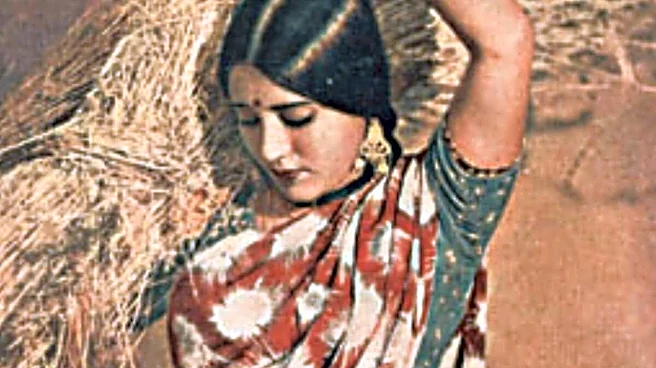



Going to cinema halls and watching colourful movies is of course normal today, but it wasn’t always the case. Long before Indian cinema embraced vibrant visuals and grand spectacles, audiences were accustomed to watching films only two colours: black and white. However, things changed in 1937 with the release of Kisan Kanya, India’s first indigenously made colour feature film.
Directed by Moti B. Gidwani and produced by legendary filmmaker Ardeshir Irani, Kisan Kanya made history not just because it was in colour, but also because of the technological leap it represented. Irani had already revolutionised Indian cinema by producing Alam Ara (1931), the country’s first talkie. With Kisan Kanya, he added another milestone to his name.
What Did Kisan Kanya Revolve Around?
Kisan Kanya
was a social drama based on the struggles of Indian farmers. It starred Padmadevi, Jilloobai, Ghulam Mohammed, Nissar, and Syed Ahmed.
The film revolved around the hardships of poor farmers and rural life, highlighting exploitation by landlords and the struggles of ordinary people. It tackled themes such as exploitation by landlords, poverty and social injustice. These subjects that were considered bold for mainstream cinema at the time.
Made Using Technology Imported From Germany
Creating a colour film in the 1930s was not easy. The production relied on Cinecolor technology, with specialised equipment imported from Germany. Since India did not have the infrastructure to process colour film, the reels had to be sent overseas for processing before being brought back for editing and release.
Why The Film Wasn’t A Box Office Hit?
Despite its historic achievement, Kisan Kanya failed to become a commercial success. The high cost of producing colour prints meant the film received only a limited release, with relatively few theatres equipped to screen it. While it didn’t set the box office on fire, its contribution to Indian cinema remains invaluable.




/images/ppid_59c68470-image-178533010743492032.webp)


/images/ppid_59c68470-image-178533011423197318.webp)
/images/ppid_59c68470-image-178533004616756574.webp)