

/images/ppid_59c68470-image-178906506710766471.webp)

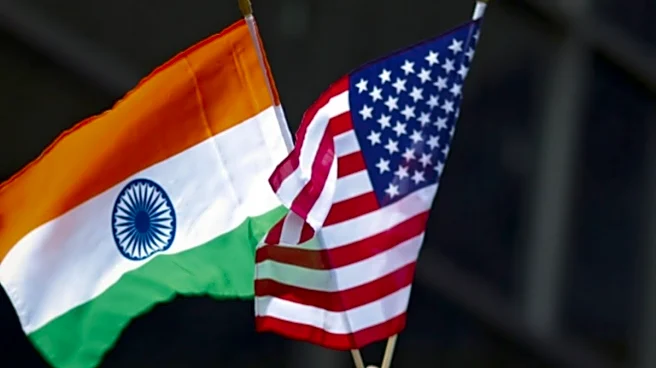
India has made it clear that while BRICS can provide a stronger voice for emerging economies, the grouping should not turn into an anti-American or anti-Western bloc.
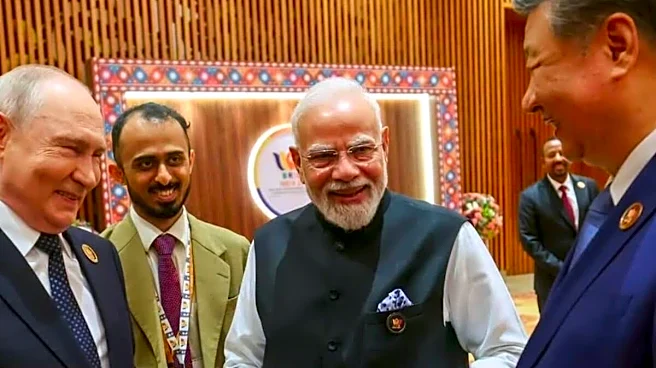
At the BRICS Summit in New Delhi, Prime Minister Narendra Modi stressed the importance of consensus and cooperation among member countries, saying the grouping should move forward not by opposing anyone, but by “taking everyone along.”
His remarks reflect New Delhi’s broader approach to BRICS: using the platform to push for reforms in global institutions and greater representation for developing countries without turning it into a geopolitical alliance against the United States.
India’s position is significant as BRICS has expanded considerably in recent years, bringing together countries
with differing relationships with Washington. While some members have openly criticised US policies, New Delhi has maintained strategic ties with the US across trade, defence, technology and the Indo-Pacific.
For India, keeping BRICS focused on issues such as development, trade, energy security, climate change and reform of global institutions also helps prevent divisions within the grouping.
The approach allows New Delhi to maintain its strategic autonomy while engaging simultaneously with competing power centres. India is a member of the Quad with the US, Japan and Australia, while also remaining an active participant in BRICS and maintaining long-standing ties with Russia.
PM Modi’s call for BRICS to convert its unity into “tangible results” suggests that India wants the grouping to be judged by what it delivers rather than by whether it takes a confrontational position against Washington.
Further, External Affairs Minister S Jaishankar has repeatedly described India as a non-Western power, reflecting its identity as a post-colonial developing country and its long-standing emphasis on strategic autonomy. But he has also drawn an important distinction: being non-Western does not mean being anti-Western.
That distinction is visible in India’s foreign policy. Its ties with the US, Europe, Japan and Australia have deepened across trade, technology, defence and investment, even as New Delhi remains an active member of BRICS and continues to position itself as a leading voice of the Global South.
India’s participation in both BRICS and the Quad perhaps best captures this approach. New Delhi does not see engagement with different groupings as mutually exclusive, but as part of its pursuit of strategic autonomy. BRICS, in that sense, gives India a platform to push for reform of institutions such as the UN, IMF and World Bank, strengthen cooperation among developing economies and seek a greater role for the Global South in global decision-making, without requiring it to position itself against the West.
As BRICS turns 20, India’s challenge will be to strengthen the grouping as a platform for the Global South without allowing it to become defined primarily by opposition to the US.


/images/ppid_59c68470-image-178912505361262002.webp)

/images/ppid_59c68470-image-17892100345427432.webp)
