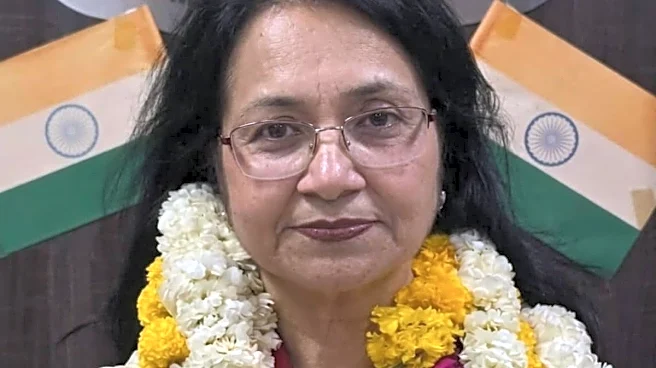


For the first time in its 63-year history, the Delhi Medical Association (DMA) has elected a woman as its president, marking a significant milestone for one of the country’s oldest medical bodies. Delhi-based radiologist Dr Neelam Lekhi assumed office on March 31, 2026, during the association’s Annual General Meeting held at DMA House in Daryaganj.
The DMA, with a legacy spanning over 112 years, had never had a woman president until now. Dr Lekhi, who previously served as the state-level vice president of the association and was also the first female president of the Indian Medical Association’s East Delhi branch, described the moment as both joyful and deeply responsible.
Her newly formed team includes Dr Vipendra Sabharwal, Dr Raminder Popli
as finance secretary, Dr SK Poddar as president-elect, and Dr JR Chugh along with Dr Poonam Goyal as vice presidents.
Speaking to News18, Dr Lekhi outlined her priorities, emphasising stronger collaboration with the Delhi government to improve affordable and timely access to healthcare for both doctors and the general public. She also highlighted long-pending issues such as stricter enforcement of laws to protect doctors, registration of smaller clinics and nursing homes, fire safety clearances, concerns related to the PC-PNDT Act, and challenges faced by resident and service doctors.
Q: What will you do first?
Delhi has a vast population, and ensuring access to affordable healthcare will be a priority. Efforts will be made to register clinics operating in neighbourhoods and smaller localities. These centres are often the first point of contact for patients and are more affordable than corporate hospitals, but many struggle due to lack of registration. At the same time, action will be taken against unqualified practitioners.
Q: Which doctor issues will you address?
Doctor safety remains a major concern in the capital. There will be a strong push for strict enforcement of existing laws to prevent frequent and sometimes fatal attacks on doctors. While legal provisions exist in Delhi, their implementation has been inadequate.
Q: Will work also be done on curing lifestyle diseases?
Yes, several public health initiatives will be prioritised, including ‘Anemia Mukt Bharat’, awareness and prevention programmes for breast and cervical cancer, CPR training for both healthcare professionals and the public, and campaigns to address lifestyle diseases such as obesity, diabetes and arthritis.