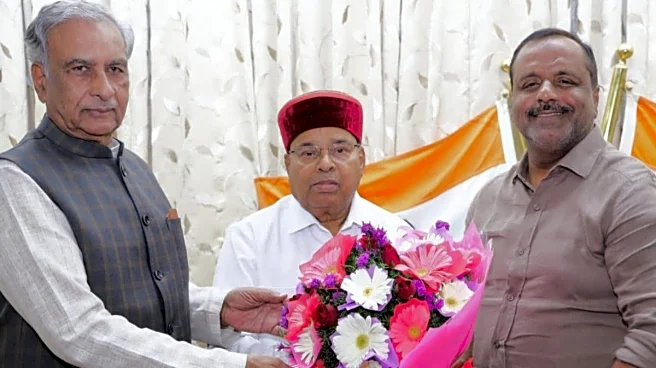




The state of Karnataka is teetering on the edge of a significant constitutional logjam as the state government prepares to move to the Supreme Court should Governor Thawar Chand Gehlot fail to attend the scheduled joint legislative session on Thursday. Sources within the administration have indicated that if the governor does not arrive by 11.15 am to deliver his address, the state will immediately approach a constitutional bench to resolve the impasse. This brewing legal battle centres on a fundamental disagreement regarding the contents of the governor’s speech, which traditionally serves as the formal opening to the legislative year.
At the heart of the dispute is the governor’s demand that specific references to the Mahatma Gandhi National
Rural Employment Guarantee Act (MGNREGA) be omitted from the address. While the Karnataka government reportedly expressed a willingness to slightly alter the phrasing of the seventh paragraph, they have flatly refused the governor’s request to drop the reference entirely. Government officials maintain that the speech is a formal declaration of the state’s policy and achievements, rather than a platform for the governor’s personal or discretionary views.
AS Ponnanna, legal adviser to the Chief Minister, expressed a measure of confidence following a meeting at Raj Bhavan, stating that the governor is expected to fulfil his constitutional duties despite the current friction. Ponnanna emphasised the mandatory nature of the address, stating that “This is not the governor’s personal speech; it is a speech that states the government’s position. Being in the position of the governor, one must deliver the speech as the Constitution says so.” He further dismissed suggestions of bowing to pressure for edits, asserting that the government has informed the governor that no major changes can be made and the speech must be read as drafted.
State Law Minister HK Patil echoed these sentiments, framing the issue as a matter of strict adherence to the supreme law of the land. Invoking Article 176(1) of the Constitution, Patil emphasised that delivering the government-drafted address is a binding obligation rather than a choice. “The Constitution remains the supreme authority for all, and its directives apply uniformly to the President, the Governor, and the State Government without exception,” Patil remarked following a meeting that included the Assembly Speaker and Council Chairman. While Lok Bhavan has yet to officially respond to speculation that the governor might skip the session, the state leadership remains firm that the address represents the collective will of the elected government.




/images/ppid_a911dc6a-image-177065466501151392.webp)



/images/ppid_a911dc6a-image-177066504785467952.webp)