

/images/ppid_a911dc6a-image-177105882330714950.webp)

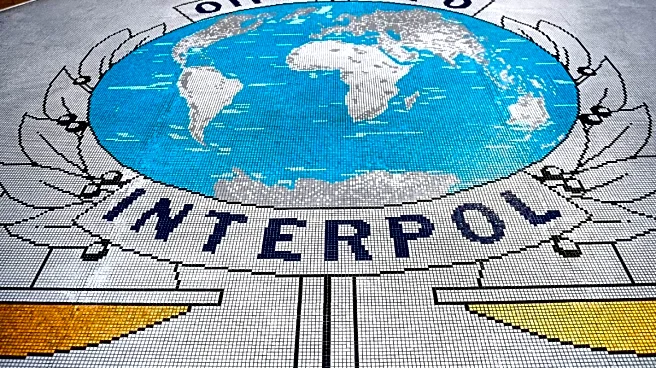
The Interpol on Tuesday issued Blue Corner Notices against Saurabh and Gaurav Luthra, owners of Goa’s Birch by Romeo Lane, who fled to Thailand after a blaze at their nightclub killed 25 people over the weekend.
The Goa Police, in a statement, said the Luthras fled to Phuket at 5.30am on December 7 on an IndiGo Airlines plane, just hours after the incident around midnight. The cops have now sought the Interpol’s help to locate the duo.
In the context of a Blue Corner Notice against the Luthras, News18 takes a look at the other notices the agency issues and what they mean:
What Is An Interpol Notice And Why Is It Issued?
The notice is an international alert used by Interpol to share critical information between police forces in its 196 member countries.
From locating fugitives, warning about threats to identifying unknown persons, the notices are issued for different purposes. A notice is issued to help countries cooperate on cross-border policing. It allows law-enforcement agencies to quickly exchange information about individuals or situations that require international attention.
What Are The Different Kinds Of Notices?
Red Notice: This is to seek the location and arrest of a wanted person pending extradition or similar legal action. It means the person is wanted for prosecution or to serve a sentence. A Red Notice is not an international arrest warrant; countries decide how to act on it.
Yellow Notice: The purpose of a Yellow Notice is to help locate missing persons, often minors, or to identify people who cannot identify themselves. It essentially means a person is missing or unable to provide identity information.
Blue Notice: It is used to collect additional information about a person’s identity, location, or activities related to crime. It means the individual is of interest, but not necessarily accused of a crime.
Green Notice: This is mainly a preventative alert about potentially dangerous individuals. The purpose is to warn about a person who has committed crimes and is considered likely to repeat dangerous offences in other countries.
Orange Notice: It is used to warn of an event, person, object, or process that poses a serious and imminent threat to public safety. It is typically used for threats like disguised weapons, dangerous criminal methods, or hazardous materials.
Purple Notice: The purpose is to share information on modus operandi, criminal trends, tools, or concealment methods used by criminals. It helps gather intelligence-style information to help law enforcement detect emerging tactics.
Black Notice: Is used to identify unidentified bodies and helps countries match missing persons with unidentified remains.
Silver Notice: The Silver Notice is the newest addition to Interpol’s system of colour-coded notices. Unlike many other Notices that focus on locating or arresting people, the Silver Notice is specifically designed to trace, identify, locate, or gather information about criminally obtained assets.
How Do Interpol Notices Help India?
• Tracking fugitives across borders: Through notices like Red Notice or Blue Notice, Indian agencies alert the world to individuals wanted in India, which helps catch those who fled abroad. For example, since 2020, the Central Bureau of Investigation (CBI) claims to have secured return of 134 fugitives using Interpol cooperation.
• Faster processing & coordination: Thanks to India’s own digital portal (Bharatpol), the time to send a notice request has dropped significantly—from around 6-14 months earlier to as low as 3 months now.
• Support for multiple kinds of crimes: Notices cover economic offences, fraud, money-laundering, narcotics, terrorism, etc. That means even financial fugitives or cyber-crime suspects abroad can be tracked.
• Asset-tracing (with newer tools): With the introduction of Silver Notice (and related mechanisms), India, which deals with several “economic offenders”, hopes to trace criminally obtained assets abroad (e.g. money or properties), not just persons.
• Deterrence & legal pressure: Knowing that fleeing abroad doesn’t guarantee safety—that they could be located, extradited, or at least have their assets frozen—makes it harder for criminals to think “escape” is a safe option. This helps India uphold law and recover losses.










/images/ppid_a911dc6a-image-177105956122469810.webp)

/images/ppid_a911dc6a-image-177105952513238219.webp)
/images/ppid_a911dc6a-image-177105952399574919.webp)