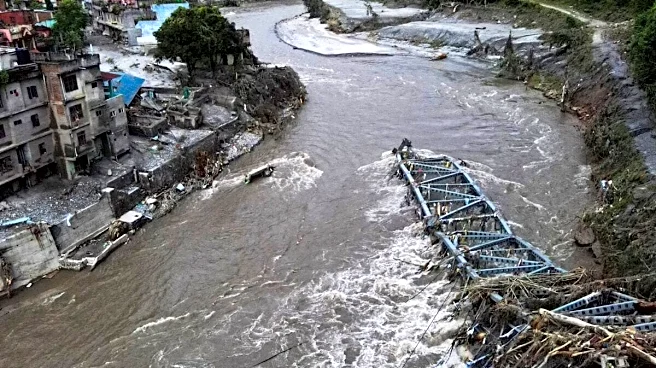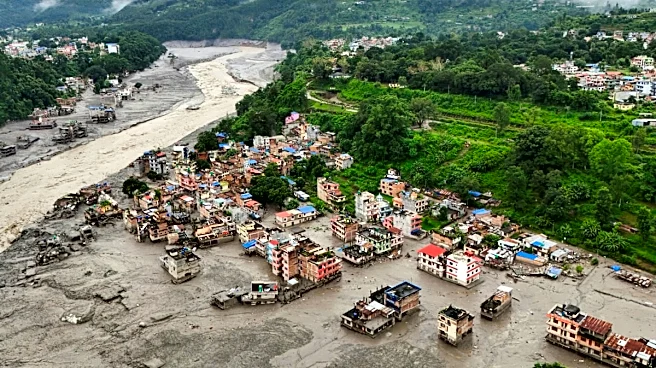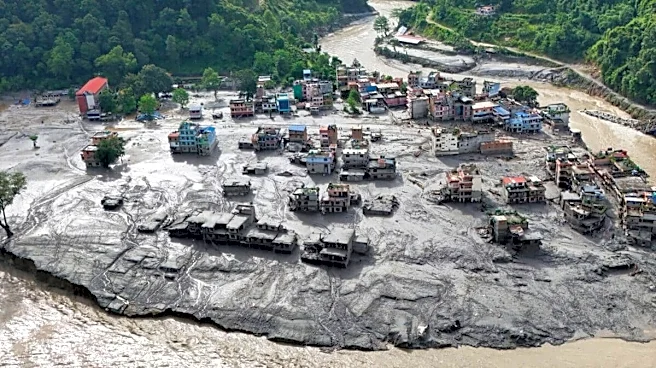

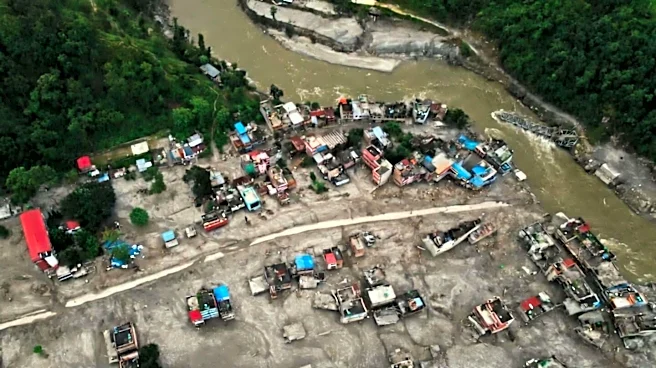
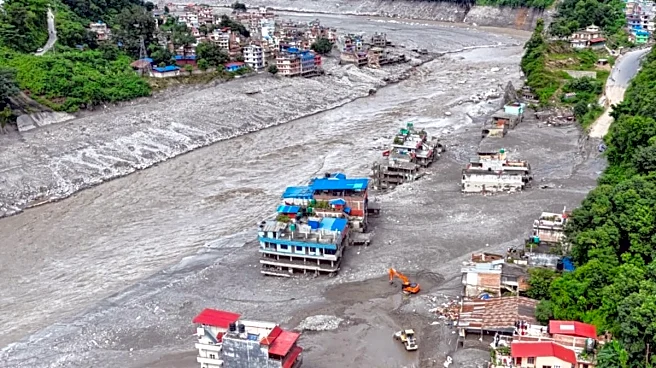
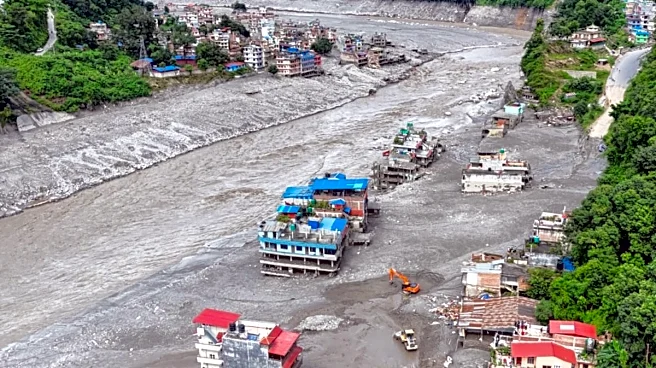
Nepal and China warned on Thursday of fresh flooding risks in the Himalayas after two lakes formed on either side of their border, raising fears they could burst as the region struggles to recover from this week’s catastrophic floods.
Rescuers in Nepal and Tibet are still searching for survivors after Wednesday’s flash floods destroyed homes, swept away bridges and submerged roads. The death toll has risen to 392, with more than 1,400 people still missing.
Nepali police said 389 bodies had been recovered, while Chinese authorities reported three deaths and at least 558 people missing in Tibet. Both countries have linked the disaster to a glacier collapse that sent rock, ice, mud and debris into mountain river systems.
Nepal Warns Of Rising Lake
Nepal’s disaster authority
said a lake formed after debris blocked a river at the flood site was rising and at risk of bursting.
It urged people living along lower river banks, as well as passengers and rescuers, to stay away from river banks and other risky areas.
“Residents of the lower banks… passengers, rescuers engaged in rescue operations, and all concerned are requested to exercise special caution and stay in safe places away from the river banks and risky areas,” the authority said.
Climate expert Qianggong Zhang, head of climate and environmental risks at the Kathmandu-based International Centre for Integrated Mountain Development, said the debris blockage upstream on the Nepal-China border meant a second flood could be “imminent”.
“With a blockage still lodged upstream on the Nepal-China border, authorities warn a second flood is imminent,” Zhang said.
1,200 Olympic-Sized Pools Of Water Could Flow
China warned that about 3 million cubic metres of water — equivalent to roughly 1,200 Olympic-sized swimming pools — could flow into an already dammed lake on its side of the border over the next three days. Authorities said this created a high risk of a breach, with peak flow expected around September 1.
Aerial footage released by Chinese state broadcaster CGTN showed brown water gathering in a basin with no visible outlet. The water had submerged bushes and trees and appeared to be pressing against a barrier of debris and stones.
More rain forecast over the coming week could worsen the threat, Chinese state media said, citing the water resources ministry.
“The volume of water is continuing to increase, and so is the risk,” Zhu Jinfeng, a researcher at the ministry’s hydrology department, told state broadcaster CCTV.
(With inputs from agencies)
/images/ppid_59c68470-image-178814275479620282.webp)





/images/ppid_59c68470-image-178802003330128474.webp)
/images/ppid_59c68470-image-178801253874929530.webp)