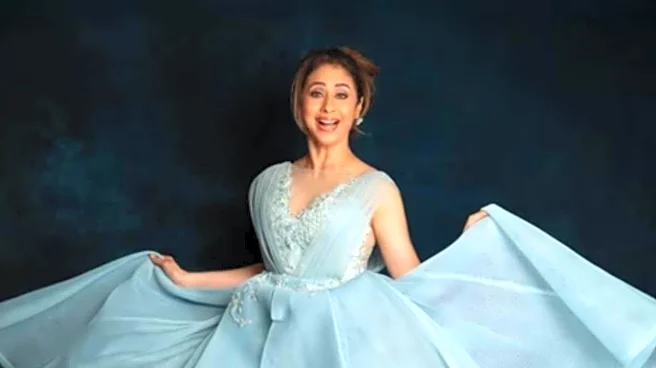

After a long absence from film screens, Urmila Matondkar has responded to speculation about whether she has stepped away from Bollywood. Speaking to Hindustan Times, the actor said she has not retired
and is preparing to return with new roles, including projects for streaming platforms.
Matondkar last featured in a film over five years ago. Since then, she has remained visible through television, including a judging role on DID Super Moms Season 3 in 2022, though it was not an acting comeback. The gap in releases prompted public assumptions about her exit from cinema.
Addressing the perception, she said, “When it comes to my work, I have always been selective. I can’t blame anybody if they thought that maybe I’m not doing movies or something. But that never was the case. I’m definitely at this moment all ready to get back onto the silver screen.”
The Rangeela actor confirmed that new work is on the way, including her first streaming project. “I am looking for roles which I have not done before, especially on OTT. Because there is just so much that is happening on OTT, which has opened a different gamut of genres, characters and emotions, which were unexplored earlier,” she said.
She added that one show has already been completed and is expected to release next year. “I have already finished one show, and hopefully that should come sometime next year. I want something that is challenging enough as an actor to actually get me up and go out there. I will definitely try and explore something new. It’s just about time to get back onto the film sets and get rocking again.”
Matondkar reflected on maintaining variety through her career, beginning with her lead role debut in Narasimha in 1991 and later films like Judaai, Satya, Kaun, Bhoot and Pinjar. “The greatest thing I managed to do over my career is that I never got stuck in any mould. I broke each and every mould which I created to the best of my abilities… There were other contemporaries of mine who were doing similar kinds of roles, wearing similar kinds of clothes. I quickly moved on.”
She recalled consciously shifting choices following the success of Rangeela. “After Rangeela, I moved towards Judaai… I tried to use my name and my star status to be part of movies which were not necessarily big movies but were good…They gave me opportunities to create different versions of myself on celluloid. That has been the biggest asset of my career. When others got fed up with doing the same roles after 10 years, I had already explored so many different kinds of varieties, which, sadly, critics then refused to see, but that’s fine. My audiences saw it, they loved it, and that is the only thing that mattered above everything else,” she notes.
She also weighed in on pay equity, sharing that conditions today are markedly different. “I have no problems with the kind of money I was paid. I was definitely one of the highly paid stars back then, also. There were also movies in which I was paid more than my male counterparts. I will humbly accept the fact. So, I don’t think the topic of pay disparity should be looked at from one perspective.”
According to Matondkar, changes in salaries must be viewed alongside rising production spends. “Things have changed for the better. Over the years, the payrolls have been much better, but then so have movie budgets. So, it would be a little immature to give an answer from only one perspective. Everything has changed tremendously over the last 3 decades, and therefore, the payrolls and everything else also have changed accordingly.”


/images/ppid_59c68470-image-177100753350744656.webp)

/images/ppid_a911dc6a-image-17710070301901476.webp)

/images/ppid_a911dc6a-image-177100572282276854.webp)