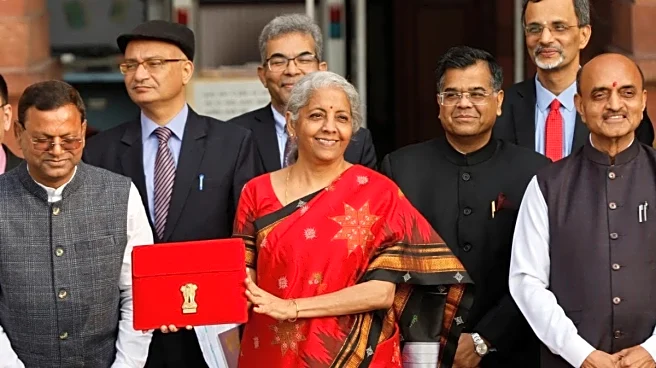



The Economic Survey for FY2025-26, a comprehensive annual document, will be presented by Finance Minister Nirmala Sitharaman on Thursday, January 29, 2026, a day ahead of the Union Budget 2026.
The document is prepared and presented by the Ministry of Finance, specifically by the Department of Economic Affairs, Government of India. It is typically presented in Parliament a day before the Union Budget.
While a lot of Indian citizens are aware of the Annual Financial Statement aka Budget, there’s a large gap in understanding of the Economic Survey and its importance in this annual convention.
Here’s a quick overview of the Economic Survey, who presents it, and why it matters.
What is an Economic Survey?
Comprehensive Analysis: It provides a detailed overview of the economic
performance of the country over the past financial year, including analysis of various sectors such as agriculture, industry, and services.
Statistical Data: Contains a wealth of statistical data related to economic parameters like GDP growth, inflation, employment, fiscal deficit, and more.
Policy Recommendations: Suggests policy measures to address economic challenges and promote growth. These recommendations are often considered in the formulation of the Union Budget.
Review of Government Programs: Evaluate the effectiveness of government programs and initiatives.
Who Presents Economic Survey?
The Economic Survey is prepared by the Chief Economic Adviser (CEA) of India and his/her team within the Ministry of Finance.
It is presented in Parliament by the Finance Minister of India.
Why Is It Significant?
Policy Guidance: Provides policymakers with insights and recommendations that inform budgetary decisions and economic policy formulation.
Transparency and Accountability: Promotes transparency by presenting an objective analysis of the economy, thereby holding the government accountable for its economic policies.
Stakeholder Awareness: Informs various stakeholders, including investors, businesses, and the general public, about the economic conditions and outlook.
Benchmarking: Acts as a benchmark for comparing the current economic situation with previous years and setting targets for the future.
Who Prepares Economic Survey?
The Economic Survey is prepared by the Economic Division of the Department of Economic Affairs (DEA) within the Union finance ministry, under the overall guidance of the CEA. The final version of the document is reviewed by the Finance Secretary and ultimately approved by the Finance Minister.
What Information Does It Provide?
The Economic Survey is divided into three parts. The first and most important part provides an overview and the CEA perspective on key economic issues, offering insights into the government’s stance on the financial state of the country.
The second part includes data and figures on various sectors of the economy, supplied by their respective departments and ministries.
The third part addresses national income, production, employment, inflation, balance of trade, and export-import trade, among other macroeconomic statistics covering all aspects of the economy.
In the past, the Economic Survey has extended beyond numbers and data to emphasise significant issues, such as the impact of climate change and the gender gap on the overall economy. For instance, the Economic Survey for 2018-2019 was pink in colour to highlight the need for gender-neutral policies.
Economic Survey: Some Interesting Facts
The first Economic Survey of India was presented in 1950-51. Until 1964, it was presented along with the Union Budget. However, from 1964 onwards, it was separated and presented before the budget announcement.
The government is not constitutionally required to present the Economic Survey. The practice has evolved due to the document’s importance and significance.