
There is much discussion today about children’s education in schools. The major question is whether to rely on rote learning or promote real understanding. The Economic Survey 2025-26, presented by the central
government before the budget, offers a significant suggestion on this matter. The survey proposes that assessments like PISA should begin at the end of Class 10 in India. This has brought PISA into the spotlight.
Let’s explore what PISA is, why it matters, and what potential benefits it might offer.
What Is PISA?
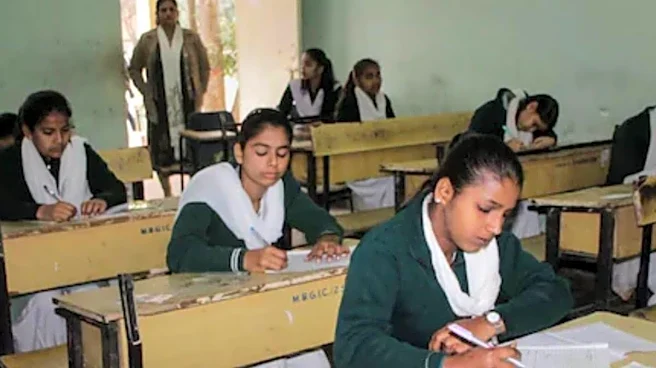
PISA stands for Programme for International Student Assessment. It is an international test conducted every three years by the OECD (Organisation for Economic Cooperation and Development). It evaluates the skills of 15-year-olds, typically in grades 9-10, in reading, mathematics, and science.
PISA is not a rote-learning exam. It assesses how students can apply their knowledge and skills to real-life situations, such as interpreting a news article, solving mathematical problems related to everyday life, or finding practical solutions based on scientific concepts.
When Did India Participate In PISA?
India participated only once, in 2009, and ranked 72nd out of 73 countries. Since then, India has not participated again. According to the latest updates, India did not participate in PISA 2025 either.
What Is Lacking In Our Exams?
School internal and board exams primarily focus on rote learning. They serve for certification and promotion but do not provide diagnostic evidence to address learning gaps. Surveys like ASER and NAS show some improvements, but structural issues persist, including regional and socio-economic disparities.
What Has The Economic Survey 2025-26 Suggested?
The survey recommends introducing a PISA-like assessment in India at the end of Class 10. This would be a standardised, competency-based test that compares states, school types (government/private), and different socio-economic groups on a single scale.
What Could Be The Benefits?
– Understanding the rationale behind scores, such as where children make mistakes and what confuses them.
– Data will help policymakers develop targeted interventions like special training and resources.
– Teachers and schools will receive feedback, improving learning.
– Comparisons across states and schools will accelerate improvement.
– Countries like the US and Australia have seen improved learning outcomes from such assessments.
– Overall, the focus will shift from rote learning to real skills, aligning with NEP 2020.
These suggestions aim to move school education beyond mere pass-fail criteria toward real learning. If implemented, children’s education could become more practical and useful.


/images/ppid_59c68470-image-176977253580990856.webp)

/images/ppid_59c68470-image-176977257414897102.webp)
/images/ppid_59c68470-image-176977253038989059.webp)
/images/ppid_59c68470-image-176977252824992935.webp)
/images/ppid_59c68470-image-176977252636730296.webp)