



Pakistan appears to be losing narrative control in the US-Iran peace process, with Qatar’s public positioning increasingly making Islamabad look like the junior partner in the mediation effort, top intelligence sources told CNN-News18.
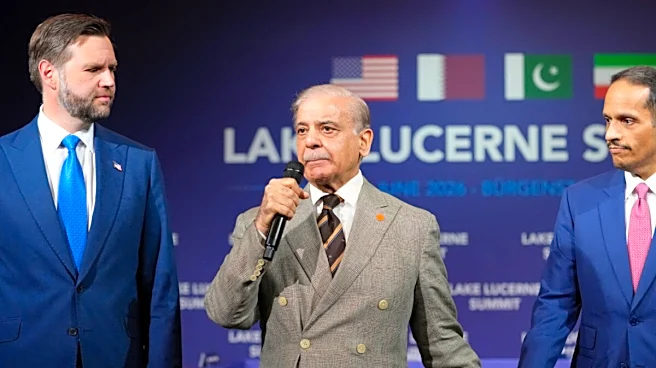
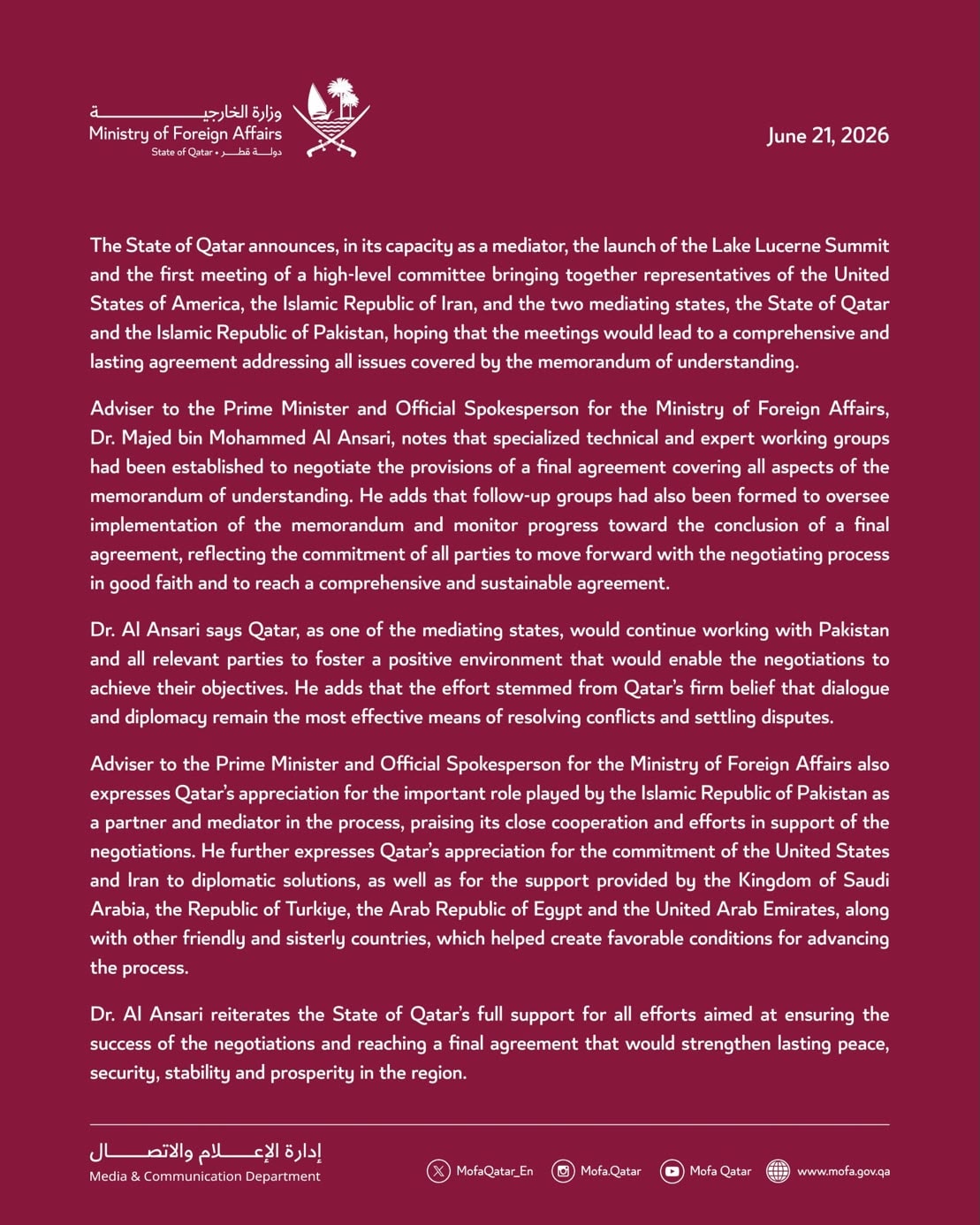
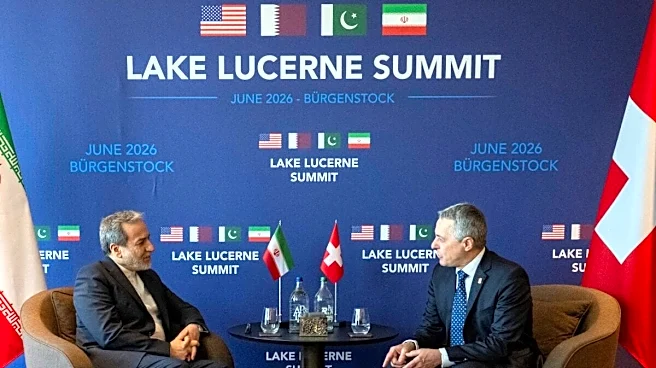
The assessment follows a statement issued by Qatar’s Ministry of Foreign Affairs on Sunday, announcing the launch of the Lake Lucerne Summit and the first meeting of a high-level committee comprising representatives of the United States, Iran, Qatar and Pakistan.
The statement refers to Qatar and Pakistan as the two mediating states and acknowledges Islamabad’s role as a partner and mediator. However, by issuing the principal statement, invoking its own “firm belief in dialogue and diplomacy” and thanking countries
including Saudi Arabia, Turkey, Egypt and the UAE for supporting the process, Qatar has reinforced its image as the indispensable, neutral and high-profile mediator.
According to sources, this systematically sidelines Pakistan in public perception in a high-stakes diplomatic process.
Qatar Frames The Mediation
Qatar said the Lake Lucerne Summit was being held pursuant to the memorandum of understanding reached between the United States and Iran and was aimed at working towards a comprehensive and lasting agreement.
The statement said specialised technical and expert working groups had been established to negotiate the provisions of a final agreement. Follow-up groups had also been formed to supervise implementation of the memorandum and monitor progress.
Dr Majed bin Mohammed Al Ansari, adviser to the Qatari prime minister and official spokesperson for the Ministry of Foreign Affairs, said the launch of the summit marked an important step and reflected the commitment of all sides to continue negotiations in good faith.
He said Qatar would continue working with Pakistan and all concerned parties to provide a positive environment for the talks and help them achieve their objectives.
The statement also said the initiative stemmed from Qatar’s firm belief that dialogue and diplomacy were the most effective means of resolving conflicts and settling disputes.
Qatar’s Established Mediation Record
Qatar already has an established record as a mediator in major international and regional disputes.
It hosted the negotiations that resulted in the 2020 US-Taliban Doha Agreement and remained involved after the US withdrawal from Afghanistan.
Doha has also facilitated multiple prisoner exchanges between the United States and Iran and helped broker elements of ceasefires between Israel and Hamas.
Qatar has also been involved in mediation efforts concerning Lebanon, Yemen and Sudan.
Over the years, it has built a reputation as a trusted and ideologically flexible intermediary capable of engaging with groups ranging from the Taliban and Hamas to Western leaders.
Financial Power Gives Qatar An Edge
Top intelligence sources said Qatar has also used its massive sovereign wealth fund as an instrument of foreign policy, strengthening its ability to support and sustain diplomatic initiatives.
Pakistan, meanwhile, continues to face a domestic economic crisis and remains dependent on external bailouts.
According to the sources, this economic imbalance is a major problem for Islamabad and risks reducing it to a symbolic partner in the mediation process.
Questions Over Pakistan’s Neutrality
Sources also said sectarian alignments within Pakistan and outside the country, along with internal civil-military frictions, weaken Islamabad’s credibility as a truly neutral arbiter.
Qatar, on the other hand, has spent decades building its reputation as an intermediary capable of dealing with ideologically opposed actors.
While the Qatari statement continues to recognise Pakistan as a partner and mediator, Doha’s established diplomatic image, financial strength and prominent public positioning have left Islamabad appearing increasingly secondary in the US-Iran peace process.




/images/ppid_59c68470-image-178203006265583633.webp)

/images/ppid_59c68470-image-178202752458396425.webp)