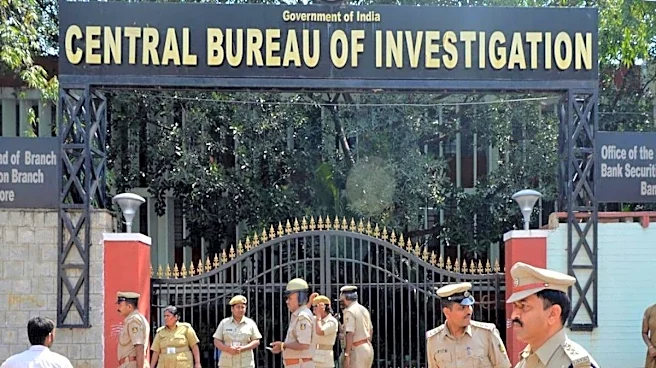



The Prime Minister-led high-powered selection committee (HPC), which includes the Opposition leader and the Chief Justice of India (CJI), are expected to meet on Tuesday to discuss the appointment of the next Director of the Central Bureau of Investigation (CBI).
The current director, Praveen Sood, is set to complete his term on May 24, 2026, though a short extension remains a possibility to ensure leadership continuity.
KEY FRONTRUNNERS FOR THE POST
Top four officers from 1989-92 batches, with six months of service left and with three years of experience in Vigilance and Anti Corruption departments will be considered. The appointee will serve a fixed two-year term, with potential extensions for up to three additional years.
The Department of Personnel and Training (DoPT)
has shortlisted several senior IPS officers:
Shatrujit Singh Kapoor (1990, Haryana): ITBP Director General with prior CBI experience. He has five months of service left but was named as an accused in an FIR in a constable suicide case. He is known for his close professional ties with former Haryana Chief Minister Manohar Lal Khattar.
GP Singh (1991, Assam-Meghalaya): CRPF Director General. He has served as the IG NIA, special DG Assam, DGP Assam and now DG CRPF. He has successfully ensured West Bengal elections with no violence and mobilised people to vote.
Another option is giving one more year to Sood, who is already on a one-year extension. As per the law, the government can grant up to three extensions, after two years of fixed tenure.
HOW CRUCIAL IS THE POST?
The CBI Director’s post is one of the most powerful and sensitive positions in India’s administrative framework because it leads the nation’s premier investigating agencyThe Director is the ultimate decision-making power for the agency’s investigations. They have the final say on whether to file a charge sheet or close a case, making their role pivotal in high-profile political scandals, financial frauds, and complex criminal matters. Unlike most other secretary-level government officials, the CBI Director has a fixed two-year tenure mandated by law to ensure functional independence from political pressure. This tenure can be extended up to five years through annual renewals, as per recent amendments. He leads the fight against corruption involving central government employees and public sector units. The CBI Acts as the nodal agency for Interpol in India, coordinating with global law enforcement. It investigates major breaches of fiscal laws, such as large-scale bank frauds and income tax violations. Courts often transfer sensitive local cases to the CBI, placing immense trust in the Director to maintain the agency’s credibility.
As the administrative head, the Director is responsible for the agency’s internal discipline, framing its vision, and providing leadership to a force that handles cases with massive national ramifications.


/images/ppid_a911dc6a-image-177850923450937934.webp)


/images/ppid_a911dc6a-image-177849103370441920.webp)