

/images/ppid_59c68470-image-177088504763695366.webp)
/images/ppid_a911dc6a-image-177088456643762990.webp)
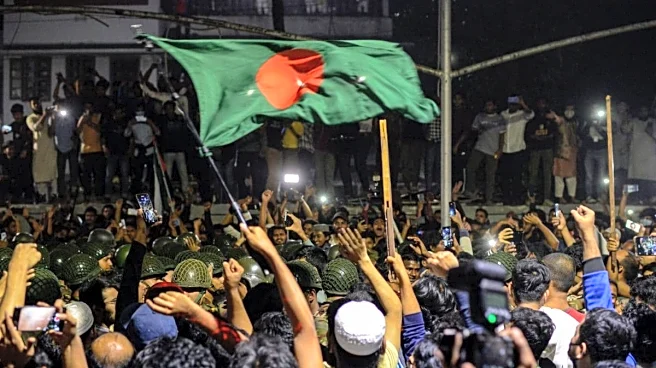
A sweeping writ petition filed in the High Court Division — Writ Petition No. 1201 of 2026 — has brought Bangladesh’s upcoming 13th National Parliamentary Election and the planned national referendum under an unexpected and intense legal spotlight.
With less than a month remaining before voters head to the polls on February 12, 2026, the petition raises questions that strike at the heart of the country’s electoral and constitutional architecture.
The petition, filed by Supreme Court Advocate Nadim Ahmed, contends that the election environment has already been compromised by actions of senior government officials and by the alleged failure of the Election Commission to enforce the law.
Petition Claims Interim Government Has Stepped Beyond Constitutional Boundaries
The petition alleges that several advisers and figures within
the interim administration—individuals legally classified as “government beneficiaries”—have been publicly advocating for a “Yes” vote in the upcoming referendum. These individuals, according to the petition, have appeared in media interviews, issued statements, and taken part in events that directly promote a specific referendum outcome.
Under the Election Code of Conduct (S.R.O 444/Ain/2025I) issued on 10 November 2025, such individuals are expressly prohibited from participating in any form of electioneering.
The petition states:
- The neutrality of the interim government has been “breached beyond repair”.
- Advisers have engaged in “active and coordinated messaging”.
- Public institutions have been used to deliver political encouragement.
One senior constitutional scholar noted:
“The legitimacy of an interim government does not come from elections—it comes from neutrality. If neutrality is compromised, the system’s foundations weaken.”
Government Website Allegedly Used for Political Persuasion
Central to the filing is the allegation that a government-operated website, www.gonovote.gov.bd, was created and used to urge citizens to vote “Yes” in the referendum.
According to the petition:
- The website’s messaging is one-sided.
- Government funds were used to promote a specific political outcome.
- Public employees facilitated the content.
- The platform’s existence violates the Election Code and public trust.
Cyber governance experts say this marks a potentially new and problematic frontier.
“Using state-backed digital platforms to guide public political behaviour is deeply concerning,” said one digital policy specialist.
“It undermines the boundary between citizen information and state influence.”
Election Commission Accused of Silent Endorsement Through Inaction
The petition stresses that the Election Commission of Bangladesh was notified of these alleged irregularities in a Notice Demanding Justice dated 20 January 2026.
The petitioner claims:
- The Commission received the notice.
- No corrective action was taken.
- No public statements were issued.
- No investigation was initiated.
This alleged inaction is portrayed as a constitutional failure, with the petition citing violations of Articles 7, 11, 27, 31, 65, 119, and 122.
A former election monitoring officer remarked: “If the Commission does nothing in the face of alleged violations, it effectively allows those violations to stand. Silence, in such cases, is consent.”
Holding the Election and Referendum Together Seen as Legally Problematic
Another major argument in the petition is the decision to conduct the parliamentary election and the referendum on the same day, an approach the petitioner calls “unprecedented, unwise, and unconstitutional.”
The petition argues that:
- Parliamentary elections rely on party competition.
- Referendums require a depoliticised environment.
- Combining the two risks distorting voter judgment.
- The arrangement could influence both outcomes in unpredictable ways.
Political analysts say this concern is not unfounded.
“When voters are asked to make two fundamentally different choices in a single political moment, confusion and influence become unavoidable,” observed a political sociologist.
Article 91 of the RPO Cited to Request Suspension
To support its demands, the petition invokes Article 91 of the Representation of the People Order (RPO) 1972, a provision that allows the Election Commission to halt an election if free and fair conditions cannot be guaranteed.
The petitioner argues that the current situation meets this threshold, pointing to:
- Executive interference.
- A compromised administrative environment.
- Misuse of public platforms.
- Breakdown of neutrality mechanisms.
The relief sought includes:
- Temporary halt of all election and referendum preparations.
- Scrutiny of the Election Commission’s conduct.
- Disciplinary measures against officials who violated electoral laws.
- Clarification that simultaneous voting procedures violate constitutional norms.
Concerns Over Public Funds and National Confidence
The petition also emphasises the economic and social consequences of continuing with the vote under disputed conditions.
It argues that going forward with a compromised election would lead to:
- Misuse of taxpayer resources.
- Erosion of democratic legitimacy.
- Long-term institutional distrust.
A governance analyst noted: “Bangladesh cannot afford an election whose legitimacy is questioned from the moment it is held.”
What the High Court’s Decision Could Mean
The Court is expected to consider the matter soon. Potential outcomes range from:
- Issuing a Rule Nisi.
- Staying election and referendum preparations.
- Directing the Election Commission to take corrective action.
- Dismissing the petition entirely.
Whatever the Court decides, the petition has reshaped the national conversation about constitutional responsibilities, electoral neutrality, and the integrity of the February 12 vote.
As the political calendar moves forward, the coming days may prove decisive — not only for the election itself but for the broader democratic trajectory of the nation.
Views expressed in the above piece are personal and solely those of the author. They do not necessarily reflect News18’s views.


/images/ppid_a911dc6a-image-177088522728382126.webp)

/images/ppid_59c68470-image-177088509203227042.webp)

/images/ppid_59c68470-image-177088512602071040.webp)
/images/ppid_59c68470-image-177088515585183979.webp)
/images/ppid_59c68470-image-177088504440359883.webp)
/images/ppid_a911dc6a-image-177088508859041936.webp)
/images/ppid_a911dc6a-image-177088504145317785.webp)