

United Nations, Sep 22 (PTI) India has co-sponsored an inaugural multilateralism summit at the UN “at a time when the global order is under stress”, as New Delhi asserted that more participative deliberations and transparent decision-making are overdue.
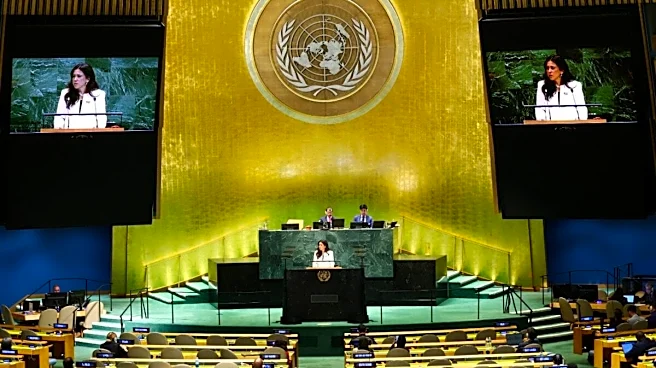
External Affairs Minister S Jaishankar Monday co-chaired the first-ever ‘Partners for Multilateralism, International Law, Peace & Prosperity (P4M)’ Summit held on the margins of the high-level 81st session of the UN General Assembly, along with leaders of Australia, Barbados, Brazil, Canada and Kenya.
“India is glad to join as a co-sponsor. We meet at a time when the global order is under stress,” Jaishankar said in his remarks at the summit held in the UN headquarters.
He said that for some decades,
the world has witnessed a steady rebalancing, which was a long-expected structural evolution.
“However, extreme competition, geopolitical tensions and actual conflicts have given this an entirely different character. If left unchecked, it would call into question the very spirit of international cooperation, and that is why it is so essential that multilateralism asserts itself strongly at this juncture,” he said.
Jaishankar told the summit that where ongoing conflicts are concerned, specific dimensions could be addressed even while nations strive for a broader peace.
“The ‘4F’ crisis of fuel, food, fertiliser and finance cannot be left to itself. When new capabilities and concerns arise, there is a very powerful case for frameworks and guardrails. Where there is a threat of chokepoint dominance and disruption, de-risking and diversifying must be encouraged.” “And where there is a compelling cause or a powerful case, the like-minded must have the confidence to come together,” he said.
Jaishankar was joined by the summit’s cosponsors – President of the European Council António Costa, President of Kenya William Ruto, Australian Prime Minister Anthony Albanese, Barbados Prime Minister Mia Mottley.
Brazilian Minister of Foreign Affairs Mauro Vieira and Canadian Permanent Representative David Lametti, who read remarks on behalf of Canadian Prime Minister Mark Carney.
Jaishankar stressed that multilateralism will be best served when international law, rules and norms are scrupulously observed.
“For multilateralism to forge ahead, its advocacy and its practice must both be strengthened. Reformed multilateralism is therefore essential. More participative deliberations and more transparent decision-making are both overdue.” “That would provide the hope and the optimism, which is clearly needed by the UN system, and it would reinforce our resolve to work together.” Jaishankar cautioned that at stake are “very real issues”, including the future of peace and international security, climate action and climate justice, emerging technologies and development finance, countering terrorism and strengthening supply chains, and ensuring disaster resilience and preparing for pandemics.
He emphasised that all depend on a “will to cooperate.” India underlined that whatever “we have achieved so far is only through collective efforts. The lesson here is to safeguard the good while striving for the better.” Costa described the cosponsors of the summit as a “wide and diverse” representation of the international community from all continents.
“We are at a critical moment for the world. Conflict is spreading, international law, including the United Nations Charter, is being repeatedly violated, including by permanent members of the United Nations Security Council, and the multilateral system is under stress.” Ruto said the question of how nations restore trust in international cooperation when the institutions created to sustain it are themselves under growing strain can no longer be postponed.
“The crisis of multilateralism is not a crisis of cooperation. It is a crisis of rules and institutions that have not kept pace with the world they are expected to govern.” “Trust will not be restored by asking countries to believe more strongly in multilateralism. Trust will be restored when multilateralism works more fairly, when its rules are applied consistently, when its institutions reflect the world that they govern today, and when cooperation produces results people can see.” “That is how we make multilateralism deliver, and that is how we ensure that the future is not written for some and imposed on others, but built together through partnership, fairness, and shared responsibility,” Ruto added.
Albanese, who has announced Australia’s candidature for a non-permanent seat at the UN Security Council for 2029-30, said global challenges cannot be solved by countries acting alone.
“When we look at the challenges confronting us: a land war in Europe, conflict in the Middle East, global inflation, the rise of new technologies, including artificial intelligence that present opportunities but also have very significant risks before us. To solve them, we must commit to the UN Charter, but we must also resolve to make the system work more effectively,” Albanese said.
Mottley said the reality is that “it is vital that countries like ours have a voice. The post-independence movement in the post-World War II era was intended to give us opportunity and choices. Regrettably, those are being taken from us without our participation, without our input,” she said.
Vieira said the world today is undergoing unprecedented changes: climate change, new technologies, and shifts in global production chains will shape our future. To address the challenges these changes will bring, we will need more dialogue and more multilateralism, not less.
“Yet, there are those who seek to divide the world into spheres of influence in an attempt to halt the inevitable emergence of a multipolar order. In doing so, they attack multilateralism, international law and the UN Charter,” Vieira said.
Lametti said effective multilateralism works in layers. “Universal institutions uphold common principles, confer legitimacy, and ensure that countries large and small have a voice,” he said.
The inaugural summit comes at a time when the powerful 15-nation UN Security Council remains deeply divided and polarised, failing to stop conflicts and fulfil its responsibilities of maintaining international peace and security.
With sharp divisions among its five permanent, veto-wielding members – China, France, Russia, UK and the US, the Council has remained ineffective as conflicts rage around the world. PTI YAS AMS
/images/ppid_59c68470-image-178998009843186746.webp)

/images/ppid_59c68470-image-179004252641791521.webp)
/images/ppid_59c68470-image-178999752989723844.webp)

/images/ppid_59c68470-image-178996260419614162.webp)