

/images/ppid_59c68470-image-177018756317372110.webp)
/images/ppid_59c68470-image-177018753227494270.webp)
It began as something ordinary—a game on a phone to pass time—until it spiralled into something that no one around them fully understood in time. In a heart-breaking tragedy, three minor sisters, aged 12, 14 and 16, jumped to death from the ninth floor of a building in Uttar Pradesh’s Ghaziabad, allegedly after being drawn into a “task-based” online game.
According to the police, the girls frequently played an online game called ‘Korean Lover’ and were obsessed with it in no time, much to the chagrin of their parents. A screenshot of the game recovered by the cops from the girls’ mobile phones shows suicide listed as the “last task”, reportedly prompting the children to take the extreme step.
“Mummy, Papa, sorry. The game you wanted us to quit,
now you will realise how much we loved it. Korean (the game) was our life,” the three said in a suicide note that police recovered from the spot.
Speaking to the media, the girls’ father said they had no idea about the game the children were playing. “They had been playing the game for the past two-three years. They used to tell me that they wanted to go to Korea. I would ask them, ‘Why Korea?’,” he said. “In the early hours of Wednesday, the girls told me they had to go to the kitchen to drink water. From there, they jumped off the building. I always thought of it as a normal game. I had no idea they were a part of a task.”
The incident took place at Bharat City, a residential township in Ghaziabad, at around 2am on Wednesday.
What makes the tragedy more heart wrenching is that this is not the first time young adults and children have fallen prey to such games. According to experts, the nomenclature “game” is fallacious in itself as these can be better described as online manipulation challenges that exploit vulnerability.
Why Are These Games Problematic?
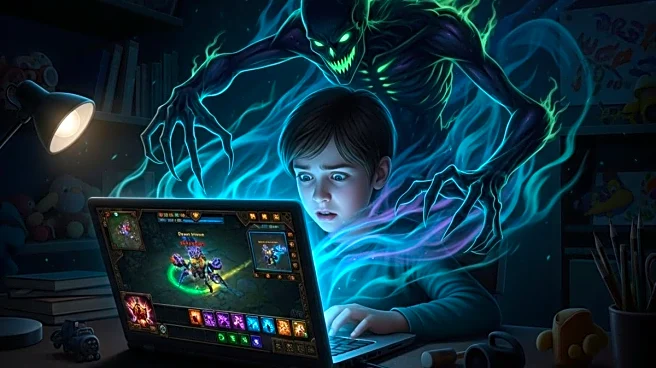
Formats that are task-based become addictive loops. Some games, like the one in the Ghaziabad case or the widely known Blue Whale Challenge, are designed to keep players continually engaged with a cycle of short, repetitive tasks that trigger psychological reward mechanisms. This becomes more problematic for children and teenagers as immersive games can take time away from real-world interaction, school, and sleep, deepening emotional dependence.
In the Ghaziabad case too, police noted the girls were “highly addicted” and had even abandoned regular schooling in a sign that gaming had become central in their daily lives.
How Are The Games Manipulative?
It’s not force but psychological grooming that keeps these games running. The tasks start small, for instance watching a video late at night or waking up early, and slowly become harmful—much before the player realises. In many cases, players are told not to talk to family or friends, cutting off support and a possible helping hand. The admins of such games may also threaten to leak personal information, harm loved ones, or shame the player, further pulling innocent people into the vortex.
They often target people who feel lonely, depressed, bullied, or unseen, offering a sense of “belonging” or being “chosen”. The Ghaziabad sisters, according to their father, had stopped going to school due to “shame” after they had failed, and this probably played a big role in their addiction to an online entity.
Who Is Most At Risk?
Young people, especially adolescents, are often still developing emotionally and socially. They can be more influenced by peers, trends, and social media content, especially if they are feeling isolated or seeking connection.
Apart from these, people dealing with depression, anxiety, bullying, grief, or isolation; those who spend long, unsupervised hours online; and curious users drawn in by viral fear or “forbidden challenge” talk are at risk.
What Are The Games That Have Been Flagged?
Apart from the ‘Korean Lover’ game that the Ghaziabad sisters were playing, several such online challenges have been flagged in the past for encouraging self harm.
• Blackout Challenge: A trend where participants intentionally restrict their breathing to the point of losing consciousness. Health experts warn this can lead to brain injury or death. It gained attention on platforms like TikTok and has been linked by media and families to multiple child deaths, leading to lawsuits against the platform for allegedly exposing children to harmful content.
• Blue Whale Challenge: Reported originally in Russia, this so‑called game involved a series of tasks over weeks that allegedly escalated to self‑harm and suicidal acts. Authorities worldwide rang alarm bells as the game spread via social networks.
• Spawnism Cult Activity (Roblox‑linked): Investigative reporting has described an online “cult” narrative around a game on Roblox called Forsaken, where vulnerable children were allegedly groomed and encouraged toward self‑harm, with harmful rituals shared beyond the game into other platforms.
Are There Any Warning Signs To Look Out For?
The warning signs that someone may be involved include sudden withdrawal or secrecy about phone use, drastic sleep changes, unexplained injuries, obsession with dark or fatalistic content, and statements like “no one would miss me” or “I want to disappear”.
The girls’ father, while speaking to the media, had also said that the sisters stayed together like a pack and would leave the room if their parents entered—possibly in an effort to maintain secrecy.
Has There Been Any Government Action?
Indian authorities have taken several steps over the years to address risks linked to harmful online content and gaming:
• Content takedown and platform obligations: The government has used the IT Rules, 2021, to require platforms to remove content that poses a risk to child safety.
• Cybercrime investigations: Police often investigate and collect digital evidence, including mobile phones and app histories, when serious incidents occur.
• Helpline and mental health awareness: Following past online challenge scares, helplines and mental health resources have been promoted to support vulnerable youth.
• Case-by-case legal action: Where there’s evidence of criminal acts (such as coercion or abetment), cases are pursued under relevant sections of the Indian Penal Code and cyber laws.
How Can One Stay Safe Online
• Unfollow or block accounts sharing harmful content.
• Report dangerous challenges on the platform (most have reporting tools).
• Focus on positive communities: Follow pages/accounts that promote mental health, creativity, support, or learning.
• Talk to someone: If you’re struggling, reach out to someone you trust — a friend, family member, teacher, or counselor.
• Parents must discuss risks honestly, including cyberbullying, addiction, and online challenges in age-appropriate language.
• Limit daily screen time, especially late at night. Studies show late-night gaming can affect sleep and mental health.
• Notice if your child becomes obsessed with certain games or online friends at the expense of real-life relationships.
If you or someone you know needs help, call any of these helplines: Aasra (Mumbai) 022-27546669, Sneha (Chennai) 044-24640050, Sumaitri (Delhi) 011-23389090, Cooj (Goa) 0832- 2252525, Jeevan (Jamshedpur) 065-76453841, Pratheeksha (Kochi) 048-42448830, Maithri (Kochi) 0484-2540530, Roshni (Hyderabad) 040-66202000, Lifeline 033-64643267 (Kolkata)





/images/ppid_a911dc6a-image-177018803350188439.webp)

/images/ppid_a911dc6a-image-177018806964148320.webp)
/images/ppid_59c68470-image-177018758689445512.webp)

/images/ppid_59c68470-image-177018764582077862.webp)
/images/ppid_59c68470-image-177018753074546188.webp)
/images/ppid_59c68470-image-177018755878393154.webp)