
/images/ppid_a911dc6a-image-17778541472192216.webp)

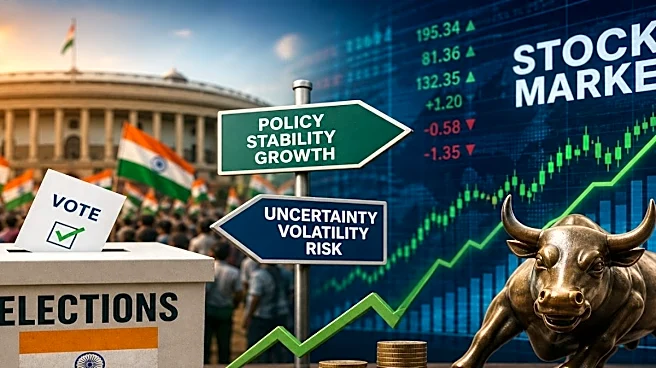
India is entering a rare 10-month election-free window, a phase typically associated with policy stability, lower volatility and improved investor confidence. After a prolonged cycle of state elections, the absence of major political events is expected to shift market focus back to fundamentals such as earnings growth, liquidity trends and global cues.
According to Kotak’s view, markets tend to reward political continuity and policy clarity, with stability often translating into stronger investor sentiment. Historically, equities have shown an upward bias around election cycles, and a relatively calm period thereafter can help sustain that momentum.
Why do elections move markets?
At their core, elections introduce uncertainty, which tends to make
markets nervous. A change in government—or even the continuation of an incumbent—can bring policy shifts that impact sectors differently. For instance, a pro-business regime may support sectors like banking, infrastructure and manufacturing, while tighter regulations could weigh on industries such as tobacco, alcohol or polluting sectors.
This uncertainty around policy direction, reforms and economic priorities often leads to volatility, as investors try to anticipate winners and losers. Elections also influence foreign investor sentiment, perceptions of political stability and the pace of reforms—all of which can shape market direction.
Shift from politics to fundamentals
Election-heavy periods are typically marked by sentiment-driven swings, but an election-free phase allows markets to recalibrate and track core drivers more closely. These include corporate earnings, interest rate movements, fiscal policy and global macroeconomic trends.
Kotak highlights that while elections create short-term noise, long-term market direction is largely driven by economic fundamentals. This shift in focus could benefit domestic-facing sectors such as banking, infrastructure and capital goods, where visibility on growth improves.
Reform momentum and policy execution
One of the key advantages of an election-free stretch is the government’s ability to push reforms without political constraints. Such periods have historically seen faster project clearances, higher infrastructure spending and more decisive policymaking.
For markets, this translates into better visibility on growth and earnings, which can support valuations and improve investor confidence over time.
FII flows and risk appetite
Foreign institutional investors, who tend to stay cautious during politically uncertain periods, may find this phase more attractive. A stable political backdrop reduces one layer of risk, potentially aiding capital inflows—especially if supported by improving domestic macroeconomic indicators.
How markets reacted to election results
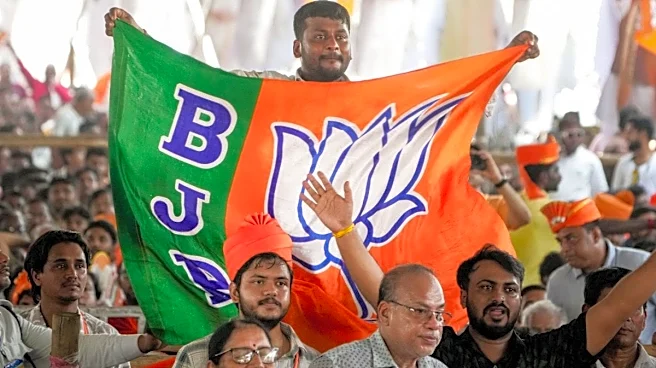
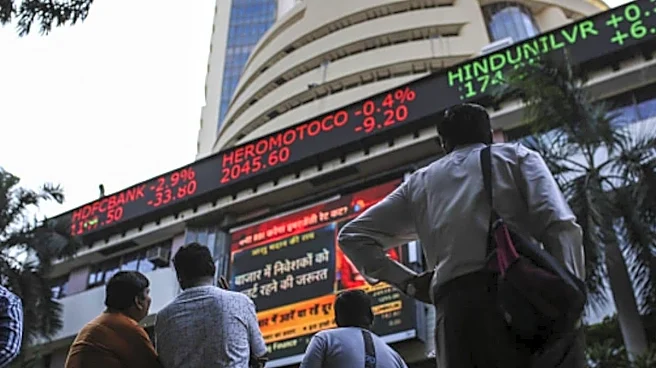
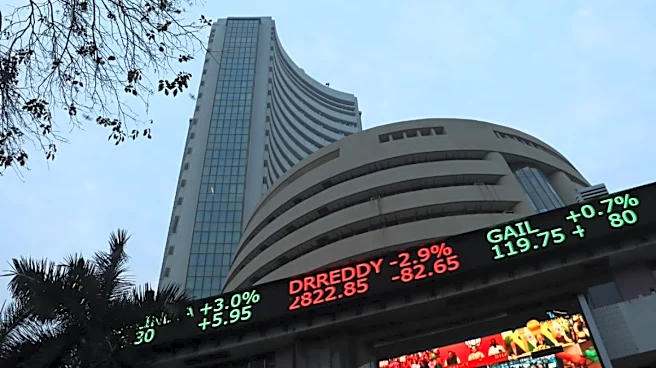
Indian equity markets offered a glimpse of this dynamic during the latest round of assembly election results. Benchmarks surged in early trade as counting trends pointed to a strong performance by the Bharatiya Janata Party, particularly in West Bengal and Assam, lifting sentiment around political stability and continuity.
The Sensex rallied sharply—at one point gaining nearly 1,000 points—while the Nifty approached the 24,200–24,300 zone. However, the gains proved short-lived, with profit booking and weakness in IT and banking stocks trimming the rally by the close. The session reflected a familiar pattern: a knee-jerk positive reaction to favourable political outcomes, followed by caution amid global uncertainties.
Policy bandwidth returns
Tanvi Kanchan, Associate Director at Anand Rathi Share and Stock Brokers Limited, said the conclusion of elections marks an important shift for markets.
“With counting concluded on May 4 for elections in West Bengal, Tamil Nadu, Kerala, Assam and Puducherry, India now enters a 10-month election-free period, with no major state polls expected until early 2027. For markets, this is significant for one primary reason—policy bandwidth. During active election cycles, governments are constrained in taking hard, politically sensitive decisions. This window removes that constraint,” she said.
Kanchan added that policymakers are now likely to focus on key reforms such as rationalising energy subsidies, accelerating trade diversification, progressing on the India-US bilateral trade agreement and pushing through long-pending structural reforms. However, she maintained that the near-term outlook remains one of “cautious optimism,” with markets likely to trade in a range before clearer triggers emerge.
Global risks still in play
That said, an election-free period does not guarantee a sustained rally. Markets continue to be influenced by global developments such as geopolitical tensions, crude oil price movements and US interest rate trends.
Kotak notes that these external factors can outweigh domestic positives in the short term, keeping volatility elevated despite a stable political environment.
India’s entry into a 10-month election-free phase is structurally positive for equities, as it reduces political noise and enhances policy visibility. However, while near-term sentiment may improve, sustained market direction will depend more on earnings growth and global cues than on politics alone.

/images/ppid_a911dc6a-image-177797262739255571.webp)



/images/ppid_a911dc6a-image-177787490344256113.webp)