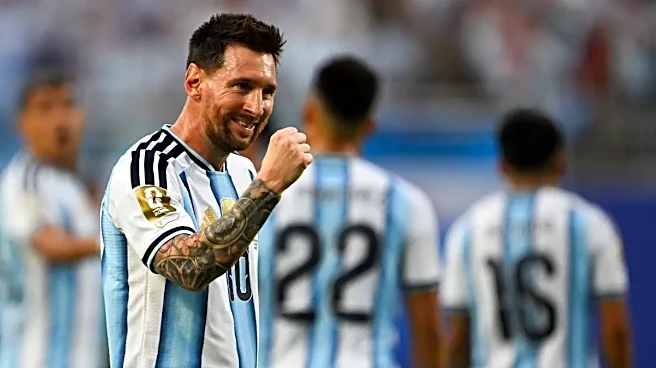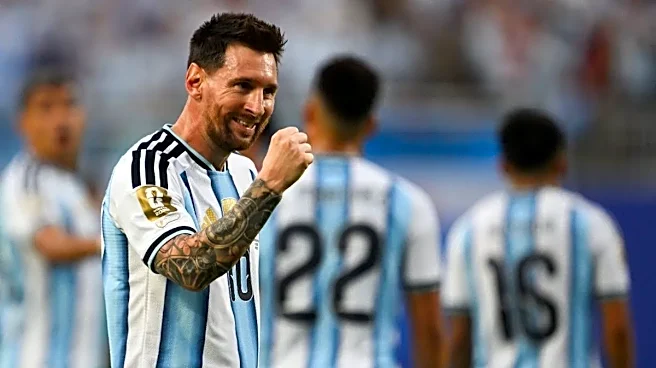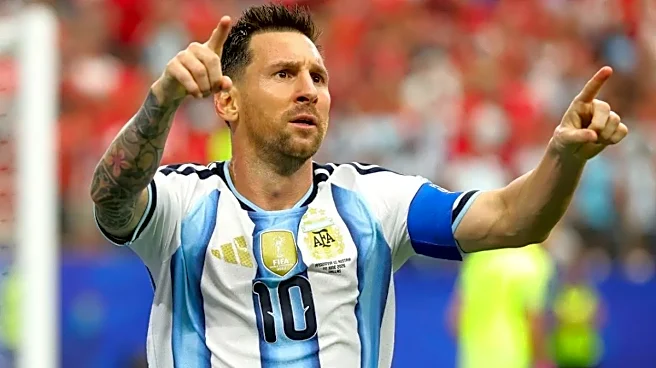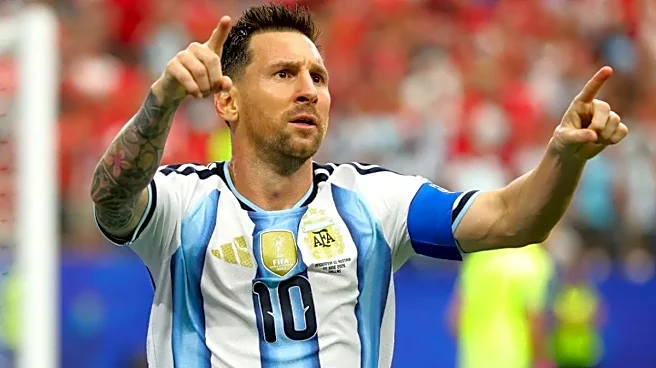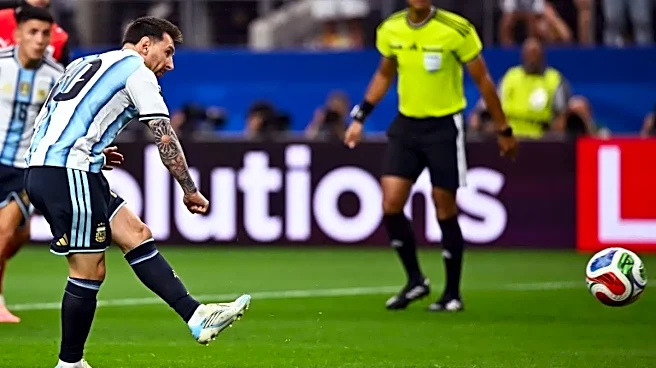




Lionel Messi, at the age of 38, continues to break records and set new benchmarks. On Monday, at AT&T Stadium in Arlington, he became the leading goal-scorer in FIFA World Cup history.
Let’s take a look at how Messi became, arguably, the greatest footballer in history.
Messi was born on June 24, 1987, in Rosario and began exhibiting exceptional footballing skills from a young age. However, as a child, he faced a major challenge. At the age of 11, Messi was diagnosed with a growth hormone deficiency, and the cost of treatment was beyond his family’s means.
With his local club, Newell’s Old Boys, struggling to secure long-term financial support, Messi’s future appeared uncertain.
That changed in 2000 when Barcelona invited the youngster for a trial.
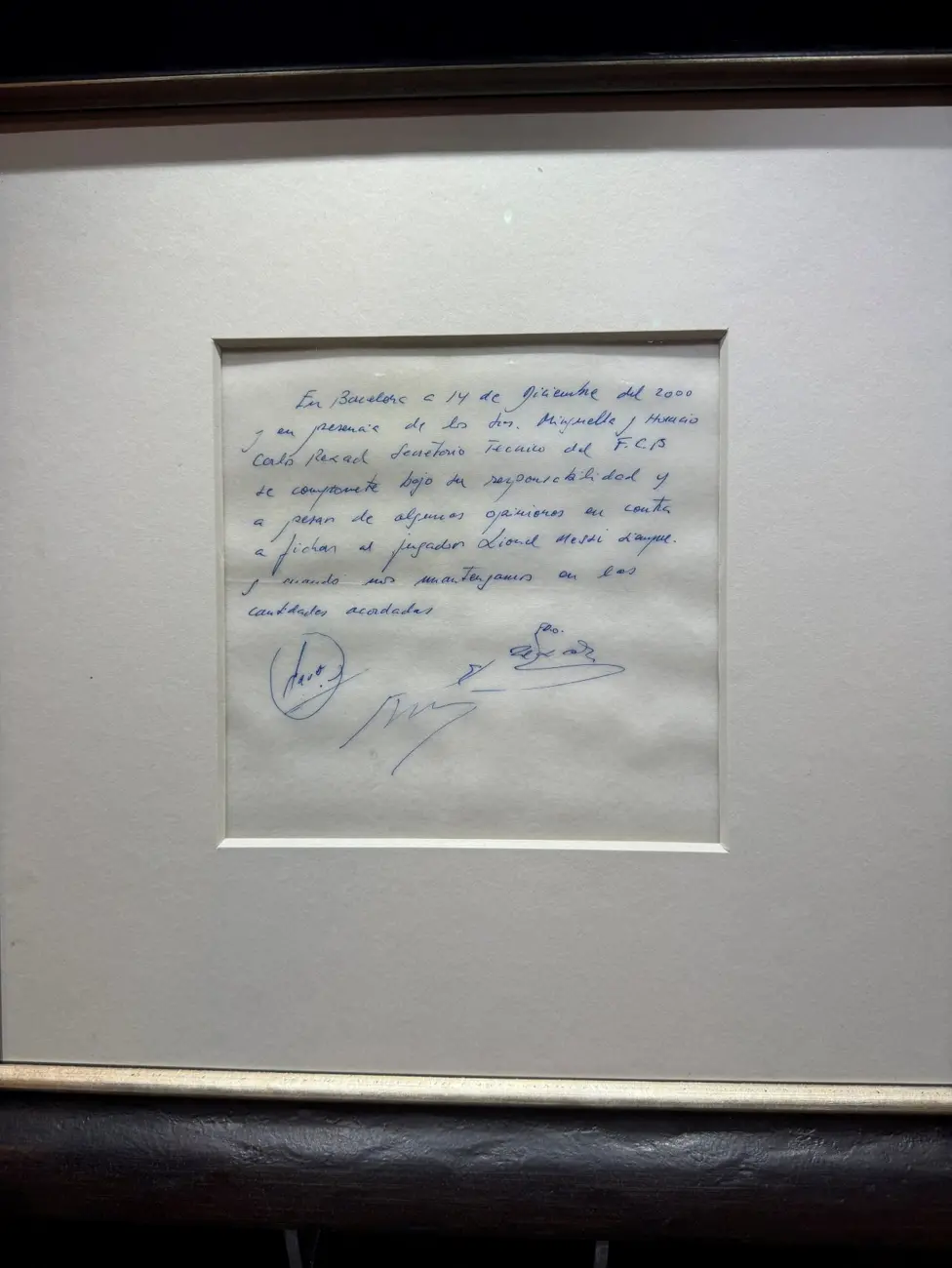
Impressed by his ability, club officials agreed to sign him at the age of 13. The deal became one of football’s most famous stories after sporting director Carles Rexach reportedly wrote the initial agreement on a paper napkin, committing the club to the teenager’s future and helping fund his medical treatment.
Rise Through La Masia
After relocating to Spain with his family, Messi progressed rapidly through Barcelona’s famed La Masia academy. Coaches quickly recognised his control, balance and vision. At the age of 17, he made his senior debut in 2004, taking the first steps towards becoming one of the most influential players in world football.
His rise as a footballing great coincided with one of Barcelona’s most successful periods in history, and he soon became the team’s focal point.
Working under coaches including Pep Guardiola, Messi helped the club dominate Spanish and European football and developed into a world-class goalscorer and playmaker.
Ballon d’Or Success
Messi’s Barcelona career lasted over two decades, during which he set a host of remarkable records. He became the club’s all-time leading scorer and won multiple domestic and international titles. Messi added eight Ballon d’Or awards to his overflowing trophy cabinet and firmly established himself among football’s royalty.
LIONEL MESSI IS THE 2023 MEN’S BALLON D’OR!
Eight Ballon d’Or for Argentina hero! 🖐🤟#ballondor pic.twitter.com/1slOJ6EoKj
— Ballon d’Or (@ballondor) October 30, 2023
The Near Misses
While club success arrived early for the prodigy, his international career proved to be complicated and full of setbacks. He won an Olympic gold medal with Argentina at the 2008 Summer Olympics, but major senior honours remained elusive.
Argentina reached the final of the 2014 FIFA World Cup only to lose to Germany in heartbreaking fashion. Further disappointment followed with defeats in the 2015 and 2016 Copa América finals. After the 2016 loss to Chile, an emotional Messi announced his retirement from international football, admitting that the repeated final defeats had taken a heavy toll.
MESSI: After #ARG‘s #WorldCup Final defeat, Lionel Messi has said he is inconsolable #GERARG – http://t.co/uEFV9BgLyn pic.twitter.com/tZ1IpFZpuU
— FIFA World Cup (@FIFAWorldCup) July 14, 2014
Tears, Retirement and U-Turn
However, as widely expected, the retirement lasted only a few weeks. Following discussions with Argentine football officials and widespread public demand, Messi reversed his decision and returned to the national team. He later explained that the frustration of yet another final defeat had forced him to quit.
That retirement reversal proved pivotal — both for Messi and for his country.
In 2021, Messi finally lifted a major senior international trophy when Argentina defeated Brazil to win the Copa América title.
World Cup Glory
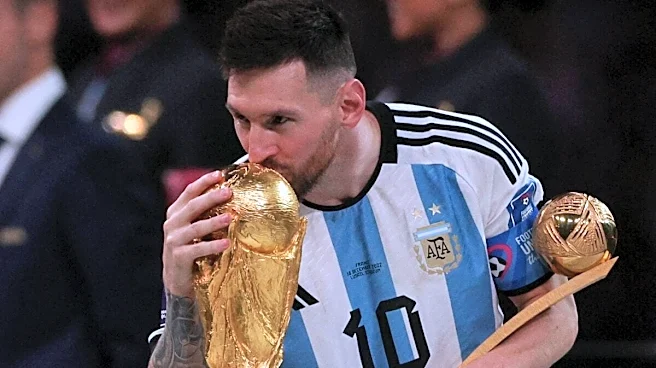
The crowning moment of Messi’s career arrived at the 2022 FIFA World Cup. After years of frustration, he captained Argentina to victory and was named the tournament’s best player. Images of Messi celebrating with the trophy became defining sporting photographs of the decade.
His international story continued beyond Qatar. At the 2026 FIFA World Cup, Messi scored a stunning goal against Austria during Argentina’s second group-stage match to register his 17th World Cup goal. He thus surpassed Miroslav Klose’s all-time record to become the leading goalscorer in men’s FIFA World Cup history.
Marrying Childhood Sweetheart
Away from football, Messi married his childhood sweetheart, Antonela Roccuzzo, in 2017. The couple have three sons and have maintained close ties with their hometown of Rosario.
In 2021, Barcelona’s financial difficulties forced a shock departure that left Messi in tears during his farewell press conference. He joined Paris Saint-Germain, but despite the hype, his stint in France was not particularly happy.
In 2023, Messi began a new chapter with Inter Miami in Major League Soccer.
At an age when footballers generally walk into the sunset, Messi continues to add to his legacy, having recently become the first male player in history to play in six different FIFA World Cups.