
/images/ppid_a911dc6a-image-177520023448252167.webp)
/images/ppid_a911dc6a-image-177520006315442085.webp)
/images/ppid_a911dc6a-image-177520016721166713.webp)
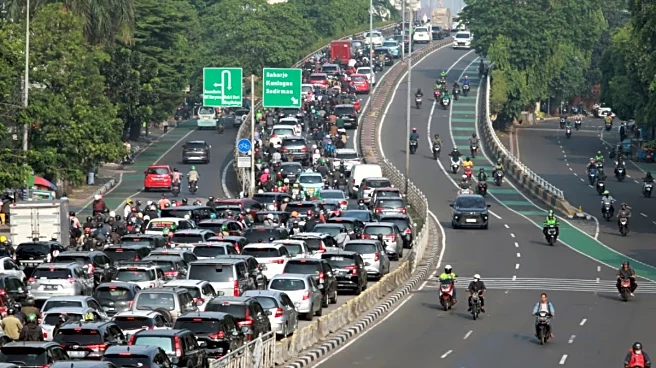
Bengaluru’s long-standing traffic woes have earned it another unenviable distinction. The city has been ranked the second most congested city in the world in 2025, according to the latest TomTom Traffic Index, reaffirming what daily commuters already know all too well: moving across India’s tech capital is getting slower, not smoother.
The Netherlands-based location technology firm’s 2025 data shows that Bengaluru motorists crawled at an average speed of just 16.6 kmph, losing 168 hours a year stuck in traffic. Simply put, residents spent the equivalent of seven full days of their year doing nothing but waiting on the road.
Six Indian cities feature among the top 10 most congested in Asia, with Bengaluru at number one and Pune at number two. Mumbai
ranks sixth, New Delhi seventh, Kolkata ninth and Jaipur tenth. Chennai comes in at 11th, while Hyderabad is placed 15th in the Asia ranking.
The TomTom Traffic Index is based on anonymised GPS data and real driving speeds collected from vehicles across the world, covering more than 3.65 trillion kilometres of trips. It benchmarks cities on congestion levels, travel times and average speeds, offering a data-backed snapshot of how people actually move through urban spaces.
The slowdown is not marginal. In 2024, a 10 km drive in Bengaluru took 34 minutes and 10 seconds. In 2025, the same distance took 36 minutes and 9 seconds, an increase of over two minutes. During peak evening rush hour, average speeds dropped further to 13.9 kmph, with congestion levels touching a staggering 183% at 6 pm.
TomTom’s data also highlights that in just 15 minutes, a motorist in Bengaluru could travel only 4.2 km, slightly less than last year. Congestion levels rose by 1.7 points compared to 2024, signalling that traffic conditions are worsening rather than stabilising.
Pune emerged as the second Indian city in the global top 10, ranking fifth worldwide for congestion. This makes India one of the most traffic-choked regions globally. In fact, six Indian cities feature among Asia’s top 10 most congested cities: Bengaluru, Pune, Mumbai, New Delhi, Kolkata and Jaipur.
Chennai narrowly missed the Asia top 10, ranking 11th, while Hyderabad stood at 15th, one of the few cities to record an improvement in traffic conditions this year.
Mumbai offered a rare silver lining. The financial capital recorded a 3.3 percentage-point drop in congestion compared to 2024. Even so, commuters there still lost 126 hours annually, with average speeds hovering at 20.8 kmph.
New Delhi, on the other hand, saw congestion rise to 60.2 percent, an increase of 3.5 percentage points year-on-year. Motorists in the capital lost 104 hours in traffic in 2025.
Kolkata, which ranked second globally for congestion in 2024, slipped to 29th place this year, though commuters still spent a significant 150 hours annually on the road.
In the global list, Mumbai stands at 18th with commuters losing 126 hours annually to traffic, and Delhi is 23rd with 104 hours wasted each year. Kolkata, which was ranked second globally in 2024, slipped to 29th in 2025, with motorists spending 150 hours a year in traffic. Chennai is ranked 32nd, while Hyderabad is placed 47th.
Among major Indian cities, Hyderabad stood out positively. It recorded a 1.3%-point reduction in congestion, landing at 47th globally. While still congested, the drop suggests that targeted interventions and road management strategies may be making a difference.





/images/ppid_a911dc6a-image-177520203363379148.webp)

/images/ppid_a911dc6a-image-177520206629386300.webp)