

India’s trade patterns have started changing sharply amid the ongoing war in West Asia and the prolonged closure of the Strait of Hormuz, with Singapore replacing the UAE as India’s second-largest export destination.
An Indian Express report, citing data shared by the Commerce and Industry Ministry, said traders have increasingly started using alternative routes to transport goods as disruptions continue across West Asia.
Shift in export routes
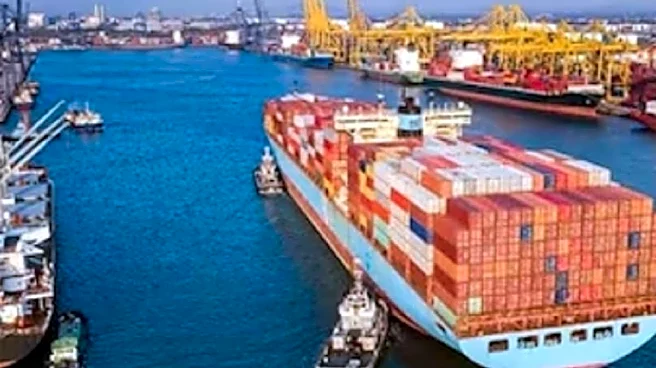
The biggest change was seen in India’s trade links with two major transshipment hubs, the UAE and Singapore, both of which have free trade agreements with India.
Singapore overtook the UAE in April after recording a major rise in imports from India. Exports to Singapore jumped by 180% to $3.20 billion in April, compared to $1.14
billion during the same period last year.
At the same time, exports to the UAE declined sharply by 36% to $2.18 billion last month, down from $3.43 billion a year earlier.
Officials said exports routed through Singapore have continued rising month after month since February as trade disruptions affected shipments through the UAE.
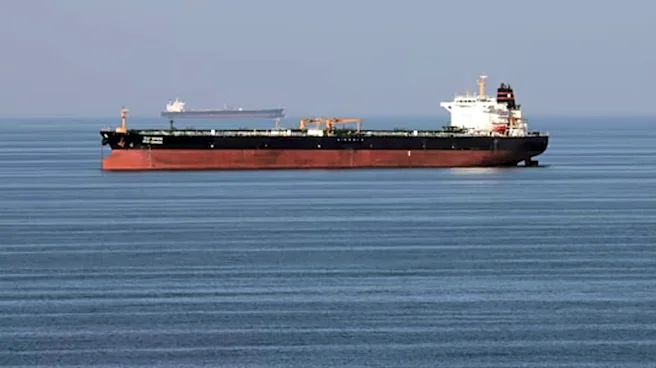
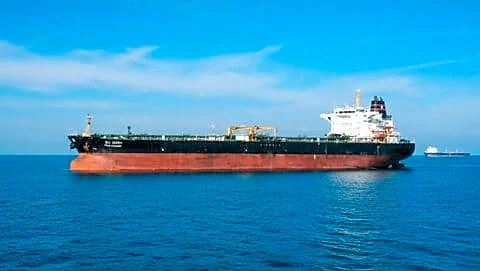
The Strait of Hormuz, a key global shipping route between Iran and Oman, has remained closed since March 2.
New import partners emerge
The conflict in West Asia has also changed India’s import patterns, especially in the energy sector.
Countries such as Oman, Peru and Nigeria have now entered India’s top 20 import sources. Imports from Oman alone more than tripled in April to $1.48 billion from $429.58 million earlier.
Traditional energy suppliers also saw major shifts. Imports from Qatar dropped by 47% in March to $537.34 million compared to $1.03 billion during the same month last year.
However, imports from Saudi Arabia recovered strongly in April, rising to $3.85 billion compared to $2.06 billion in March.
Rising energy prices and pressure on Rupee
The war in West Asia and the closure of the Strait of Hormuz have pushed global energy prices higher. Damage to energy infrastructure in Gulf nations has also affected supplies.
The crisis has increased India’s import bill and created uncertainty for exporters.
The rupee has also come under pressure and has fallen to several record lows against the US dollar, declining 5.2% since the end of February.
To reduce pressure on foreign currency reserves and fuel consumption, the government has introduced austerity measures. Oil marketing companies on Friday also increased petrol and diesel prices for the first time in four years. Import duty on precious metals has also been raised.
Strait Of Hormuz crisis
Before the conflict began on February 28, the Strait of Hormuz handled nearly one-fifth of global oil flows.
Since the closure of the route, ship movement through the strait has almost stopped, creating a major global energy supply crisis.
According to the US Energy Information Administration (EIA), oil producers including Iraq, Saudi Arabia, Kuwait, the UAE, Qatar and Bahrain together shut in 10.5 million barrels per day of crude oil production in April, up from 8.9 million barrels per day in March.
The EIA also revised its March estimate upwards by 19%, raising the production shut-in figure from 7.5 million barrels per day. The April disruption now accounts for slightly more than 10% of global liquid fuel consumption.
/images/ppid_59c68470-image-177911502674525655.webp)


/images/ppid_59c68470-image-177909006623962743.webp)
/images/ppid_59c68470-image-177907006321059798.webp)
/images/ppid_a911dc6a-image-177906562777217641.webp)

/images/ppid_59c68470-image-177908505434630201.webp)
/images/ppid_59c68470-image-177916251962577212.webp)