
/images/ppid_a911dc6a-image-177890312208913231.webp)
/images/ppid_a911dc6a-image-177890302255832872.webp)
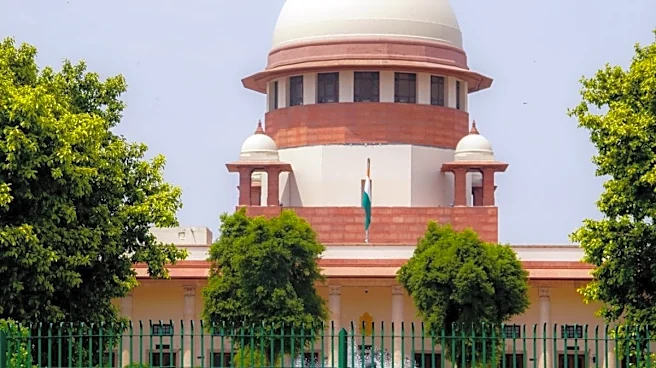
The Supreme Court on Wednesday made a significant observation in the Sabarimala temple case, questioning whether majority rule in India should be allowed to overshadow constitutionalism. The court said decisions that go against constitutional principles must be tested.
A bench comprising Chief Justice of India Surya Kant and eight other judges was hearing the Sabarimala reference case, particularly seven legal questions about the scope of religious freedom in India. During the hearing, Justice Joymalya Bagchi referred to the Constitution as the ‘lakshman rekha‘ (red line) and said courts have to test decisions that go against constitutional principles, even if a majority feels that thing should be done.
“It is not majoritarianism which the Court
is bothered about. The Court is essentially bothered about majoritarianism trumping constitutionalism, and that is the lakshman rekha. We are committed to a democracy which is definitely a test of numbers, but we are also a constitutional democracy,” he said.
This came after Solicitor General Tushar Mehta said the scope of judicial review in religious matters is very restricted and courts should ordinarily leave the matter to the legislature. “I am sorry. It is democracy. Democracy means majority,” he said, when Justice Amanullah questioned whether courts should not investigate such matters because of majoritarianism.
CJI Kant emphasised that the debate was unnecessary, saying the question of religious practice had nothing to do with the minority or majority principle, while Justice Bagchi said everyone had equal rights as per the Constitution, irrespective of the numbers they have.
READ MORE: ‘Not Visiting Temple Doesn’t Mean You Aren’t A Hindu’: What Supreme Court Said At Sabarimala Hearing
The discussion was linked to the Supreme Court’s 2018 verdict that overruled the restriction on women of menstruating age to enter the Sabarimala Temple in Kerala. In November 2019, the Supreme Court pronounced its judgment on the review petitions against the 2018 verdict, and framed seven larger questions on religious freedom in India.
Wednesday’s discussion extended to the aspect of choice in religious matters. Justice Nagarathna commented that Hinduism was a way of life and “it is not necessary for a Hindu to mandatorily go to a temple or perform a ritual. He or she still remains a Hindu.”
The top court had earlier observed that if individuals start questioning every religious practice or matters of religion before a constitutional court, then there will be hundreds of petitions and every religion will “break” due to this.
CJI Kant also warned of the court assuming the role of a super-spiritual authority or a super-religious leader that started interpreting the entirety of religious life.




/images/ppid_59c68470-image-177890502892080598.webp)

/images/ppid_59c68470-image-17789050344096186.webp)
/images/ppid_59c68470-image-177890506920844620.webp)