

/images/ppid_59c68470-image-178789508463184599.webp)
Pakistan is weighing changes to the constitutional status of Pakistan-occupied Kashmir (PoK) and Gilgit-Baltistan, with a new constitutional framework that could grant the two regions an interim, province-like status being considered, top government sources in Islamabad have told CNN-News18.
The proposed changes could come through the much-discussed 28th Constitutional Amendment or other upcoming legislation, with Pakistan also examining the possibility of altering Article 1, Clause 2 of its Constitution, which defines the territories that constitute the country.
According to the sources, Islamabad is closely watching the ongoing India-China boundary talks and broader developments between New Delhi and Beijing, which could have implications for
Pakistan’s position on Jammu and Kashmir and the constitutional status of the territories under its control.
The potential move would mark a significant shift in Pakistan’s constitutional approach towards Gilgit-Baltistan and Jammu and Kashmir.
The sources said Islamabad is exploring whether the two regions could be given an interim constitutional status closer to that of provinces, while retaining Pakistan’s stated position on the larger Kashmir dispute.
The discussions come amid efforts by India and China to stabilise their bilateral relationship and make progress on their long-standing boundary issues.
Pakistan is understood to be keenly monitoring the talks because any eventual understanding between India and China over their disputed boundary could have wider implications for the Kashmir region and the existing territorial arrangements involving India, Pakistan and China.
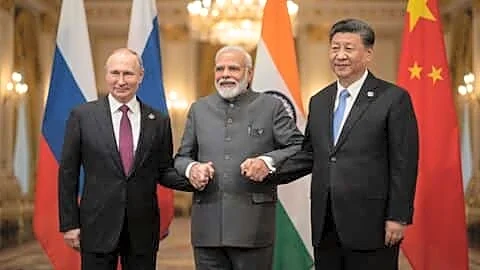
Beijing, meanwhile, is seeking workable ties with New Delhi while continuing to maintain its strategic partnership with Islamabad. China remains a key strategic and economic partner of Pakistan, making the direction of India-China relations particularly important for Islamabad’s calculations.
Sources said the possibility of a future India-China boundary settlement is one of the factors prompting Pakistan to examine the constitutional and political status of PoK and Gilgit-Baltistan.
The India-China boundary question is directly linked to the wider territorial dispute in Jammu and Kashmir. China controls Aksai Chin, while Pakistan administers PoK and Gilgit-Baltistan. Pakistan had also ceded the Shaksgam Valley to China under the 1963 Sino-Pakistan boundary agreement, a move India has rejected.
Against this backdrop, any potential settlement between India and China could force Pakistan to reassess aspects of its Kashmir policy, particularly if changes in the India-China border arrangement affect the existing territorial framework.
Pakistan’s constitutional position on Gilgit-Baltistan and PoK has remained distinct from that of its formally recognised provinces. While Islamabad exercises administrative control over both regions, their constitutional status has been a politically sensitive issue. The proposed changes would therefore represent a potentially consequential departure from the existing framework.
The development also comes years after India made a sweeping constitutional change in Jammu and Kashmir. In August 2019, the Centre revoked the special status granted to the erstwhile state under Article 370 and rendered Article 35A inoperative, subsequently reorganising Jammu and Kashmir into two Union Territories—Jammu and Kashmir and Ladakh.
Sources indicated that Pakistan is now examining its own constitutional options for the territories under its control, though the proposed changes should not necessarily be viewed as a direct replication of India’s 2019 move.
The exact contours of the proposed Pakistani framework, including whether Article 1(2) will ultimately be amended and whether the 28th Amendment will be used for the purpose, have not yet been finalised. For now, Islamabad is continuing to assess the regional situation, particularly the trajectory of India-China boundary talks and Beijing’s efforts to improve ties with New Delhi while preserving its strategic partnership with Pakistan.
/images/ppid_59c68470-image-178808002431483992.webp)


/images/ppid_59c68470-image-178782252994111912.webp)


/images/ppid_59c68470-image-178792002121588475.webp)
/images/ppid_59c68470-image-178793507486848678.webp)