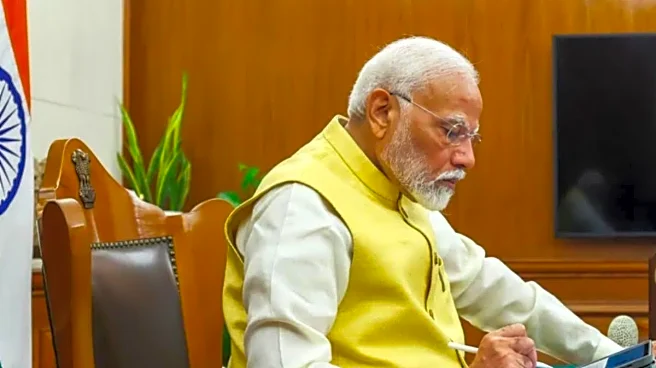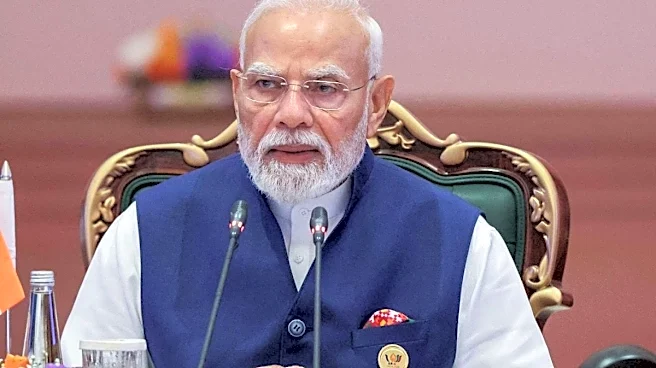



India has managed to hold its diplomatic ground in Asia at a time when several countries in the region saw their influence weaken in 2026. Prime Minister Narendra Modi, meanwhile, has moved up three places in assessments of regional leadership and is now ranked as the second-most effective leader in Asia, behind Chinese President Xi Jinping.
These are among the key findings of the 2026 Asia Power Index, released by Australia’s Lowy Institute. Authored by Hunter Marston and Jack Sato, the report says India played a more influential role in the region despite domestic challenges and a slight decline in its relative economic capabilities.
The assessment comes amid a wider debate over India’s standing in international affairs. Leader of Opposition
Rahul Gandhi recently described India as a “side player” in global diplomacy, questioning the country’s absence from efforts to resolve major international conflicts and arguing that its diplomatic influence has weakened.
India, however, scored 70.3 points in Diplomatic Influence, with only a marginal decline from the previous year. Its relative performance stood out in a year when diplomatic influence weakened across much of Asia.
PM Modi Moves Up, But Global Leadership Faces Questions
The prime minister’s rise to the second position in the regional leadership rankings is one of the more notable findings of this year’s index. However, the improvement has not extended to perceptions of his global leadership. The report attributes some of this decline to India’s relatively low diplomatic profile during the Gulf conflict.
One example it cites is India’s muted response after a US submarine sank an Iranian naval vessel that was returning from an exercise hosted by India. The incident, according to the report, exposed the limits of India’s diplomatic engagement during a wider international crisis.
In other words, while India’s leadership is increasingly recognised within Asia, its response to developments beyond the region continues to shape how its wider diplomatic ambitions are viewed.
Why India’s Diplomatic Standing Matters More This Year
India’s relatively stable score stands out against a difficult regional picture.
The US and China continue to dominate Asia’s balance of power, but the gap between them has narrowed to just 5.3 points—the smallest since the Asia Power Index was launched in 2018.
Washington’s handling of the conflict with Iran, which began in February 2026, and the diversion of military resources away from the Pacific affected perceptions of its diplomatic influence and commitment to the region. China, meanwhile, continued to build its diplomatic and cultural influence across Asia while pushing ahead with military modernisation.
For countries such as India, this shifting balance presents both an opportunity and a challenge. The report points to growing discussions around the role of middle powers in addressing global challenges, but notes that this has yet to translate into substantial action or a major change in Asia’s power balance.
India’s ability to maintain its diplomatic standing in such an environment is therefore significant, even if it has not yet translated into a comparable shift in the wider regional order.
Defence Ties, Trade And Cultural Reach Also Improve
Diplomacy was not the only area where India made progress. Its defence partnerships, economic relationships and cultural influence also showed gains.
In Defence Networks, India climbed two places to ninth, scoring 18.6 points. The improvement was driven by greater regional defence engagement and BrahMos missile sales to Southeast Asian countries, according to the report.
India also moved up two places to seventh in Economic Relationships. It was among just five countries whose scores in this category did not decline in 2026, pointing to relative stability in its regional trade and investment ties.
Cultural Influence was another area of improvement. India’s score rose to 43.8 points, supported by gains in cultural projection, information flows and people exchanges.
Together, these gains suggest that India’s regional influence is being built through more than diplomatic engagement alone, with defence cooperation, economic ties and cultural outreach also playing a role.
India’s Power Is Growing, But China Remains Far Ahead
Despite the gains, the report makes clear that India still has a considerable distance to cover before it can challenge China’s overall position in Asia.
India consolidated its standing as a major power in the region, with an overall score of 40.5 points. The gap between the two countries narrowed to its smallest level since the index began in 2018. Yet China’s overall power remains approximately 80 per cent higher than India’s.
India’s economic performance was less encouraging. Its Economic Capability score slipped to 26.4 points. A weakening rupee, changes in the International Monetary Fund’s methodology for measuring economies and a nearly $20-billion fall in outbound investment all contributed to the decline.
There was, however, some positive news on the long-term outlook. India’s Future Resources score rose to 56.2 points, reflecting an improved economic forecast and the country’s future potential. The report also found that India narrowed its Power Yield gap for the first time since 2023. Power Yield measures how effectively a country converts its available resources into actual influence in Asia.
The larger takeaway is that India is becoming more effective at translating its strengths into regional influence, even as economic constraints continue to limit its overall power.