
/images/ppid_a911dc6a-image-177105903625699976.webp)

For years, Jammu and Kashmir experienced a troubling phase where those who suffered the most were often unheard by the state. The concept of “healing touch” appeared noble on paper but often translated into a one-sided accommodation for former militants. Families torn apart by terrorism were left to fend for themselves while successive governments ignored their plight.
The Reality of the ‘Healing Touch’ Policy
Introduced in the early 2000s, the healing touch policy was intended as a humanitarian outreach to bridge gaps between the government and Kashmiri youth. In practice, it relaxed enforcement against stone-pelters, curtailed security operations, and suspended FIRs against those involved in street violence. Instead of aiding the common citizen, the policy inadvertently strengthened
radical networks, weakened the morale of security forces, and allowed terror sympathisers to operate freely. Victims of violence received no such healing.
The ‘Return and Rehabilitation’ Policy
The return and rehabilitation scheme for former terrorists aimed to reintegrate youth who had crossed over to Pakistan back into mainstream life. It offered cash incentives, land, jobs, and housing benefits to those who had received arms training across the border. While reintegration is not inherently wrong, the policy lacked safeguards and oversight. Many beneficiaries had unverified terror backgrounds, and some exploited the scheme while maintaining ties with terror groups. Meanwhile, families who lost loved ones to terrorism waited in vain for justice.
These years left a deep wound, both physical and psychological. Victims were forgotten, and an entire ecosystem grew around terrorism, separatism, and political convenience.
A Different Valley After August 2019
The abrogation of Article 370 marked not just a constitutional change but a recalibration of the ethical compass of governance. The shift since then has been clear: victims are no longer invisible, and perpetrators are no longer romanticised. The security grid is more confident, separatist networks have been dismantled, and public life has stabilised. The bigger change is moral: the state now stands with those who suffered, not those who caused suffering.
A Clear Doctrine from the National Leadership
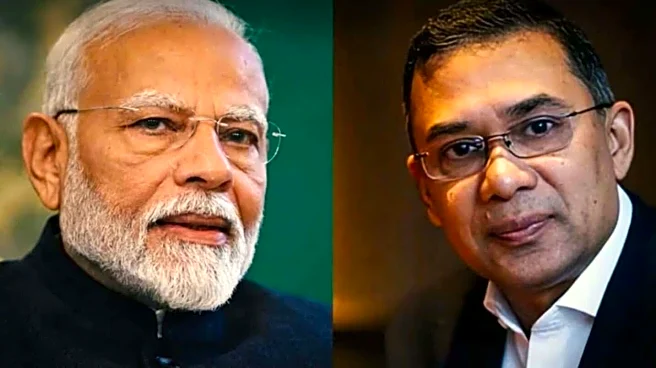
Prime Minister Narendra Modi’s public address in Srinagar, marked by enormous attendance across regions, symbolised something unseen in decades—people participating without fear. Modi’s message was direct: the era of shutdowns, coercion, and intimidation is over, and J&K’s future will be shaped by development and dignity. Home Minister Amit Shah reinforced this clarity in multiple visits. His interactions with families of victims and security personnel were not ceremonial; they set the tone for a policy framework where terrorism receives zero tolerance and victims receive priority. Their stance drew a clear line between the old politics of hesitation and the new politics of conviction.
L-G Manoj Sinha: Delivering Justice on the Ground
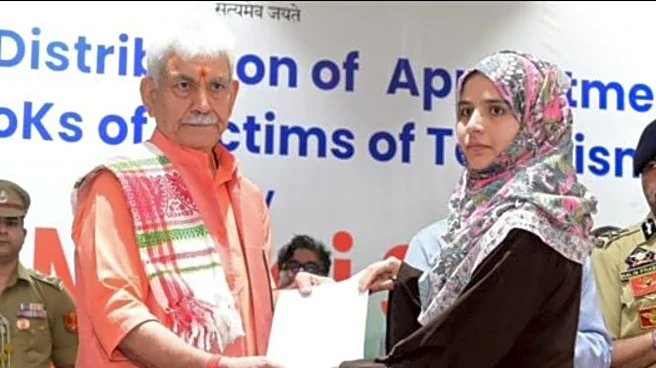
If Delhi set the direction, Lieutenant Governor Manoj Sinha turned intent into action. Over the past years, Sinha has built a reputation for running an administration that is steady, firm, and emotionally attuned to the long-neglected victims of terrorism. At Thursday’s appointment-letter ceremony—a quietly historic moment—his remarks captured the tragedy of the past and the resolve of the present. He began by honouring those killed in terror incidents, noting that their families suffered twice: once at the hands of terrorists, and again through decades of governmental apathy. He reminded the audience that 41,949 civilians have been killed in terrorism since it began—a staggering number reflecting both loss and neglect. Sinha recounted the case of a family in Kotranka whose members were killed in 2005. For nearly twenty years, no government acknowledged their suffering. “Today they finally have a job,” he said—a small but powerful correction of decades of injustice.
He bluntly stated, “Deliberately, these families were denied justice so that they don’t contribute to the development of the country.” He revealed that 82 families received appointment letters today, including 41 families who lost relatives in terror attacks. This is the first administration in decades that has placed victims at the centre of its moral framework.
Calling Out the Ecosystem—Without Euphemisms
Sinha spoke openly about Pakistan-backed terrorists trying to mislead people with fake narratives. He urged those still clinging to separatist illusions to recognise that the old era is gone. He described the four-tier terror structure—the planner, the transporter, the shooter, and the sympathiser—noting that some linked to these networks once received government jobs. That era is over. Sinha dismissed claims that “there was peace earlier”, saying those who say so are blindfolding themselves. Shutdowns, fear, intimidation, and stone-pelting were not peace; they were paralysis. His message was unmistakable: “In 2025, victims get jobs. Terrorists will get bullets.”
Towards a Fearless J&K
Sinha noted that victims today are speaking up openly because the fear that once overshadowed the Valley has lifted. Terrorism will be defeated militarily, he said, but moral defeat requires society’s voice. His assurance was unequivocal: “There is no need to fear terrorists. The government will not bear them anymore.” He closed with a commitment deeply resonant with the Prime Minister’s vision: “The administration and J&K Police are with you. Rehabilitation of victim families will be ensured at any cost.”
Democracy Reclaimed, Fear Defeated
One of the strongest indicators of J&K’s transformation came last year when the Union Territory witnessed its most peaceful Assembly election in decades, conducted under L-G Manoj Sinha’s administration. There were no shutdowns, no street violence, no coercion, and no fear. And for the first time in a generation, voting day felt like a festival of democracy. It also recorded one of the highest voter turnouts in J&K’s electoral history, with people standing in long queues even in areas once dominated by extremist intimidation. This was not just an election; it was a reclaiming of agency.
A Long Road, But a New Foundation
J&K still faces challenges: cross-border infiltration, narco-terror funding, and propaganda networks. But the foundation laid over the last few years is stronger than anything the region has seen since the post-1990 era. The transformation is as psychological as it is administrative. When victims speak openly, when citizens vote freely, and when the state prioritises justice over appeasement, a society begins to heal in ways both visible and invisible.
A Region Reclaiming Confidence
Jammu and Kashmir’s story today is not one of overnight miracles, nor does it erase the pain of the past. It is the story of a region learning to trust again—trust in institutions, in fairness, and in its own future. The moral architecture built in the last five years has made one thing clear: the Valley’s destiny will no longer be dictated by those who carry guns, but by those who carry hope.
The Promise Ahead
The shift from a conflict-ridden mindset to one grounded in justice, development, and dignity is not merely a policy change; it is a cultural transformation. With Manoj Sinha’s steady governance and the national leadership’s clarity, Jammu and Kashmir now stands on the threshold of renewal. If the last few years are any indication, the next chapter of J&K will be shaped not by fear, but by aspiration—not by those who silenced the people, but by the people themselves.




/images/ppid_a911dc6a-image-177105956122469810.webp)
